Perimenopause brain fog — the fuzzy thinking, memory lapses, and difficulty concentrating that many women experience during the hormonal transition — is caused by fluctuating estrogen levels that directly affect cognitive function. Research from the SWAN study confirms that these cognitive changes are real, measurable, and typically temporary, improving after the menopause transition is complete. But while you are in the middle of it, brain fog can feel profoundly disorienting.
This article is for informational purposes only and is not medical advice. Always consult a healthcare provider about your symptoms.
What Perimenopause Brain Fog Actually Feels Like
Brain fog is not a medical term — it is a description of a collection of cognitive symptoms that women in perimenopause consistently report:
- Walking into a room and forgetting why you are there
- Struggling to find the right word in conversation
- Difficulty concentrating on complex tasks or reading
- Forgetting names, appointments, or what you were just about to do
- Feeling mentally sluggish, like thinking through cotton wool
- Taking longer to process information or make decisions
- Losing your train of thought mid-sentence
For many women, especially those in demanding careers, the cognitive changes can be alarming. Some women fear early-onset dementia. The reassuring news is that perimenopause brain fog and dementia are fundamentally different processes, and perimenopause-related cognitive changes are temporary.
The Science: Why Estrogen Affects Your Brain
Your brain is one of the most estrogen-sensitive organs in your body. Estrogen receptors are densely concentrated in the hippocampus (memory center), prefrontal cortex (executive function, planning, and focus), and the language areas of the brain. Here is what estrogen does cognitively:
- Promotes neurotransmitter production. Estrogen supports the production and function of acetylcholine (essential for memory and learning), serotonin, and dopamine.
- Increases blood flow to the brain. Estrogen promotes vasodilation, ensuring adequate oxygen and glucose delivery to brain tissue.
- Supports synaptic plasticity. Estrogen helps neurons form new connections and strengthens existing ones, which is critical for learning and memory.
- Provides neuroprotection. Estrogen has antioxidant properties and helps protect neurons from damage.
During perimenopause, estrogen does not just decline — it fluctuates wildly, sometimes higher than premenopausal levels, sometimes much lower. This instability is what causes the cognitive symptoms. The brain essentially has to constantly recalibrate to changing hormone levels, and during the adjustment periods, cognitive function suffers.
What the Research Shows
The SWAN study, which has been tracking women through the menopausal transition since 1996, provides the most robust data on perimenopause and cognition. Key findings include:
- Cognitive difficulties, particularly in processing speed and verbal memory, increase during the perimenopause transition.
- These difficulties peak during late perimenopause (the year or two before final menstrual period).
- After menopause, cognitive function generally returns to premenopausal levels, suggesting the changes are temporary.
- Women who reported more sleep disturbances and depressive symptoms during perimenopause also reported worse cognitive function.
A 2013 study published in Menopause tested women on objective cognitive measures and confirmed that working memory and attention decline during perimenopause but recover postmenopause. This is incredibly reassuring: your brain is not deteriorating — it is adapting to a temporary hormonal environment.
What Makes Brain Fog Worse
While hormonal fluctuation is the root cause, several factors can amplify perimenopause brain fog:
- Poor sleep. Sleep is when your brain consolidates memories and clears metabolic waste. Perimenopause insomnia directly worsens cognitive function the next day.
- Chronic stress. High cortisol impairs hippocampal function. When stress and hormonal fluctuation combine, brain fog intensifies significantly.
- Multitasking. Your brain's ability to juggle multiple tasks efficiently declines when estrogen is unstable. Trying to force multitasking can make brain fog feel much worse.
- Depression and anxiety. Both conditions independently impair concentration and memory. When they coexist with perimenopause, cognitive symptoms compound.
- Dehydration and poor nutrition. Your brain is 75% water and requires steady glucose. Skipping meals, eating poorly, or being dehydrated directly affects thinking.
Evidence-Based Strategies to Clear the Fog
Prioritize Sleep
This is the single most impactful thing you can do. Sleep deprivation worsens brain fog more than any other factor. Strategies: consistent bedtime, cool room temperature (65-68 degrees F), no screens for 30 minutes before bed, and limiting caffeine after noon. If night sweats are disrupting sleep, address those specifically with your doctor.
Regular Aerobic Exercise
Exercise increases blood flow to the brain, stimulates the production of brain-derived neurotrophic factor (BDNF), which supports neuron growth and synaptic plasticity, and improves sleep. Studies show that women who exercise regularly during perimenopause report less cognitive difficulty. Aim for 150 minutes per week of moderate-intensity activity — walking, cycling, swimming, or dancing.
Manage Stress
Chronic stress keeps cortisol elevated, which directly impairs the hippocampus. Mindfulness meditation has been shown to improve attention and working memory. Even 10 minutes a day can make a noticeable difference. Yoga combines physical movement with stress reduction, making it particularly effective for perimenopause.
Feed Your Brain
What you eat directly affects cognitive function:
- Omega-3 fatty acids (fatty fish, walnuts, flaxseed) support brain cell membrane integrity
- Antioxidant-rich foods (berries, dark leafy greens, dark chocolate) protect neurons from oxidative stress
- Complex carbohydrates provide steady glucose to the brain, avoiding the crashes from refined sugars
- Adequate protein provides amino acid building blocks for neurotransmitters
- Stay hydrated — even mild dehydration impairs attention and memory
Work With Your Brain, Not Against It
- Single-task instead of multitasking during your foggiest hours
- Write things down — externalize your memory with lists, notes, and reminders
- Do cognitively demanding tasks during your sharpest hours (often mid-morning)
- Take regular breaks — the Pomodoro technique (25 minutes of focus, 5-minute break) is helpful
- Use calendars and alarms for appointments and deadlines
Track Your Patterns
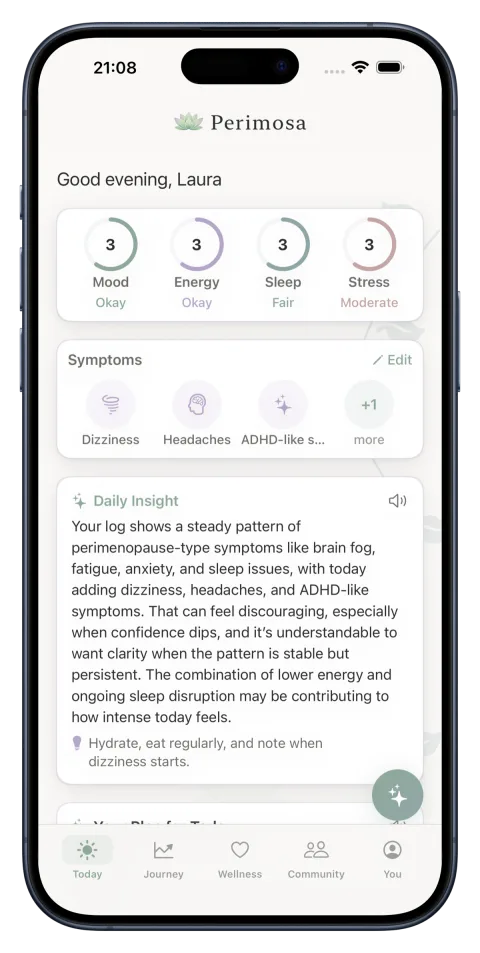
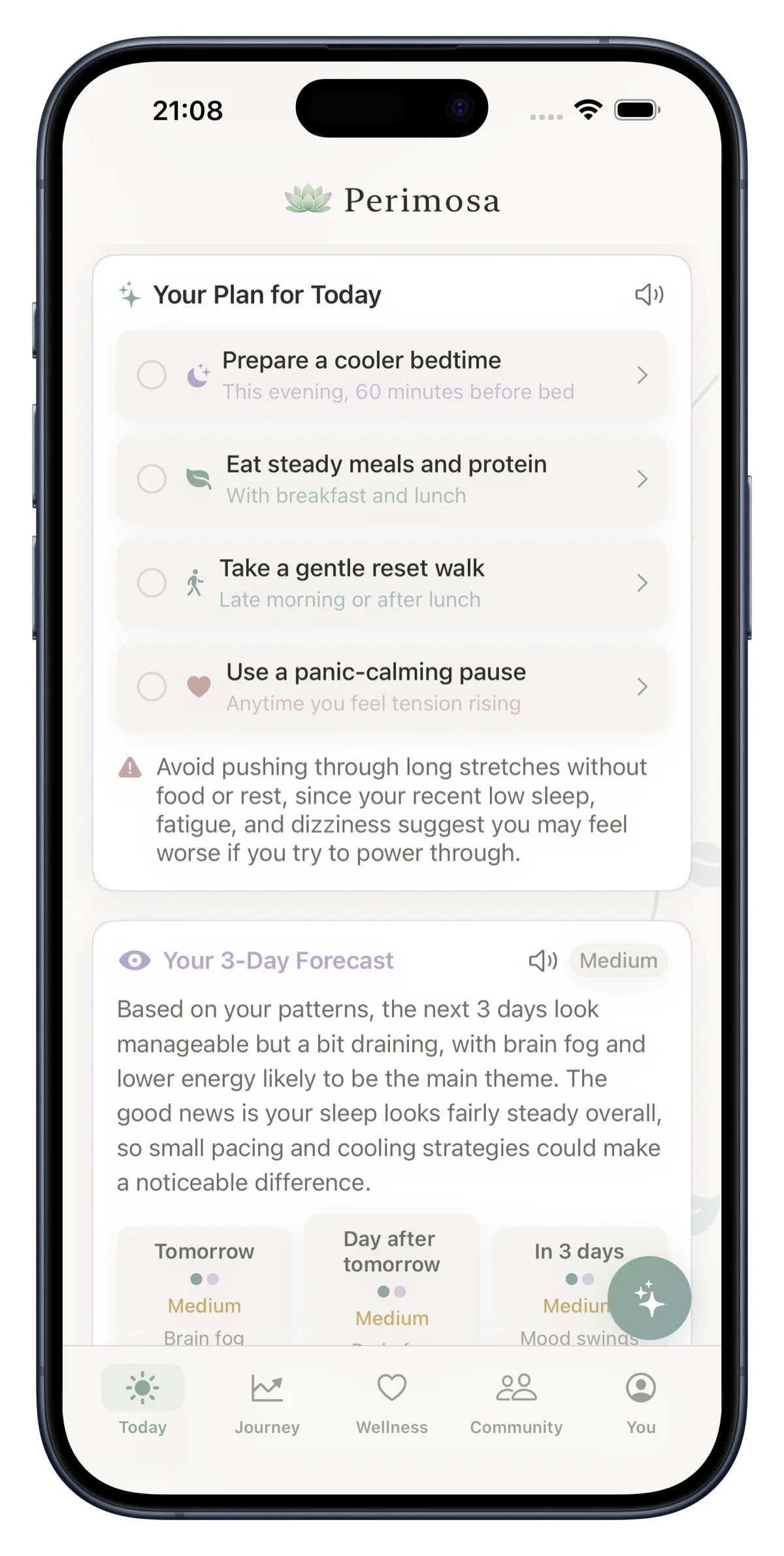
Brain fog is not constant — it fluctuates with your hormone cycle, sleep quality, stress levels, and other factors. Tracking these connections helps you anticipate foggy days and plan accordingly. With Perimosa, you can log cognitive symptoms alongside sleep, mood, and other factors to discover what makes your brain fog better or worse.
Consider Hormone Therapy
For women with severe cognitive symptoms that significantly affect work and daily life, hormone therapy (HT) can stabilize estrogen levels and reduce brain fog. This is a conversation to have with your healthcare provider, weighing the benefits against your individual risk profile.
Brain Fog vs. Dementia: How to Tell the Difference
Many women worry that their cognitive changes signal early dementia. Here are key differences:
- Perimenopause brain fog: You forget where you put your keys. Dementia: You forget what keys are for.
- Perimenopause brain fog: You lose your train of thought but can usually get it back. Dementia: You cannot retrace the thought at all.
- Perimenopause brain fog: You are aware of and frustrated by your cognitive changes. Dementia: You are often unaware of the decline.
- Perimenopause brain fog: Cognitive function fluctuates — some days are fine. Dementia: Cognitive function progressively worsens.
If you are genuinely concerned, discuss it with your doctor. Formal neuropsychological testing can distinguish between normal perimenopause cognitive changes and something more concerning.
Perimenopause Brain Fog Treatment: What Actually Works
There is no single FDA-approved drug for "perimenopause brain fog" — but several treatments have meaningful evidence for restoring cognitive function during the transition.
- Hormone replacement therapy (HRT). The strongest evidence. A 2021 systematic review found HRT modestly improved verbal memory, attention, and processing speed in women who started it during perimenopause or early postmenopause. The benefit is largest in women under 60 starting within 10 years of menopause — the "critical window" hypothesis. Outside that window, cognitive benefits are smaller.
- Treating night sweats specifically. Even one night of fragmented sleep significantly impairs next-day cognitive function. If night sweats are driving sleep disruption, addressing them often produces dramatic brain-fog improvement within 2-3 weeks.
- Aerobic exercise. The most reliably effective non-drug intervention. 150 minutes/week of moderate intensity improved cognitive scores in randomized trials. Effect appears within 8-12 weeks.
- Cognitive behavioral therapy. Helps with the anxiety-amplifies-fog loop. Particularly useful when fear of cognitive decline is creating its own cognitive burden.
- Treating coexisting conditions. Untreated sleep apnea, thyroid dysfunction, B12/iron deficiency, and depression all amplify brain fog. Rule these out — they're treatable.
Limited or weak evidence: phosphatidylserine, ginkgo biloba, "nootropic" supplement stacks. Some women report subjective improvement; randomized trial data is unconvincing.
Does Perimenopause Brain Fog Go Away?
For most women, yes — and this is one of the most reassuring findings in the research. The SWAN study tracked women through the menopausal transition and found that the cognitive dip in late perimenopause largely resolved in postmenopause. By 1-2 years past the final period, average cognitive scores had returned to or surpassed pre-perimenopausal levels.
Translation: your brain is adapting to a new hormonal baseline, not declining permanently. The fog clears as the adaptation completes. Many women describe a noticeable lift 2-3 years into postmenopause — not because anything dramatic happened, but because the turbulence calmed.
Two exceptions worth noting: severe sleep deprivation can produce cognitive effects that look like brain fog but persist if the sleep problem isn't addressed. And in the small subset of women with untreated severe perimenopausal depression, cognitive symptoms may linger if depression isn't treated.
Forgetfulness Specifically: When Should You Worry?
"Forgetfulness in perimenopause" is the symptom that most often triggers fear of early dementia. The pattern that distinguishes hormonal forgetfulness from concerning forgetfulness:
- You forget WHERE you put your keys (perimenopause) vs. forgetting WHAT keys are for (dementia concern).
- You lose your train of thought but can usually get it back vs. can't retrace at all.
- You're aware and frustrated by changes vs. unaware of decline.
- Function fluctuates day to day vs. progressively worsens.
- Word-finding pauses that resolve in seconds vs. persistent inability to find the word.
If any of the right-hand patterns apply consistently, or if family members are noticing changes you aren't, get a neurology referral. Otherwise: this is almost certainly hormonal, common, and self-resolving.
The Bottom Line
Perimenopause brain fog is real, research-validated, and — most importantly — temporary. It is caused by your brain adapting to fluctuating estrogen, not by cognitive decline. Prioritizing sleep, exercise, stress management, and good nutrition are the strongest tools you have. Understanding the pattern of your fog through tracking helps you work with it instead of fighting against it.