You’re not losing it.
It’s perimenopause.
30 seconds a day turns into a clear picture of what your body is doing — and why.
- Tracks
- 30+ symptoms
- Daily check-in
- 30 seconds
- Built for
- Ages 35-55
- Platform
- iOS · Android
- Pricing
- Free + Pro
Are You Experiencing These Perimenopause Symptoms?
Perimenopause can bring dozens of symptoms that overlap and shift from week to week. If any of these sound familiar, you are not alone.
If you are wondering “Is this perimenopause?” — you are in the right place. Perimosa helps you track what you are feeling and see the patterns behind it.
Built for what perimenopause actually feels like.
Not a period tracker with features bolted on.
See what’s actually driving your worst days
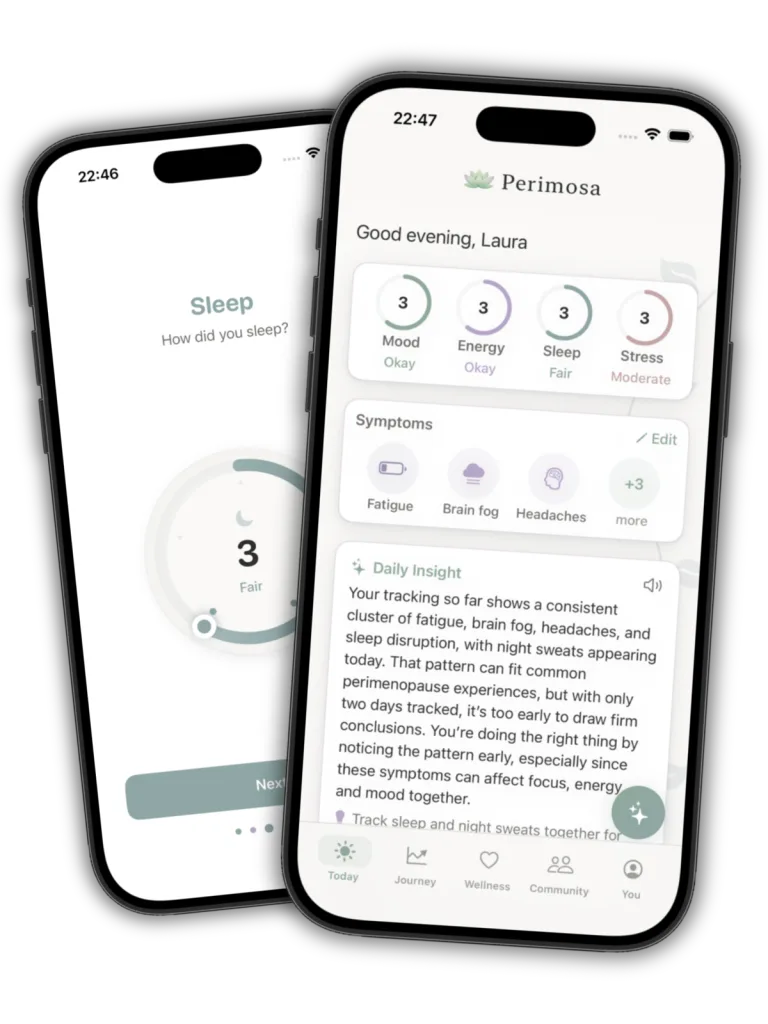
30 seconds each morning. Mood, energy, sleep, stress — we do the analysis.
Chat with Perimosa AI — she’s read everything you’ve tracked
Ask why you’re exhausted, what triggered last week’s brain fog, or vent at 2am. Perimosa AI answers using YOUR data — not generic wellness advice.
A wellness plan built around YOUR patterns
Personalized action plans you can actually follow this week. Updates as your data changes — no 50-page PDFs, no one-size-fits-all advice.
Patterns you’d never spot on your own
AI looks across weeks and months of your data and surfaces what’s driving your hardest days. See how sleep affects mood, when hot flashes peak, which symptoms cluster.
Finally, words for what you’re feeling
Hot flashes, brain fog, the rage spells, the 3am awakenings — log 30+ perimenopause symptoms with a tap.
Walk into your doctor’s office with a real report
Export a clean clinical summary of weeks or months of data. No more vague descriptions, no more being dismissed.
How Perimosa Works
No complicated setup. Start tracking perimenopause symptoms in under a minute.
Quick Check-in
Swipe through mood, energy, sleep, and stress dials each morning. Takes 30 seconds.
Log Symptoms
Tap any symptoms you are experiencing — hot flashes, brain fog, night sweats, anxiety, and more. Add severity and triggers if you want.
Get AI Insights
AI analyzes your patterns across weeks and gives you personalized insights about your perimenopause symptoms.
What Is Perimenopause?
Perimenopause is the transition period leading up to menopause, when your body gradually produces less estrogen and progesterone. It typically starts between ages 35 and 45 — most women notice the first changes in their early 40s — and can last anywhere from 4 to 10 years before periods stop permanently.
During this time, fluctuating hormone levels can cause a wide range of perimenopause symptoms: irregular periods, hot flashes, night sweats, brain fog, anxiety, mood swings, insomnia, weight gain, and many others. Because symptoms overlap with stress, aging, and other conditions, many women go years without realizing perimenopause is the cause.
Tracking your symptoms consistently is one of the most effective ways to understand what is happening in your body. It helps you identify patterns, recognize triggers, and have more productive conversations with your healthcare provider about perimenopause treatment options and natural remedies.
Latest from the Perimenopause Blog
Expert-reviewed guides to help you understand your symptoms and navigate perimenopause with confidence.
Irregular Periods in Perimenopause: What Changes, and What Doesn't Belong
Cycle changes are usually the first sign of perimenopause. What counts as normal irregularity, which bleeding patterns need a doctor, and how tracking makes the difference obvious.
Heavy Periods in Perimenopause: Why Bleeding Often Gets Worse Before It Stops
Heavy bleeding is one of the most common and least discussed perimenopause symptoms. Why it happens, how heavy is too heavy, what treatment exists, and when to be seen.
Spotting Between Periods in Perimenopause: What It Usually Means
Light bleeding between periods is common during perimenopause, but not all of it is hormonal. What causes it, which patterns are worth investigating, and how to describe it accurately.
Perimenopause FAQ
When does perimenopause start?+
Perimenopause typically starts between ages 35 and 45, though some women notice symptoms as early as their mid-30s. The average age of onset is around 40. Factors like genetics, smoking, and certain medical treatments can influence when perimenopause begins.
What are the first signs of perimenopause?+
The earliest signs are usually changes in your menstrual cycle — shorter, longer, or skipped periods. Other early symptoms include new or worsening anxiety, brain fog, difficulty sleeping, hot flashes, night sweats, and mood swings that feel different from your norm.
How long does perimenopause last?+
Perimenopause typically lasts 4 to 10 years. The average duration is about 4 years, but every woman's experience is different. Perimenopause ends when you have gone 12 consecutive months without a period, which marks the official start of menopause.
Can I track perimenopause symptoms with an app?+
Yes. Perimosa is a perimenopause symptom tracker that lets you log 30+ symptoms daily — including hot flashes, brain fog, night sweats, mood swings, and anxiety. The app uses AI to detect patterns across weeks and months, giving you insights you would never spot on your own.
What is perimenopause?+
Perimenopause is the transition period before menopause, typically starting in your late 30s to mid-40s. It can last 4-10 years and brings hormone fluctuations that cause symptoms like irregular periods, hot flashes, sleep changes, and mood shifts.
Is Perimosa a medical app?+
No. Perimosa is a tracking and awareness tool, not a diagnostic or medical app. It helps you understand your patterns and have better conversations with your doctor. Always consult a healthcare provider for medical decisions.
How is this different from a period tracker?+
Period trackers focus on cycle prediction and fertility. Perimosa is built specifically for the perimenopause transition — tracking 30+ relevant symptoms, detecting multi-week patterns, and providing AI insights tailored to this life stage.
Is my data private?+
Yes. Your health data is encrypted and stored securely. We never sell your data to third parties. You can export or delete your data at any time.
Do I need to check in every day?+
We recommend it for the best insights, but there’s no pressure. Even 3-4 check-ins per week give meaningful patterns. The app works with whatever you give it.