Hormone replacement therapy (HRT) is the most effective treatment for perimenopause symptoms — and one of the most misunderstood. A flawed reading of the 2002 Women's Health Initiative study scared a generation of women away from HRT, and decades later many clinicians still under-prescribe it. The current research is much clearer: for healthy women under 60 or within 10 years of menopause, HRT's benefits substantially outweigh its risks. This guide covers what it actually does, who should consider it, the different types, and what the real numbers look like.
This article is for informational purposes only and is not medical advice. HRT decisions should always be made with a qualified clinician who knows your medical history.
What Is HRT and How Does It Work?
HRT replaces some of the estrogen — and progesterone if you still have a uterus — that your ovaries no longer produce reliably. By stabilizing hormone levels, HRT addresses the root cause of most perimenopause symptoms instead of just masking them.
Two forms of estrogen are commonly used:
- Estradiol (E2) — the same molecule your ovaries make. Available as patches, gels, sprays, oral pills, and vaginal rings. Considered "bioidentical."
- Conjugated estrogens (Premarin) — a mix of estrogens derived from pregnant mare urine. Older formulation. Largely replaced by estradiol in modern prescribing.
Progesterone is needed if you have a uterus to protect the endometrial lining from estrogen-driven thickening (which raises endometrial cancer risk if unopposed). Options include:
- Micronized progesterone (Prometrium) — bioidentical, often taken orally at bedtime (helps sleep as a bonus)
- Progestins — synthetic versions, also effective
- Levonorgestrel IUD (Mirena) — delivers progestin locally to the uterus while also providing contraception
What HRT Actually Does for Perimenopause Symptoms
HRT is not a magic pill — but it is the most evidence-supported intervention for the constellation of symptoms perimenopause produces.
| Symptom | HRT effectiveness |
|---|---|
| Hot flashes & night sweats | Reduces frequency 75-90%. Gold standard treatment. |
| Sleep disruption | Significant improvement, especially with bedtime progesterone |
| Vaginal dryness / painful sex | Very effective; local vaginal estrogen is first-line |
| Mood instability | Moderately helpful — works best for hormone-driven mood swings, not pre-existing depression |
| Brain fog | Mixed evidence; some women report clear improvement, others minimal |
| Heart palpitations | Often reduces frequency by stabilizing estrogen |
| Bone density loss | Prevents postmenopausal bone loss when started early |
| Cardiovascular protection | Reduces heart disease risk if started within 10 years of menopause ("timing hypothesis") |
Who Should Consider HRT?
Current guidelines from the North American Menopause Society (NAMS 2022) and International Menopause Society (IMS 2022) recommend considering HRT for:
- Women experiencing moderate-to-severe vasomotor symptoms (hot flashes, night sweats)
- Women with significant sleep disruption from perimenopause
- Women with genitourinary symptoms (vaginal dryness, painful sex, recurrent UTIs)
- Women under 60 or within 10 years of their final period
- Women with premature menopause (before age 40) — HRT is strongly recommended until at least age 51 in this group
- Women at risk for osteoporosis without other treatment options
HRT may not be appropriate if you have: active breast cancer or a history of estrogen-sensitive cancer, undiagnosed vaginal bleeding, active liver disease, history of blood clots or stroke, untreated high blood pressure, or pregnancy. These are not absolute — modern transdermal HRT has been used in carefully selected women with histories that would have been contraindications under older guidelines. The conversation is individual.
The WHI Study and Why It Caused 20 Years of Confusion
In 2002, the Women's Health Initiative (WHI) study reported increased breast cancer and cardiovascular risk in women using combined HRT. The findings made global headlines and HRT prescriptions dropped by over 70% almost overnight. Many of those women suffered through symptoms they did not need to.
What the headlines missed:
- The WHI used conjugated equine estrogens + medroxyprogesterone acetate — formulations that are no longer first-line. Modern HRT uses bioidentical estradiol + micronized progesterone with a different risk profile.
- The average WHI participant was 63 years old — roughly 13 years past menopause when starting HRT. Risk is dramatically different in women starting HRT during or near perimenopause.
- The "increased breast cancer risk" was a small absolute increase: about 1 extra case per 1000 women per year of combined HRT use, after 3-5 years. Statistical significance, but small absolute risk.
- Re-analyses showed cardiovascular risk INCREASED in older starters but was REDUCED in women who started HRT under age 60 — known as the "timing hypothesis," now well-established.
The current scientific consensus, including the 2022 NAMS position statement: for symptomatic women under 60 or within 10 years of menopause, HRT benefits outweigh risks for most candidates.
Honest Risks: The Actual Numbers
For healthy women starting HRT during or within 10 years of menopause:
- Breast cancer: Combined estrogen+progesterone HRT increases breast cancer risk by about 1 extra case per 1000 women per year of use, starting after 3-5 years. Estrogen-alone HRT (for women without a uterus) does not increase breast cancer risk in the WHI follow-up — and may slightly reduce it.
- Blood clots / DVT: Oral estrogen roughly doubles clot risk (from a low baseline). Transdermal estrogen (patch, gel) does not appear to raise clot risk in observational studies. If clot risk matters, choose transdermal.
- Stroke: Small absolute increase with oral HRT; less clear with transdermal.
- Endometrial cancer: Estrogen alone in a woman with a uterus significantly raises this risk. That is why progesterone is always added.
- Gallbladder disease: Slightly increased risk with oral estrogen.
For context: alcohol consumption of 1+ drinks per day raises breast cancer risk by about the same amount as combined HRT does over a similar time window. Obesity raises it more. HRT is not risk-free, but the risk is comparable to common lifestyle factors that rarely get the same scrutiny.
Types of HRT and How to Choose
Estrogen Routes
- Transdermal patch (Vivelle-Dot, Climara, Estradot) — 1-2 patches per week, steady estradiol release. Preferred starting route for most women. Lowest clot risk.
- Estradiol gel (Divigel, EstroGel) — daily application to skin. Easier dose adjustment than patches.
- Estradiol spray (Evamist) — applied to inner forearm. Some women prefer this over patches.
- Oral estradiol (Estrace) — daily pill. Slightly higher clot risk than transdermal. Used when transdermal isn't tolerated.
- Vaginal estrogen (Estrace cream, Vagifem tablets, Estring ring) — local treatment for vaginal/urinary symptoms only. Minimal systemic absorption. Safe even for many women who shouldn't use systemic HRT.
Progesterone Forms
- Micronized progesterone (Prometrium) 100-200 mg oral at bedtime — bioidentical, often improves sleep. First-line for most women.
- Norethindrone, medroxyprogesterone, drospirenone — synthetic progestins. Effective but with different side effect profiles.
- Levonorgestrel IUD (Mirena) — provides endometrial protection AND contraception. Useful in perimenopause when both are needed.
Continuous vs. Cyclical
- Continuous combined — estrogen + progesterone every day. After an initial 3-6 months of possible spotting, periods stop. Standard for postmenopausal women.
- Cyclical (sequential) — estrogen daily + progesterone for 12-14 days each month. Produces a predictable monthly bleed. Useful in early perimenopause when cycles are still happening.
Starting HRT: What to Expect
Most women feel meaningful improvement within 4-8 weeks of starting an appropriate dose. The first 1-2 weeks may include mild bloating, breast tenderness, or spotting as your body adjusts. These usually settle by week 6. If they persist beyond 3 months, the dose or formulation may need adjustment — talk to your clinician.
Symptom relief typically follows a pattern:
- Weeks 1-2: Often the worst — adjustment phase, possible spotting or mild side effects
- Weeks 3-6: Hot flash frequency starts dropping noticeably
- Months 2-3: Sleep improves, mood typically lifts
- Months 3-6: Settled symptom relief; this is where you and your clinician decide if the dose is right
Bringing the Conversation to Your Doctor
Two practical things help an HRT conversation go well:
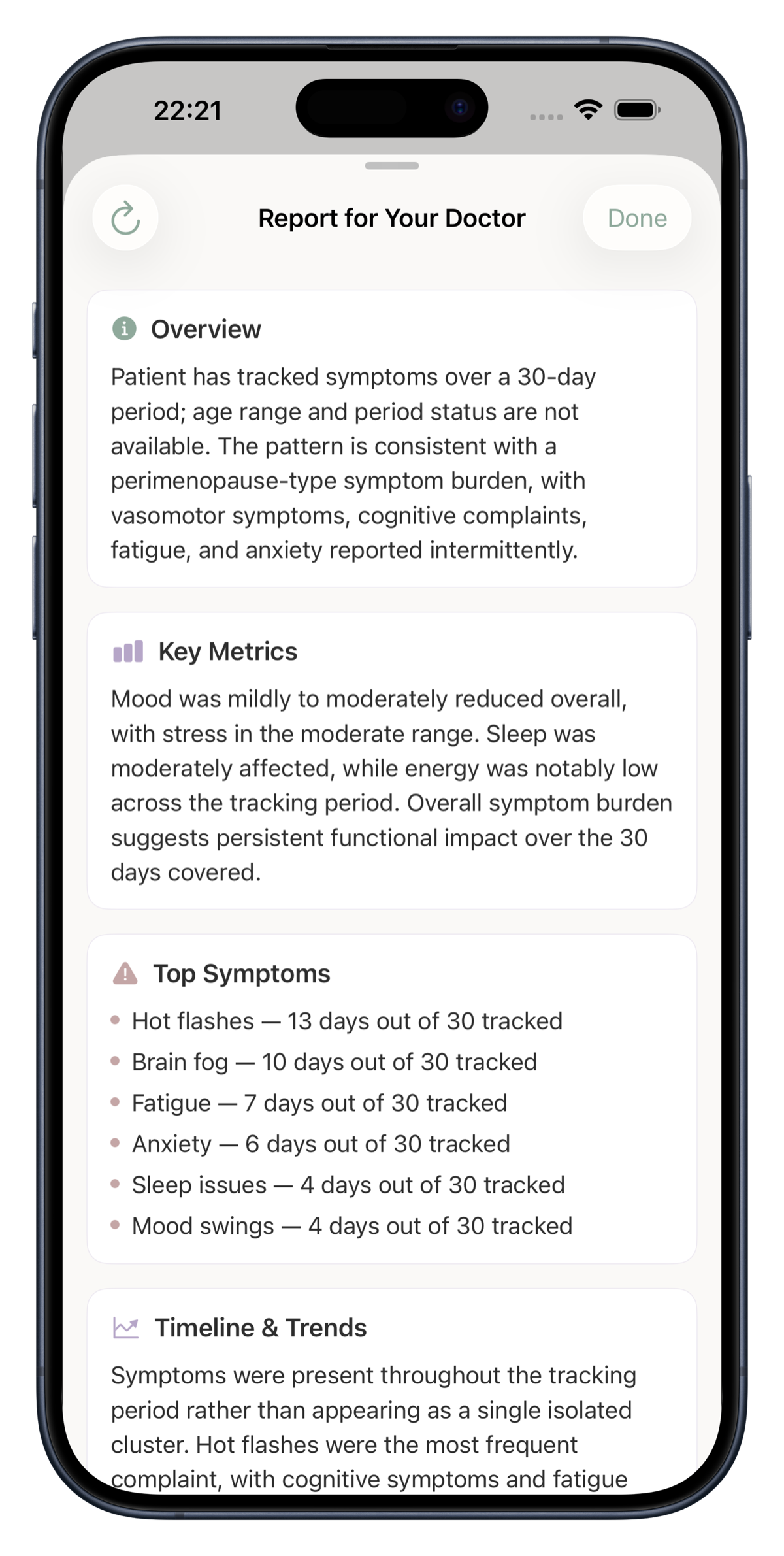
- Bring a tracked symptom log. "My hot flashes have been 8-12 per day for the last 3 months and I'm waking 3 times a night" is more actionable than "I'm not sleeping well." Apps like Perimosa let you build that record over 30 days so the conversation is data-driven.
- Know what you want to ask. "Am I a candidate for HRT given my health history?" "What's the lowest dose that could relieve my main symptoms?" "Transdermal or oral, and why?" These questions move the conversation past general reassurance.
If your current clinician is dismissive of HRT or uncomfortable with prescribing, find one who is. The North American Menopause Society maintains a directory of clinicians certified in menopause care — a clinician with the NCMP credential has been specifically trained in current HRT evidence.
The Bottom Line
HRT remains the most effective treatment available for moderate-to-severe perimenopause symptoms. The 2002 WHI study was misinterpreted in ways that hurt a generation of women, and the modern evidence is clear: for healthy women under 60 or within 10 years of menopause, the benefits outweigh the risks for most candidates. Modern transdermal estrogen + micronized progesterone has a meaningfully different risk profile than the older formulations the WHI studied. If symptoms are affecting your life, having an honest HRT conversation with a knowledgeable clinician is worth doing.