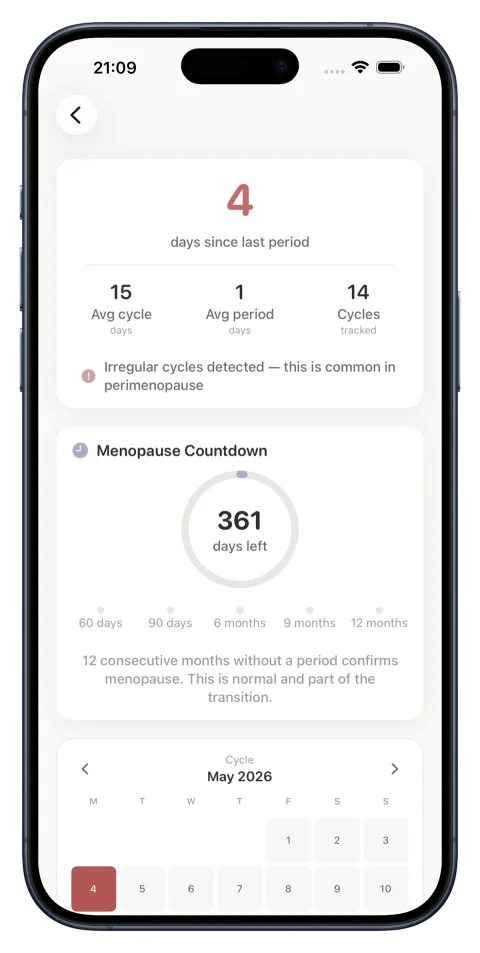
Yes, perimenopause can start in your 30s. While the average age of onset is the mid-40s, approximately 5% of women begin the hormonal transition in their late 30s, and some experience it even earlier. If you are in your 30s and noticing changes in your cycle, sleep, mood, or energy that feel hormonal, you are not imagining it — and you are not too young for this to be happening.
This article is for informational purposes only and is not medical advice. Always consult a healthcare provider about your symptoms.
What does the research say about perimenopause in your 30s?
The Study of Women's Health Across the Nation (SWAN) found that while the median age of perimenopause onset is 47, the range extends into the late 30s. A smaller percentage of women experience the onset even earlier. When menopause itself (12 consecutive months without a period) occurs before age 40, it is classified as premature ovarian insufficiency (POI), which affects about 1% of women.
But here is the important distinction: you can be in early perimenopause in your 30s without having POI. Early perimenopause means your ovarian function is beginning to change and your hormones are starting to fluctuate, even though you may still be ovulating and menstruating regularly. This early phase can last many years before periods actually stop.
What are the risk factors for early perimenopause?
Several factors increase the likelihood of perimenopause beginning in your 30s:
- Genetics. The single strongest predictor. If your mother or sisters entered perimenopause early, you are more likely to as well.
- Smoking. Cigarette smoking accelerates ovarian aging by about two years. Smokers tend to enter perimenopause earlier than non-smokers.
- Autoimmune conditions. Thyroid disease (Hashimoto's), lupus, and other autoimmune conditions can affect ovarian function and trigger earlier perimenopause.
- Ovarian surgery. Even removal of one ovary (oophorectomy) or surgery for endometriosis, cysts, or ectopic pregnancy can reduce ovarian reserve and accelerate the timeline.
- Cancer treatment. Chemotherapy and pelvic radiation can damage ovarian tissue, sometimes causing premature perimenopause.
- Chromosomal factors. Turner syndrome, Fragile X premutation carriers, and other genetic variations affect ovarian aging.
- BMI. Very low body weight or extreme exercise can affect hormonal function, though the relationship is complex.
- Never having been pregnant. Some research suggests that nulliparity (never having carried a pregnancy) is associated with slightly earlier menopause.
What are the signs of perimenopause in your 30s?
The symptoms are the same as perimenopause at any age, but they are more easily dismissed when you are younger. Common early signs in your 30s include:
- Cycle changes: shorter cycles, longer cycles, or increased variability
- Heavier or more painful periods
- New or worsened PMS
- Sleep disruption, especially in the second half of your cycle
- Increased anxiety or mood instability
- Brain fog or difficulty concentrating
- Decreased energy without explanation
- Subtle temperature regulation changes
Because these symptoms overlap with stress, thyroid conditions, and other issues common in the 30s, they are frequently misattributed. Many women in their 30s are told "you're too young for perimenopause" by healthcare providers who are thinking of the average timeline rather than the actual range.
How is early perimenopause diagnosed?
Diagnosing perimenopause in your 30s can be challenging. There is no single definitive test — hormone levels fluctuate too much to be reliably diagnostic from a single blood draw. However, your doctor may consider:
- FSH (follicle-stimulating hormone). Elevated FSH can suggest declining ovarian function, though levels vary by cycle day and can be normal even during perimenopause.
- AMH (anti-Mullerian hormone). A more stable marker of ovarian reserve. Low AMH in your 30s may indicate earlier ovarian aging.
- Estradiol. Baseline estrogen levels, though highly variable.
- Thyroid panel. To rule out thyroid disease, which mimics many perimenopause symptoms.
- Symptom pattern. A consistent pattern of hormonal symptoms over months is often the most useful diagnostic tool.
If your doctor is dismissive, it is reasonable to seek a second opinion, particularly from a reproductive endocrinologist or a menopause specialist. Bring any symptom tracking data you have — it makes the conversation much more productive.
What does early perimenopause mean for fertility?
This is often the most urgent concern for women in their 30s. Early perimenopause does not mean you cannot get pregnant, but it does mean your fertility window may be shorter than expected. During perimenopause, you still ovulate, but less reliably. Some cycles produce an egg, some do not.
If you are in your 30s, experiencing perimenopause symptoms, and planning a pregnancy, consult a reproductive endocrinologist sooner rather than later. They can assess your ovarian reserve and discuss options like egg freezing or adjusting your family planning timeline.
Importantly, because you can still ovulate during perimenopause, you should continue using contraception if you do not want to become pregnant.
What are the health implications of early perimenopause?
Starting perimenopause earlier means spending more of your life with lower estrogen levels, which has implications for long-term health:
- Bone health. Estrogen protects bone density. Earlier perimenopause means more years of potential bone loss, increasing osteoporosis risk.
- Cardiovascular health. Estrogen has cardioprotective effects. Women who enter menopause earlier have a slightly higher lifetime risk of cardiovascular disease.
- Cognitive health. Some research suggests a link between earlier menopause and increased risk of cognitive decline later in life.
These are long-term risks, not certainties. Being aware of them means you can take proactive steps: weight-bearing exercise for bones, cardiovascular fitness, and discussing hormone therapy with your doctor.
Perimenopause at 35 vs. 38 vs. 39 — What's Actually Different?
The specific age within your 30s changes the picture:
- Age 35-37: Genuinely unusual. Warrants AMH testing, FSH bloodwork, and consideration of premature ovarian insufficiency. If symptoms started suddenly, also screen for autoimmune thyroid disease and pituitary disorders — sometimes these mimic perimenopause.
- Age 38-40: Still early but increasingly common. About 5-10% of women in this range have started the transition. Less concerning from a diagnostic standpoint but still worth a fertility-preservation conversation if you want children.
- Age 40-42 (technically "early-mid"): Normal range starting. The "you're too young" dismissal disappears here.
What changes with each age band is the urgency of fertility decisions, the importance of bone-health planning, and the threshold for offering HRT (most clinicians will offer HRT more readily to early-perimenopause women specifically because the bone and cardiovascular costs of long-term low estrogen are higher).
How to Get Diagnosed Before 40 (When Doctors Often Dismiss You)
One of the hardest parts of perimenopause in your 30s is that many primary care providers will say "you're too young." Strategies that actually move the conversation:
- Bring data, not feelings. A 60-day symptom log with cycle days, sleep quality scores, and specific symptom severity beats "I feel off." Apps make this trivial.
- Ask for the right tests. AMH (ovarian reserve), FSH on cycle day 3, estradiol day 3, full thyroid panel including antibodies. If those are dismissed, see a reproductive endocrinologist directly.
- Use the right framing. "I'm trying to assess my ovarian reserve and rule out thyroid disease" gets further than "I think I'm in perimenopause." The first sounds like organized clinical thinking, the second sounds like self-diagnosis.
- Find a NAMS-certified clinician. The North American Menopause Society credentials (NCMP) signal a doctor specifically trained in current menopause evidence. They take early perimenopause seriously.
- Don't accept "your labs are normal." Normal-range FSH at age 36 is not the same as healthy-for-your-age FSH. Ask for your actual numbers and for the doctor to interpret them in context.
Fertility Window Math If You're 35-40 and Want a Pregnancy
This is the calculation nobody likes but everyone considering pregnancy in their late 30s needs to make. At 35: per-cycle conception chance ~15-20%, 12-month cumulative ~85%. At 38: per-cycle ~10%, 12-month ~70%. At 40: per-cycle ~5%, 12-month ~40%. Miscarriage rate roughly doubles between 35 and 40.
If perimenopause is starting early, your fertility window is shorter than the calendar suggests. The American Society for Reproductive Medicine recommends seeing a specialist after 6 months of trying at 35-39, and after 3 months at 40+. If you're noticing perimenopause signs at 35, that's a reason to compress these timelines further — start the fertility conversation now, not after a year of trying naturally.
What should you do if you think perimenopause started early?
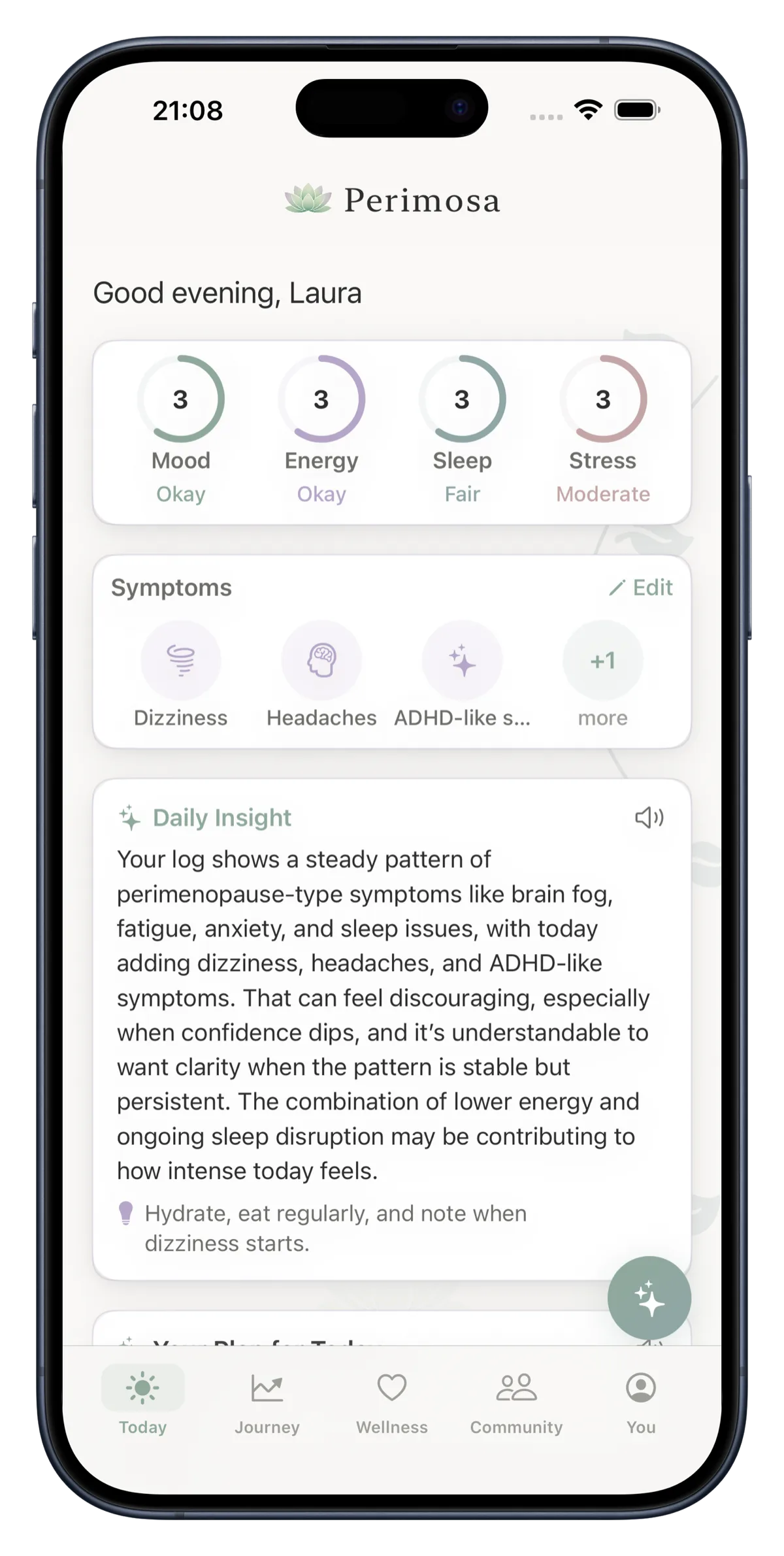
- Start tracking now. The sooner you begin logging symptoms, the faster you will see patterns and have data for your doctor. Perimosa makes daily tracking simple and is designed specifically for the perimenopause experience.
- Find a knowledgeable provider. Look for a doctor who specializes in menopause or reproductive endocrinology. The North American Menopause Society (NAMS) has a certified practitioner directory.
- Get baseline testing. Even if results are "normal," having baseline hormone and bone density numbers is valuable for tracking changes over time.
- Prioritize bone and heart health. Weight-bearing exercise, calcium, vitamin D, and cardiovascular fitness matter even more when perimenopause starts early.
- Consider your fertility plan. If you want children, consult a fertility specialist about your timeline and options.
The Bottom Line
Perimenopause in your 30s is uncommon but not rare. If your symptoms feel hormonal and the timing does not match what you expected, trust your instincts. You know your body. Early perimenopause is manageable, but it benefits from early recognition and proactive planning. Do not let anyone tell you that you are too young — the research says otherwise.