Perimenopause symptoms at 40 are more common than most women realize.
Perimenopause symptoms at 40 are the physical and emotional changes that occur as your body begins the transition toward menopause, which most commonly starts in the early to mid-40s but can begin in the late 30s. Perimosa helps women in their 40s track and understand these changes from the very first signs.
If you are around 40 and noticing changes you cannot explain, you are not imagining things and you are not too young. The average age of perimenopause onset is 40 to 44, and some women begin experiencing symptoms in their late 30s. The problem is that many women, and even some doctors, do not recognize early perimenopause symptoms for what they are. Changes get attributed to stress, aging, or lifestyle when they may actually be the first signs of a hormonal transition that will unfold over several years.
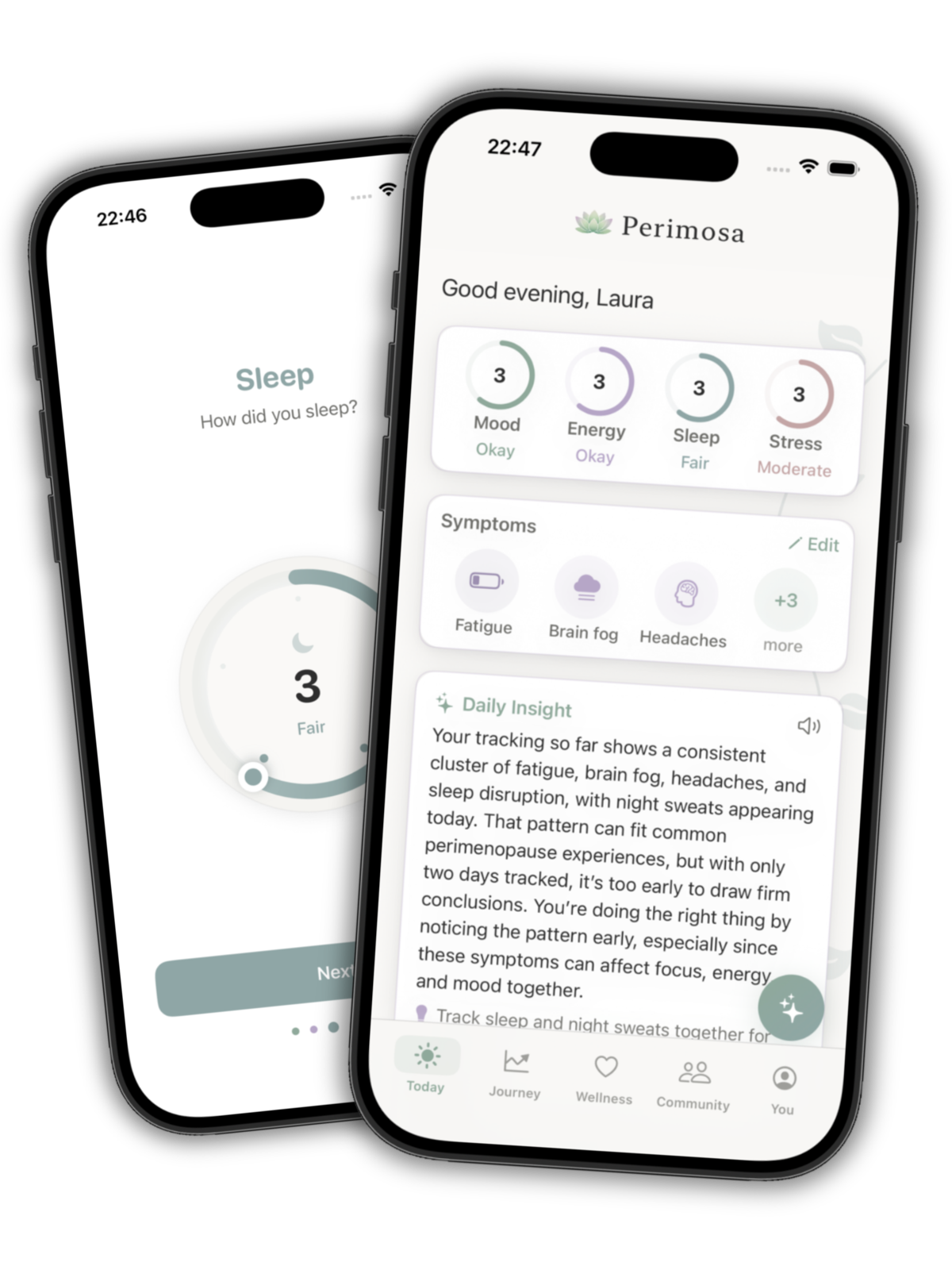
Tracking Perimenopause in Your 40s
Track Early Signs
Log subtle changes like cycle length shifts, new sleep patterns, increased anxiety, and energy fluctuations that may be the first signs of perimenopause in your 40s.
AI Pattern Detection
Perimosa's AI can spot early patterns that confirm perimenopausal changes before they become obvious, giving you awareness and understanding sooner.
Symptom Timeline
Build a timeline of how your symptoms evolve month over month. See the progression of your perimenopause experience rather than just isolated bad days.
Learn What to Expect
Access expert-reviewed articles about perimenopause in your 40s. Understand what is normal, what deserves medical attention, and what tools can help.
What Are the First Signs of Perimenopause at 40?
The earliest perimenopause symptoms are often subtle and easily attributed to other causes. Your menstrual cycle might start getting slightly shorter, moving from 28 days to 25 or 26. You might notice more intense PMS symptoms than you used to have. Sleep might become lighter or more disrupted without an obvious cause. Anxiety or irritability might appear or intensify. You might experience occasional night sweats or episodes of feeling flushed. Brain fog, fatigue that does not match your activity level, and changes in libido are also common early signs. Individually, each of these can be dismissed. Together, they often paint a clear picture of early perimenopause.
Why Perimenopause Gets Missed at 40
Many women in their early 40s do not consider perimenopause because they associate menopause with being older. Some healthcare providers also underestimate how early the transition can begin, leading to dismissal of symptoms or misattribution to stress and anxiety disorders. Additionally, perimenopause does not arrive all at once. It begins gradually, with symptoms that wax and wane. You might have a month of disrupted sleep followed by two months of feeling fine, which makes it hard to see the pattern without tracking. By the time symptoms become unmistakable, many women have spent months or years confused about what was happening. Starting to track early gives you clarity and agency from the beginning.
How Tracking at 40 Helps You Long Term
Starting to track your symptoms in your early 40s gives you a significant advantage. You build a baseline before symptoms intensify, so you can see changes clearly as they develop. You accumulate months or years of data that becomes incredibly valuable for healthcare conversations. You learn your personal patterns early, which helps you adapt proactively rather than reactively. And you develop a daily habit of checking in with yourself that supports your wellbeing throughout the entire transition. Women who start tracking early consistently report feeling more prepared and less anxious about perimenopause because they understand what is happening in their bodies.
What women are saying
“At 41, my doctor told me I was too young for perimenopause. But my cycles were getting shorter, my sleep was falling apart, and I had anxiety for the first time in my life. Perimosa showed me the patterns and gave me the data I needed to go back and advocate for myself.”
Rachel, 41
Tracking for 2 months
Frequently Asked Questions
Can you be in perimenopause at 40?+
Yes. The most common age range for perimenopause onset is 40-44, though some women begin experiencing symptoms in their late 30s. If you are noticing changes in your cycle, sleep, mood, or energy in your early 40s, perimenopause is a likely explanation.
What are the first symptoms of perimenopause?+
Early symptoms often include shorter menstrual cycles, more intense PMS, lighter or heavier periods, new or increased anxiety, sleep disruptions, occasional hot flashes or night sweats, brain fog, fatigue, and mood changes. These symptoms may be subtle at first and can come and go.
How do I know if it is perimenopause or something else?+
Tracking your symptoms over time is one of the most reliable ways to identify perimenopause. When multiple symptoms appear or intensify together, especially cycle changes combined with sleep disruption, mood shifts, and vasomotor symptoms, perimenopause is likely. A healthcare provider can also help with assessment, and tracked data makes those conversations more productive.
Should I see a doctor about perimenopause at 40?+
A healthcare visit is recommended if symptoms are affecting your quality of life or if you want to discuss management options. Bringing tracked symptom data from Perimosa helps your provider understand your experience clearly. Note that standard blood tests are not always reliable for diagnosing perimenopause, as hormone levels fluctuate significantly during this stage.
How long does perimenopause last if it starts at 40?+
Perimenopause typically lasts 4-10 years, with the average being about 7 years. If it begins around 40, the transition usually continues into your late 40s or early 50s. The experience varies significantly from person to person, which is another reason why personal tracking is valuable.
You are not too young and you are not imagining it
Start tracking today and see what your body is telling you. Perimosa is free to download.
Free on iOS · Android
Perimosa is a tracking and awareness tool, not a diagnostic tool. If you suspect you are in perimenopause, consult a healthcare provider for personalized guidance.