Hair changes during perimenopause are one of the symptoms women find most distressing — and one of the least talked about. Your part may widen. The crown thins. Hair feels less full. Strands collect in the shower drain. According to the American Academy of Dermatology, hormonal hair loss affects roughly 40% of women during the menopausal transition. The good news: it's often treatable, and understanding why it happens is the first step toward addressing it.
This article is for informational purposes only and is not medical advice. Always consult a healthcare provider about hair loss, especially if it's severe or sudden.
Why hair changes during perimenopause
Hair growth cycles through three phases: anagen (growth), catagen (transition), and telogen (rest). At any given time, about 85-90% of your hairs are in the growth phase. Estrogen extends the growth phase, keeping hair on your head longer. Progesterone supports the same effect. As both decline during perimenopause, more hairs shift into the resting and shedding phases. The balance of estrogen relative to androgens (testosterone and related hormones) also shifts — relative androgen excess can miniaturize hair follicles, producing the thinner, weaker hair characteristic of female pattern hair loss.
This isn't a moral failing or a sign you're "doing something wrong." It's biology responding to hormonal change.
Where the hair loss shows up
Hormonal hair loss in perimenopause typically follows recognizable patterns:
- Widening part line. The most common early sign. Your part appears wider than before, especially at the crown.
- Crown thinning. Hair density decreases at the top of the head. The scalp may show through more visibly.
- Frontal thinning. Some women notice thinning at the temples or hairline.
- Diffuse thinning. Overall density decreases across the entire scalp rather than in specific patches.
- Increased shedding. More hair in the brush, shower drain, and on your pillow.
Hair texture also commonly changes: strands may become finer, more brittle, slower to grow, and less able to hold styles or color.
How to tell if it's hormones or something else
Several conditions cause hair loss and require different treatment. Worth ruling out before assuming it's "just perimenopause":
- Iron deficiency / low ferritin. Common in women with heavy perimenopausal bleeding. Ferritin below 50 ng/mL often correlates with hair shedding even if hemoglobin is normal.
- Thyroid dysfunction. Both hyper- and hypothyroid states cause hair loss. Frequently undiagnosed in perimenopausal women.
- Vitamin D deficiency. Very common; affects hair follicle cycling.
- Telogen effluvium. Sudden, massive shedding (often 3 months after a stressor — illness, major weight loss, surgery, severe emotional event).
- Alopecia areata. Patchy hair loss in distinct circles, autoimmune in origin.
- Scarring alopecia (lichen planopilaris, frontal fibrosing alopecia). Can emerge during perimenopause; requires prompt dermatology referral.
- Medication effects. Some antidepressants, blood pressure medications, and others.
Request blood work: complete blood count, ferritin, TSH with free T3 and T4, vitamin D 25-OH, B12, zinc. If your hair loss is sudden, patchy, asymmetric, or accompanied by scalp itching, redness, or scarring, see a dermatologist.
Treatments that actually work
Minoxidil (topical)
The most-studied treatment for female pattern hair loss. Available over-the-counter as 2% or 5% solution / foam. Applied daily to the scalp, it extends the hair growth phase and increases follicle size. Expect 4-6 months of consistent use before seeing meaningful results. Initial "shed" in the first 2-4 weeks is normal — your scalp is shedding resting hairs to make way for new growth.
Side effects are mild for most users: occasional scalp itch or dryness. Some women see better results with 5% than 2%. If you stop using minoxidil, the benefit gradually reverses over 6-12 months — it's a maintenance treatment, not a cure.
Addressing nutrient deficiencies
If your blood work showed low ferritin, vitamin D, B12, or zinc, treating these often produces visible improvement within 3-6 months. NIH guidance recommends working with a doctor to dose iron correctly — too much iron is harmful, and supplementation strategy depends on cause and severity of deficiency.
Hormone replacement therapy
For women already considering HRT for other perimenopause symptoms, the hair improvement can be a meaningful side benefit. HRT doesn't reverse genetic female pattern hair loss, but it can slow hormonally-driven thinning and improve hair density and quality in many women. Discuss with a menopause-trained doctor whether HRT makes sense given your symptoms and risk factors. The Menopause Society's 2022 HRT position statement is the current standard reference.
Anti-androgens (in specific cases)
For women with female pattern hair loss confirmed by a dermatologist, prescription anti-androgens like spironolactone may be appropriate. Requires medical supervision and monitoring.
Low-level laser therapy
FDA-cleared laser devices (caps, helmets, combs) have modest evidence for stimulating hair growth. Less robust than minoxidil but a useful adjunct. Devices are expensive but effects accumulate over months.
Platelet-rich plasma (PRP) injections
Increasingly used by dermatologists for female pattern hair loss. Evidence is moderate. Requires multiple sessions and isn't covered by insurance. Worth discussing with a dermatologist if other approaches haven't worked.
What's overhyped
- Biotin supplements at megadoses. Biotin only helps if you're deficient. Most women aren't. High-dose biotin can interfere with some lab tests (thyroid, cardiac markers).
- "Hair growth" multivitamins. Most contain biotin and a kitchen sink of low-dose ingredients. Save your money unless blood work shows specific deficiencies.
- Castor oil, rosemary oil, other DIY topicals. Anecdotal benefit at best. Some emerging evidence for rosemary oil but not as effective as minoxidil.
- "Scalp detox" treatments. Healthy scalp matters, but no "detox" reverses hormonally-driven hair loss.
Hair care practices that help
- Avoid tight hairstyles and aggressive brushing that increase mechanical shedding
- Wash hair less frequently if texture allows — over-washing dries out thinning hair further
- Use gentle, sulfate-free shampoos and conditioners
- Skip heat styling when possible, or use low heat with thermal protection
- Eat adequate protein (100g+ daily) — hair is largely made of keratin
- Treat your scalp as skin: keep it clean, hydrated, and protected from sun
The Bottom Line
Hair thinning affects roughly 40% of perimenopausal women and is driven primarily by declining estrogen and progesterone alongside relative androgen excess. The good news: it's often treatable. Rule out treatable causes through blood work (iron, thyroid, vitamin D, B12). Use minoxidil consistently for at least 4-6 months. Address deficiencies. Consider HRT if appropriate for your overall symptom picture. See a dermatologist for severe, sudden, or patchy loss. Skip the hyped-up biotin and "hair growth" multivitamins unless you're deficient.
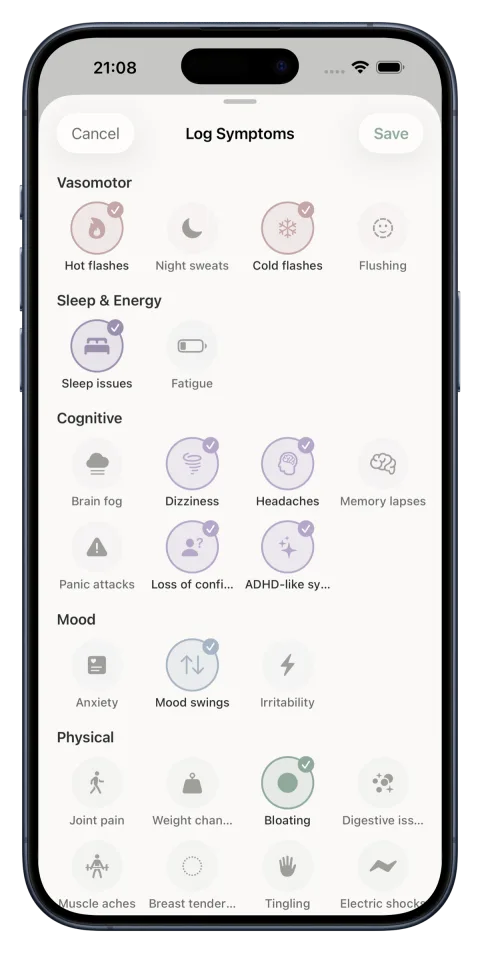
And track when the shedding started, what other symptoms appeared with it, and whether interventions are actually working. Hair takes 4-6 months to respond to treatment — without tracking, you'll never know what's helping.