Vaginal dryness is one of the most common perimenopause symptoms — and one of the least talked about. Women often suffer with it for years before mentioning it to a doctor, and many never bring it up at all. The result is unnecessary discomfort, painful intercourse, relationship strain, and increased UTI risk that all could be addressed with available treatments. According to The Menopause Society, roughly 40% of perimenopausal women experience symptoms, and the prevalence rises steadily through postmenopause.
This article is for informational purposes only and is not medical advice. Always consult a healthcare provider about your specific symptoms and treatment options.
Why declining estrogen causes vaginal dryness
The tissues of the vagina and vulva are estrogen-dependent. Throughout the reproductive years, estrogen maintains:
- Tissue thickness and elasticity
- Blood flow to the area
- Natural lubrication production
- An acidic pH that supports healthy microbiome
- Glycogen production that feeds beneficial lactobacilli
As estrogen declines during perimenopause, all of these begin to shift. Tissues become thinner and more fragile. Blood flow decreases. Natural lubrication drops. The pH becomes more alkaline, which changes the microbiome and increases susceptibility to UTIs and infections. This collection of changes has a formal name: genitourinary syndrome of menopause (GSM). It's progressive — symptoms typically worsen over years if untreated.
How vaginal dryness shows up
Symptoms range from mild to significantly disruptive:
- General vaginal discomfort. A persistent dry, irritated, or itchy feeling.
- Painful intercourse (dyspareunia). Burning, tearing, or stinging during or after sex. This is one of the most common reasons women avoid intimacy in perimenopause.
- Reduced sexual response. Less arousal lubrication. Sex that used to feel pleasurable becomes uncomfortable.
- Urinary symptoms. Increased UTIs, urinary urgency, leakage, burning with urination. The bladder and urethra share tissue characteristics with the vagina and are affected by the same estrogen decline.
- Light bleeding or spotting. Fragile tissues can bleed after intercourse or even pelvic exams.
- Pelvic floor changes. Tissue thinning can affect pelvic floor support and contribute to incontinence.
Many women dismiss early symptoms as stress, low libido, or relationship issues — when the underlying cause is hormonal tissue change that responds well to treatment.
Treatments that actually work
Vaginal moisturizers
Used regularly (every 2-3 days), vaginal moisturizers maintain tissue hydration over time. They're hormone-free and available over the counter. Look for products without fragrances, glycerin (which can irritate), or parabens. Brand examples include Replens, Hyalo Gyn, and Revaree (hyaluronic acid suppositories). Apply at bedtime so the product has time to absorb.
Lubricants for intimacy
Lubricants reduce friction during sex but don't address the underlying tissue changes. They're useful in addition to moisturizers, not as replacements. Choose water-based or silicone-based products without flavors, warming/cooling additives, or glycerin. Silicone lubricants last longer but can degrade silicone toys. Avoid coconut oil and other DIY options if you use latex condoms — oils degrade latex.
Low-dose vaginal estrogen (the most effective treatment)
For most women with significant symptoms, low-dose vaginal estrogen is the gold standard. Available as creams (Estrace, Premarin), tablets (Vagifem, Yuvafem), or rings (Estring). It directly restores vaginal tissue health, lubrication, pH, and microbiome over 8-12 weeks of use.
According to the 2022 Menopause Society position statement, vaginal estrogen is considered safe for most women including many who cannot use systemic HRT — because systemic absorption is minimal. Even many breast cancer survivors can use it after consultation with their oncologist. This is one of the most undertreated symptoms in women's health: an effective, safe treatment exists, but cultural taboo keeps many women from asking for it.
DHEA suppositories (prasterone, brand name Intrarosa)
FDA-approved for moderate-to-severe dyspareunia. A daily vaginal insert that converts locally to estrogen and testosterone. Useful alternative for women who prefer not to use estrogen directly.
Ospemifene (Osphena)
An oral SERM (selective estrogen receptor modulator) FDA-approved for moderate-to-severe dyspareunia. Acts like estrogen on vaginal tissue but not on breast or uterine tissue. Useful for women who can't use vaginal estrogen.
Pelvic floor physical therapy
Often underused but highly effective for many women. A pelvic floor physical therapist can address tissue mobility, scar tissue, muscle tension contributing to pain, and pelvic floor weakness affecting urinary symptoms. Ask your doctor for a referral if pain persists despite topical treatments.
Hormone replacement therapy (systemic)
For women already considering systemic HRT for other symptoms, the vaginal benefit is meaningful. However, systemic HRT alone often doesn't fully resolve vaginal symptoms — many women on systemic HRT still need topical vaginal estrogen for full resolution. The two are complementary, not redundant.
What's less effective or worth skipping
- Vaginal "rejuvenation" laser treatments (MonaLisa, FemiLift, etc.). Mixed evidence. The FDA has cautioned that benefits are unclear and risks include scarring and chronic pain. Don't choose these over established treatments.
- "Yoni" steaming. No evidence of benefit. Risks include burns and microbiome disruption.
- Phytoestrogen creams marketed as "natural HRT". Inconsistent dosing and weak evidence compared to regulated vaginal estrogen.
- Tightening creams or "rejuvenating" gels. Most are moisturizers with marketing. The moisturizing effect is real, but you're paying premium for what generic moisturizers do.
Why this symptom particularly deserves treatment
Other perimenopause symptoms (hot flashes, mood changes) often improve once you reach postmenopausal hormonal stability. Vaginal symptoms typically continue or worsen indefinitely without treatment — because the underlying cause (low estrogen) doesn't go away. Untreated GSM accelerates: tissue changes compound over years, intimacy becomes increasingly painful, relationships strain, UTIs recur. The earlier you treat, the easier the trajectory.
And the conversation gets easier to start than most women fear. A simple opening: "I'm having vaginal dryness and painful intercourse. I'd like to discuss treatment options including vaginal estrogen." Doctors with menopause training will take this seriously. If yours dismisses it or seems uncomfortable, find a menopause-trained doctor through the Menopause Society practitioner directory.
The Bottom Line
Vaginal dryness affects roughly 40% of perimenopausal women and continues to increase in postmenopause. Unlike many perimenopause symptoms, it typically worsens with time rather than improving — making early treatment important. Vaginal moisturizers, lubricants, and low-dose vaginal estrogen are highly effective. Pelvic floor physical therapy helps when muscle tension or pain persists. The treatments work; the barrier is usually starting the conversation.
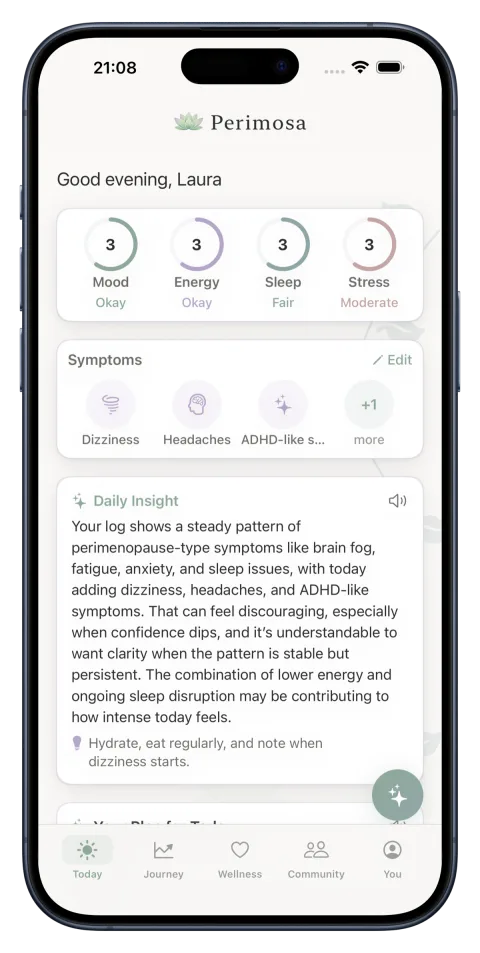
Track your symptoms — including intimate health — so you have specific information for your doctor visit. Cultural silence around this topic costs women years of unnecessary discomfort and damaged relationships. Effective treatment is available; ask for it.