About 75% of women experience hot flashes during perimenopause and menopause, making them the single most common symptom of the transition. They are also one of the most disruptive — affecting sleep, work performance, mood, and confidence. The good news: hot flashes are extremely well-studied, and there are several effective treatments. This guide covers the science of why they happen, how long they typically last, what triggers them, and the full range of treatment options.
This article is for informational purposes only and is not medical advice. Always consult a healthcare provider about your symptoms.
What Is a Hot Flash, Physiologically?
A hot flash is a sudden, intense sensation of heat — typically starting in the chest and spreading to the neck and face — accompanied by sweating, rapid heartbeat, sometimes chills as the body cools, and occasionally a brief feeling of anxiety. Most last 1-5 minutes; some up to 10. They can happen at any time of day or night.
The physiological cascade:
- The hypothalamus (your brain's thermostat) misreads your core body temperature as too hot
- It activates heat-dissipation responses: blood vessels in the skin dilate (causing flushing), sweat glands activate
- Heart rate often rises (sometimes triggering palpitations as a side effect)
- As sweat evaporates and blood pools at the skin, body temperature actually drops
- Many women experience chills afterward as the body overcorrects
Why Does Estrogen Cause This?
The hypothalamus maintains a "thermoneutral zone" — a range of body temperature within which no heat-dissipation or heat-conservation response is triggered. Normally this zone is fairly wide.
During perimenopause and menopause, fluctuating estrogen affects KNDy neurons in the hypothalamus (kisspeptin/neurokinin B/dynorphin) that regulate this zone. Lower estrogen narrows the zone dramatically — sometimes to less than 0.1°C. A tiny rise in core body temperature, which normally would go unnoticed, now triggers a full heat-dissipation response.
This is also why the new drug fezolinetant works: it blocks the neurokinin-3 receptor on those KNDy neurons, restoring the wider thermoneutral zone without using hormones.
How Long Do Hot Flashes Last?
The single hot flash and the phase-of-life duration are two different questions.
Per episode: 1-5 minutes typical, up to 10 minutes in severe cases.
As a phase of life: The landmark SWAN study (Study of Women's Health Across the Nation) tracked over 3,000 women for 17 years. Findings:
- Median total duration: 7.4 years
- 10-15% of women still have hot flashes 10+ years after their final period
- Black women have longer durations (median 10.1 years) than other ethnic groups
- Women whose hot flashes start in early perimenopause typically have the longest courses
Frequency typically peaks in the year before and the year after the final menstrual period. After that, hot flashes gradually become less frequent and less intense over the next several years.
Common Triggers
Hot flashes happen spontaneously, but certain triggers reliably increase frequency:
- Heat and warm rooms. Any small bump in body temperature can be enough.
- Spicy foods. Capsaicin activates heat-sensing receptors.
- Caffeine. Increases heart rate and core temperature.
- Alcohol. Particularly red wine. Causes vasodilation.
- Sugar and refined carbs. Blood sugar swings increase adrenaline.
- Stress and strong emotions. Adrenaline release narrows the thermoneutral zone further.
- Tight clothing and synthetic fabrics. Trap heat.
- Smoking. Smokers have more frequent and more severe hot flashes; quitting reduces them within months.
Hot Flashes vs. Night Sweats
These are the same physiological event. A "night sweat" is just a hot flash that happens while you're asleep. The clinical importance: night sweats often fragment sleep architecture without fully waking you, leading to chronic sleep deprivation that drives many secondary symptoms — brain fog, fatigue, mood instability, weight gain.
Quick check: if you wake up to find your pajamas, sheets, or pillow damp, you've had a night sweat. If you wake up feeling unrefreshed despite 7-8 hours in bed, undetected night sweats may be the reason.
Hot Flashes During the Day vs. at Night
| Aspect | Daytime hot flashes | Night sweats |
|---|---|---|
| Peak timing | Often morning + late afternoon | Often 2-4 a.m. |
| Awareness | Fully aware, often disruptive socially | May not fully wake; fragments sleep silently |
| Triggers | Stress, food, drink, environment | Cortisol rhythm, bedding warmth, alcohol |
| Downstream effects | Productivity, social anxiety | Daytime fatigue, brain fog, mood |
Treatment: What Actually Works
Hormone Therapy (Gold Standard)
Estrogen replacement reduces hot flash frequency by 75-90% within 4-12 weeks. Combined with progesterone if you have a uterus. This is the most effective treatment available. For appropriate candidates (most women under 60 or within 10 years of menopause), benefits outweigh risks. See our HRT guide for the full picture on safety, types, and the WHI confusion.
Non-Hormonal Prescription Options
- Paroxetine (Brisdelle) 7.5 mg. The only FDA-approved non-hormonal treatment specifically for hot flashes. SSRI at sub-antidepressant dose. Reduces hot flashes by ~50-60%.
- Venlafaxine (Effexor) 37.5-75 mg. SNRI. Reduces hot flashes by ~50%. Also helps with associated anxiety.
- Gabapentin 300-900 mg/day. Especially useful for night sweats since it also helps sleep.
- Clonidine 0.1 mg/day. Blood pressure medication that reduces hot flashes by ~30-40%. Lower-line option due to side effects.
- Fezolinetant (Veozah) 45 mg/day. Approved 2023. The first neurokinin-3 receptor antagonist. Non-hormonal, targets the underlying brain mechanism. Reduces moderate-to-severe hot flashes by 60-65% in clinical trials.
Cognitive Behavioral Therapy
Surprisingly effective. CBT-based interventions reduce the bother and frequency of hot flashes by ~30% in randomized trials. Works by changing the cognitive and emotional response to the physical sensation. Particularly helpful if anxiety amplifies your hot flash experience.
Lifestyle Strategies That Have Evidence
- Cool the environment. Keep bedroom at 65-68°F. Layer clothing for easy removal. Use a personal fan.
- Paced breathing. Slow, deep abdominal breathing (6 breaths per minute) twice daily reduces hot flash frequency by 30-50% in some studies.
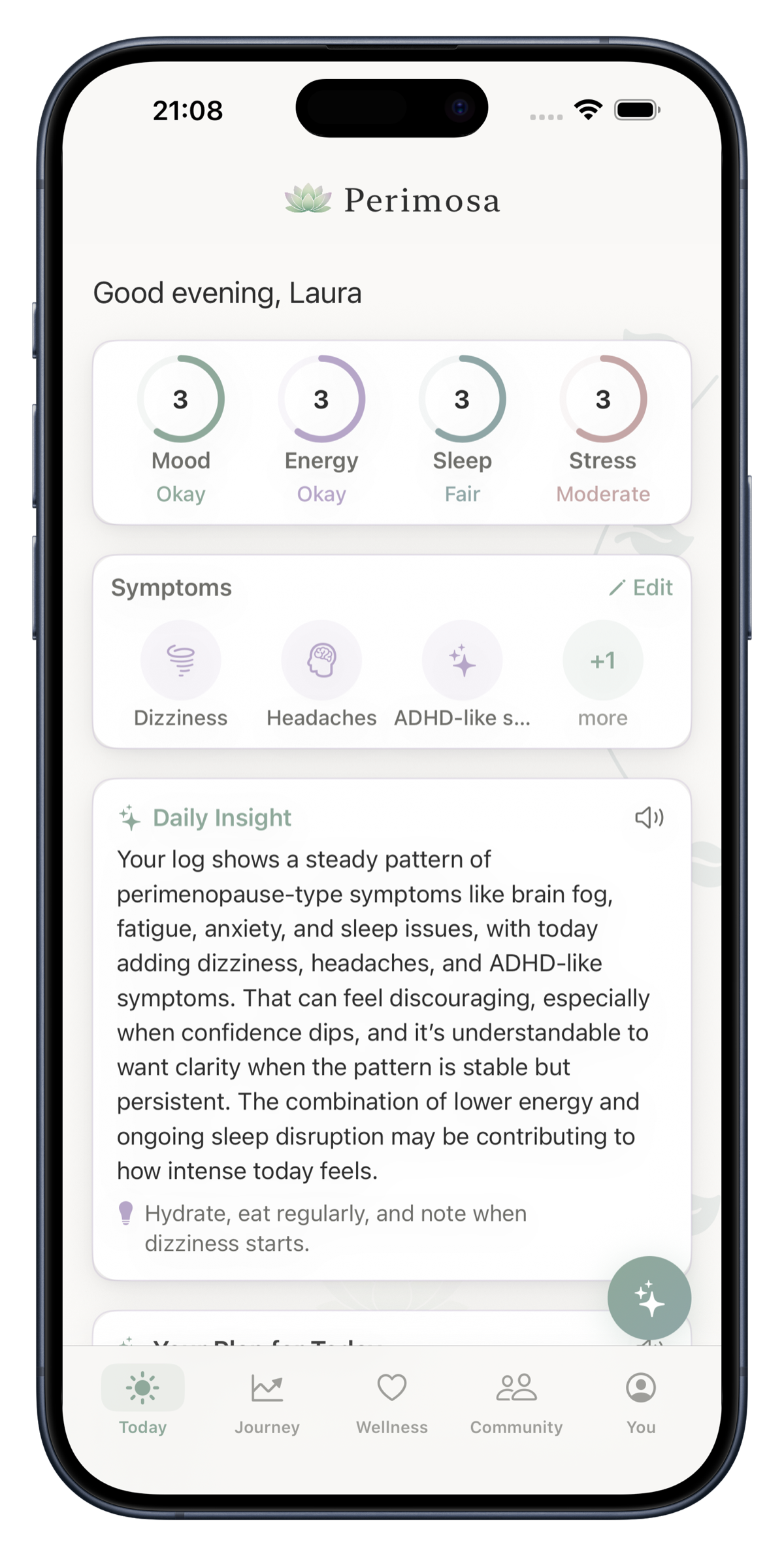
- Identify and avoid your triggers. Logging hot flashes alongside food, drink, stress, and cycle phase reveals personal triggers. Perimosa makes this kind of multi-variable tracking simple.
- Maintain a healthy weight. Higher BMI correlates with more severe hot flashes; weight loss reduces them.
- Regular exercise. 150 minutes/week of moderate activity. Note: exercise can transiently increase hot flashes immediately after, but improves them overall.
- Stress management. Mindfulness, yoga, progressive muscle relaxation.
What Has Weaker or Mixed Evidence
- Black cohosh: Some studies positive, others null. May help mild hot flashes. Liver safety concerns in rare cases.
- Phytoestrogens (soy isoflavones, red clover): Modest effect in some women, none in others. Possibly genetics-dependent.
- Acupuncture: Some randomized trials show modest benefit; others do not.
- Vitamin E: Slight benefit in studies but the effect is small (about 1 fewer flash per day).
When to See a Doctor About Hot Flashes
Hot flashes themselves are not dangerous but warrant a medical conversation when:
- They are significantly affecting your sleep, work, or quality of life
- They are accompanied by chest pain, rapid heart rate that doesn't settle, or fainting
- They started suddenly and severely without obvious perimenopause context
- They continue intensely for more than 5-7 years after your final period
- You're under 40 and having them (could indicate premature menopause)
Sudden severe hot flashes can occasionally signal thyroid disease, certain cancers, or other endocrine conditions — worth ruling out if the pattern doesn't fit typical perimenopause.
Tracking Hot Flashes: Why It Matters
Hot flash patterns are highly individual. Women who track theirs typically discover:
- A daily rhythm (often worst late afternoon and early morning)
- Cycle-phase variation (worst in late luteal phase when estrogen drops)
- Specific food/drink triggers that are personal to them
- Sleep-quality correlation (worse sleep → more next-day flashes)
- Stress amplification effect
This is data your doctor can use. A treatment conversation goes much further when you can say "I have 8-12 flashes per day, worst between 4-6 PM, worse in the week before my period, and they wake me 2-3 times per night" than "I get hot flashes."
The Bottom Line
Hot flashes are the most common perimenopause symptom — about 75% of women experience them, with a median total duration of 7.4 years. The mechanism is well-understood: fluctuating estrogen narrows the brain's thermoregulatory zone. Treatment options are extensive: hormone therapy remains gold standard for those who can use it, but non-hormonal options (paroxetine, venlafaxine, gabapentin, the newer fezolinetant) are effective for those who can't. Lifestyle changes — cool environments, paced breathing, trigger identification — add real benefit. If hot flashes are disrupting your life, you have options.