"Menopause symptoms" covers a vast and often confusing landscape — over 30 recognized changes that affect nearly every body system, varying dramatically from woman to woman and across the stages of the transition. This guide is the comprehensive overview: what symptoms occur, why, when to expect them, how to recognize them, and what actually helps. Whether you're in early perimenopause noticing subtle changes or postmenopausal still managing symptoms, this covers what you need to know.
This article is for informational purposes only and is not medical advice. Always consult a healthcare provider about your specific symptoms.
First: understanding the stages
"Menopause symptoms" technically describes the experience across three stages, not just one. Knowing which stage you're in determines which symptoms are typical and which treatments are appropriate.
Perimenopause (the 4-8 year transition before menopause)
The phase when ovarian function gradually declines. Hormones fluctuate wildly. Most symptoms women associate with "menopause" actually emerge during perimenopause. Average age range: 40-50, though it can start as early as the late 30s.
Menopause (a single retrospective day)
Defined as exactly 12 consecutive months after your final menstrual period. Average age: 51-52 in the US, with normal range 45-55. Before 45 is early menopause; before 40 is premature ovarian insufficiency.
Postmenopause (the rest of life)
The years following menopause. Hormones stabilize at low baseline. Some symptoms improve (mood often stabilizes); others persist or worsen (vaginal, urinary, bone density).
According to The Menopause Society, this framework helps determine appropriate treatments — what makes sense in perimenopause differs from postmenopausal interventions.
The full range of menopause symptoms
Menstrual changes (4 symptoms — perimenopause only)
- Irregular periods. Cycle length variability, the most common early sign. Affects 90%+ of women.
- Heavier periods. Fluctuating estrogen can build up the uterine lining.
- Lighter periods. Some cycles produce very light flow.
- Spotting between periods. Becomes more common as ovulation becomes less predictable.
Vasomotor symptoms (3 symptoms)
- Hot flashes. Sudden waves of heat, usually starting in chest or face. Affect about 75% of women.
- Night sweats. Hot flashes during sleep, often drenching. Fragment sleep architecture.
- Cold flashes. Less discussed but common. Sudden chills, sometimes following hot flashes.
Sleep symptoms (3 symptoms)
- Insomnia. Affects 40-60% of women during the transition.
- Restless sleep. Sleep quality declines even when duration is normal.
- Sleep apnea onset or worsening. Risk increases during perimenopause due to multiple factors.
Mood and emotional symptoms (6 symptoms)
- Anxiety. New-onset or worsening. Common, often missed.
- Depression. Risk doubles to quadruples during the transition.
- Irritability and rage. Sudden anger disproportionate to triggers.
- Mood swings. Rapid emotional shifts.
- Crying spells. Unexpected tears.
- Low motivation or anhedonia. Reduced drive, pleasure flatness.
Cognitive symptoms (3 symptoms)
- Brain fog. Difficulty concentrating, fuzzy thinking.
- Memory lapses. Forgetting words, names, why you walked into a room.
- Difficulty finding words. "On the tip of my tongue" experience.
Physical symptoms (9 symptoms)
- Joint pain and stiffness. Affects about 50% of women.
- Muscle aches. Generalized body soreness.
- Headaches and migraines. Often worsen with hormonal fluctuation.
- Heart palpitations. Benign but alarming racing or fluttering.
- Digestive changes. Bloating, gas, motility shifts.
- Weight gain, especially abdominal. Affects about 60% of women.
- Breast tenderness. Sore or swollen breasts.
- Dizziness. Brief lightheadedness or vertigo.
- Tinnitus. Ringing or buzzing in ears.
Skin, hair, and tissue changes (4 symptoms)
- Dry skin. Reduced collagen and hydration.
- Hair thinning. About 40% of women experience this.
- Vaginal dryness. About 40% in perimenopause, more in postmenopause.
- Changes in body odor. Hormonal effect on sweat composition.
Sexual and urinary symptoms (3 symptoms)
- Reduced libido. Multiple causes — hormonal, vaginal, mood, fatigue.
- Urinary frequency or urgency. Tissue thinning affects bladder and urethra.
- Increased UTIs. pH changes reduce protective microbiome.
Other symptoms (2 symptoms)
- Electric shock sensations. Brief buzzing under skin.
- Burning mouth or tongue. Less common but recognized symptom.
That's roughly 37 documented symptoms (often referenced as "34 symptoms" historically). Most women experience 8-15 simultaneously. No woman experiences all of them.
When each symptom typically appears
Early perimenopause (years 1-3 of transition)
Subtle and easy to miss:
- Cycle length variability
- Intensifying PMS
- Mild sleep changes
- Occasional mood shifts
- Mild brain fog episodes
- Anxiety appearing or worsening
- Breast tenderness intensifying
Mid-perimenopause (years 3-5)
More noticeable, multiple symptoms together:
- Hot flashes and night sweats begin
- More frequent sleep disruption
- Mood swings intensify
- Joint pain emerges
- Weight changes accelerate
- Skin and hair changes appear
Late perimenopause (years 5-8, often the hardest phase)
Peak symptom intensity for most women:
- Hot flashes and night sweats most frequent and severe
- Sleep at worst
- Mood instability most volatile
- Brain fog peaks
- Vaginal dryness becomes noticeable
- Cycles increasingly irregular with long gaps
Early postmenopause (first 5 years after final period)
Some symptoms improve, others persist or worsen:
- Hot flashes typically continue but gradually decrease
- Mood often stabilizes
- Brain fog improves for many women
- Vaginal and urinary symptoms often worsen
- Bone density loss accelerates
- Cardiovascular risk increases
Late postmenopause (5+ years out)
Long-term considerations:
- Most vasomotor symptoms significantly diminished
- Genitourinary symptoms persist without treatment
- Bone, cardiovascular, and cognitive health become priority focus
Why symptoms vary so dramatically between women
Factors influencing symptom severity and duration:
- Genetics. Strongest predictor. Your mother's experience is roughly predictive.
- Ethnicity. African American and Hispanic women tend toward longer, more severe vasomotor symptoms.
- BMI. Higher BMI is associated with more frequent vasomotor symptoms.
- Smoking. Worsens hot flashes and accelerates the transition.
- Age of onset. Earlier onset often means longer overall transition.
- Prior mental health history. History of severe PMS, postpartum depression, mood disorders predicts more severe perimenopausal mood symptoms.
- Stress and life circumstances. High-stress periods amplify all symptoms.
- Other medical conditions. Thyroid issues, autoimmune conditions, sleep apnea all affect symptom experience.
- Lifestyle. Sleep quality, exercise, nutrition, alcohol use all influence severity.
What's typical vs what warrants medical evaluation
Typical and manageable with foundation strategies
- Cycle variability of 7+ days from your norm
- Hot flashes 1-10 daily
- Sleep disruption a few nights weekly
- Mood shifts that don't damage relationships
- Mild brain fog episodes
- Mild joint stiffness
- Gradual weight changes
- Mild vaginal dryness
Warrants medical evaluation
- Very heavy bleeding (soaking through protection hourly)
- Bleeding after sex
- Periods lasting more than 7 days
- Bleeding after 12 months without a period (postmenopausal bleeding)
- Hot flashes severely fragmenting sleep nightly
- Mood symptoms damaging relationships or work
- Suicidal thoughts
- Severe joint pain with swelling or asymmetry
- Heart palpitations with chest pain or shortness of breath
- Symptoms significantly impairing daily function
- Sudden severe symptoms suggesting non-hormonal causes
Treatment options across the stages
Foundation interventions (helpful at every stage)
- Strength training 2-3x weekly
- 150 minutes weekly moderate cardio
- Mediterranean-style eating
- Adequate protein (100g+ daily)
- Sleep optimization (cool bedroom, no late alcohol/caffeine)
- Daily stress management practice
- Reducing or eliminating alcohol
- Strong social connection
Targeted supplements
- Magnesium glycinate for sleep, anxiety, muscle tension
- Vitamin D after testing (target 40-60 ng/mL)
- Omega-3 (EPA/DHA) for inflammation and mood
- B-complex for energy
- Black cohosh specifically for hot flashes
The NCCIH evidence review covers what has solid evidence vs marketing claims.
Hormone replacement therapy (HRT)
Most effective treatment for moderate-to-severe vasomotor and mood symptoms. The 2022 Menopause Society Hormone Therapy Position Statement is the current standard reference. Best initiated within 10 years of menopause for women without contraindications.
Non-hormonal medical options
- Fezolinetant (Veozah) — FDA-approved for vasomotor symptoms
- Gabapentin — particularly for night sweats and sleep
- Low-dose SSRIs/SNRIs — for mood, hot flashes, or both
- Oxybutynin — for combined VMS and urinary symptoms
- Vaginal estrogen — for genitourinary symptoms, safe for most women including many who can't use systemic HRT
Therapy and behavioral interventions
- CBT (cognitive behavioral therapy) for mood symptoms
- CBT-I (CBT for insomnia) for sleep disruption
- Pelvic floor physical therapy for urinary and sexual symptoms
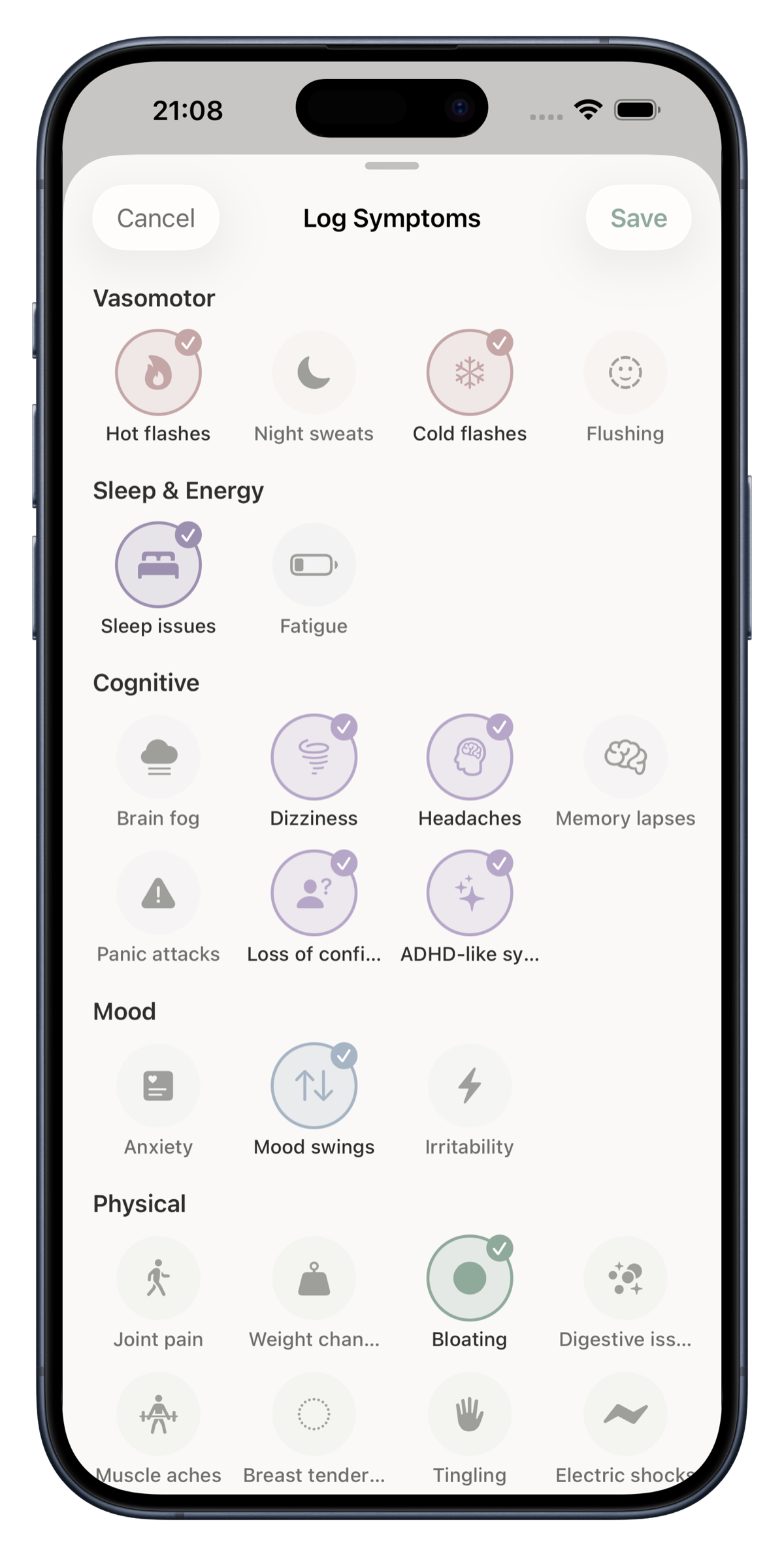
Why tracking symptoms matters across all stages
Symptoms vary day-to-day and week-to-week, especially during perimenopause. Without tracking, you can't tell:
- Which symptoms are most disruptive (often surprising when measured)
- What your personal triggers are
- Whether treatments are actually working
- How patterns connect (sleep predicting next-day mood, cycle phase predicting symptoms)
- Whether you're improving over months even when individual days feel hard
Tracking in Perimosa across years builds the longitudinal record that supports informed treatment decisions and clear conversations with your doctor.
The Bottom Line
Menopause symptoms span 30+ recognized changes across nearly every body system, driven by declining and fluctuating estrogen. Symptoms typically begin in perimenopause, peak in late perimenopause and early postmenopause, and gradually improve for most women — though some (especially vaginal and urinary) persist or worsen without treatment. Individual experience varies enormously based on genetics, ethnicity, BMI, smoking, prior mental health history, and lifestyle factors.
You don't have to suffer through it. Foundation strategies (sleep, exercise, diet, stress management) help everyone. Targeted supplements help with specific symptoms. Medical treatments including HRT, fezolinetant, SSRIs, and vaginal estrogen are highly effective for moderate-to-severe symptoms. The biggest mistake is suffering for years out of pride, dismissal, or not knowing what's available. Track your symptoms, find a menopause-trained doctor, and access the care that exists.