Few perimenopausal symptoms disrupt life as completely as night sweats. You wake at 3am drenched, throw off the covers, change into dry pajamas, lie there too alert to sleep. You're exhausted the next day. The next night it happens again. According to the Study of Women's Health Across the Nation (SWAN), roughly 75% of women experience vasomotor symptoms during the menopausal transition, and the duration averages 7-10 years. This guide covers why night sweats happen, what triggers them, what actually works, and what to do when natural approaches aren't enough.
This article is for informational purposes only and is not medical advice. Always consult a healthcare provider about your symptoms.
What are night sweats?
Night sweats are episodes of excessive sweating during sleep, often severe enough to soak through sleepwear or bedding. They're distinct from feeling slightly warm or sweating in a hot room — true night sweats happen even in a cool bedroom and typically wake you (or fragment your sleep without fully waking you).
Medical literature classifies night sweats as a vasomotor symptom — the same category as daytime hot flashes. The mechanism is essentially identical; the difference is that one happens while you're asleep. Many women experience both, though some have only night sweats (the body's narrower thermoneutral zone during sleep makes nighttime more vulnerable to temperature dysregulation).
Why declining estrogen causes night sweats
Your hypothalamus regulates body temperature with remarkable precision. Normally it tolerates a wide thermoneutral zone before triggering cooling (sweating, vasodilation) or warming (shivering, vasoconstriction) responses. Estrogen helps maintain this broad zone.
As estrogen fluctuates and declines during perimenopause and menopause, the thermoneutral zone narrows dramatically. The body interprets minor temperature changes — even the natural overnight drop in core temperature — as overheating. The hypothalamus triggers an immediate cooling response: blood vessels dilate (causing the flush), sweat glands activate (causing the drenching), heart rate increases. This produces the classic night sweat episode.
Research over the past decade identified specific brain cells called KNDy neurons that become hyperactive when estrogen drops, sending the temperature dysregulation signal. This discovery led to fezolinetant (Veozah), the first FDA-approved non-hormonal medication specifically targeting this pathway.
Why nighttime is particularly vulnerable
Three things make sleep especially susceptible to vasomotor episodes:
- Core body temperature naturally drops 1-2°F overnight as part of the sleep cycle. This narrows the thermoneutral zone further, making it easier to trip the cooling alarm.
- Reduced ability to compensate. Awake, you'd adjust clothing, move to a cooler room, or open a window before you reached the sweating threshold. Asleep, the body's behavioral options are gone.
- Hormonal fluctuations during REM and deep sleep stages coincide with the most dramatic temperature shifts. Many night sweats occur during these stages.
This is why women often report night sweats are worse than equivalently severe daytime hot flashes — they're harder to interrupt and they specifically damage sleep architecture.
How night sweats damage more than sleep
The downstream effects of night sweats compound over weeks and months:
- Sleep fragmentation. Even episodes that don't fully wake you cycle you out of deep restorative sleep into lighter stages, reducing overall sleep quality.
- Daytime fatigue. Chronic poor sleep creates a cumulative sleep debt that no single recovery night fixes.
- Cognitive impairment. Brain fog and memory problems are dramatically worse on poor sleep.
- Mood instability. Sleep deprivation amplifies anxiety, depression, and emotional reactivity.
- Relationship strain. Partners are affected by disturbed sleep, sheet changing, bedroom temperature compromises.
- Increased cardiovascular risk. Long-term sleep disruption is associated with higher cardiovascular event risk.
The Menopause Society now classifies severe vasomotor symptoms as a quality-of-life and possibly cardiovascular health issue, not just an annoyance — which has influenced treatment thresholds.
Triggers that worsen night sweats
While the underlying cause is hormonal, specific triggers reliably worsen frequency and severity. Identifying yours is the foundation of management.
Universal high-impact triggers
- Alcohol — by far the biggest behavioral trigger. Even one drink within 3-4 hours of bed triggers night sweats in most women. Alcohol dilates blood vessels and disrupts the second half of sleep where many night sweats occur. Eliminating evening alcohol produces the fastest, most visible improvement for most women.
- Caffeine after noon. Half-life lengthens with age. Late caffeine raises core temperature and disrupts deep sleep.
- Spicy food at dinner. Capsaicin can trigger vasomotor responses hours after eating.
- Late large meals. Digestion raises core body temperature. Finishing dinner 3+ hours before bed helps.
- Warm bedroom (above 67°F). The single biggest environmental factor.
- Stress and racing thoughts. Cortisol amplifies the vasomotor response.
Less obvious triggers worth identifying
- Aged cheese and cured meats contain tyramine, which triggers vasomotor responses in sensitive women.
- Sugar before bed destabilizes blood sugar overnight, which can trigger sweating.
- Synthetic fabrics trap heat against skin.
- Heavy comforters create microclimates above 67°F under the covers even when the room is cool.
- Working out too close to bed raises core temperature for hours afterward.
Other causes worth ruling out
Night sweats are most commonly perimenopausal in women 40+, but other conditions can cause them and deserve evaluation if symptoms are severe, sudden, or accompanied by red flags:
- Sleep apnea. Wildly underdiagnosed in women — the typical female presentation includes insomnia, fatigue, and night sweats rather than the loud snoring seen in men. About 30% of sleep apnea cases involve night sweating.
- Hyperthyroidism. Increases heat production. Causes sweating, anxiety, palpitations, weight loss.
- Low blood sugar overnight (especially in women on certain diabetes medications or eating insufficient evening protein).
- Medications. SSRIs, SNRIs, opioids, tamoxifen, and some blood pressure medications can cause night sweats.
- Infections. Tuberculosis, endocarditis, HIV — usually accompanied by fever and weight loss.
- Lymphoma or leukemia. Drenching night sweats with weight loss and fatigue warrant prompt evaluation.
- GERD/acid reflux. Can cause nighttime sweating, especially when severe.
Red flags warranting a doctor visit: drenching sweats nightly without identifiable trigger, fever, weight loss, fatigue out of proportion to sleep disruption, sweats that started after a new medication. Get appropriate blood work (CBC, TSH, fasting glucose) and discuss sleep apnea screening if daytime exhaustion is severe.
The treatment stack: from foundation to medical
Tier 1: Environmental and behavioral foundations (start here)
Bedroom temperature 60-67°F (15-19°C). Single biggest environmental intervention. Use the AC, a fan, open windows in cool months. Many women find 64°F is the sweet spot.
Moisture-wicking bedding and sleepwear. Bamboo, eucalyptus (Tencel), or lightweight cotton in breathable weaves. Skip heavy synthetic comforters. Layer so you can adjust without changing sheets.
Eliminate evening alcohol entirely, or limit to before-dinner only. Avoid within 4 hours of bed.
No caffeine after noon. Or earlier if you're sensitive.
Earlier, lighter dinner. Finish eating 3+ hours before bed. Avoid spicy food.
30-60 minute wind-down ritual. Dim lights, no screens, calming activity. Reduces cortisol before sleep.
Keep ice water by the bed. Sipping cool water during an episode can shorten it.
Cooling pillow or chillipad/Ooler. Worth the investment for severe cases — water-cooled mattress pads that maintain consistent temperature.
Tier 2: Supplements with evidence
Magnesium glycinate 200-400mg in the evening. Supports sleep quality. May indirectly reduce night sweats through better sleep. Allow 4-6 weeks. NIH ODS fact sheet on magnesium covers safe dosing.
Black cohosh. Modest evidence for reducing vasomotor symptom frequency by 25-30% in some women. Standardized products with 27-deoxyactein content. 4-8 weeks to evaluate effect. Not for women with liver disease.
Soy isoflavones. Help a subset of women (those who can metabolize to equol). Food sources (tofu, tempeh, edamame) are safer than concentrated supplements for women with hormone-sensitive conditions.
Tier 3: Cognitive Behavioral Therapy for Insomnia (CBT-I)
Strong evidence for chronic sleep disruption including that caused by night sweats. More effective long-term than sleep medications. Can be done via apps (Sleepio, Somryst) or with a therapist. Particularly helpful when anxiety about night sweats has become its own sleep disruptor.
Tier 4: Medical treatment
Hormone replacement therapy (HRT) is the most effective treatment for moderate-to-severe vasomotor symptoms. Per the Menopause Society's 2022 Hormone Therapy Position Statement, HRT typically reduces hot flash and night sweat frequency by 70-90% within 8-12 weeks. Best initiated within 10 years of menopause when benefits outweigh risks for most women.
Non-hormonal options:
- Fezolinetant (Veozah). FDA-approved 2023 specifically for vasomotor symptoms. Targets the KNDy neuron pathway directly. Reduces VMS frequency 60-70%.
- Gabapentin. Particularly effective for nighttime symptoms. 300-900mg at bedtime. Also improves sleep quality directly.
- Low-dose SSRIs/SNRIs. Paroxetine 7.5mg (Brisdelle, the only FDA-approved non-hormonal vasomotor treatment before fezolinetant), escitalopram, venlafaxine. Reduce VMS 50-60% with bonus of mood support.
- Oxybutynin. 2.5-5mg daily. Useful when urinary symptoms also present.
- Clonidine. Older option, modest effect, more side effects.
Why tracking night sweats specifically matters
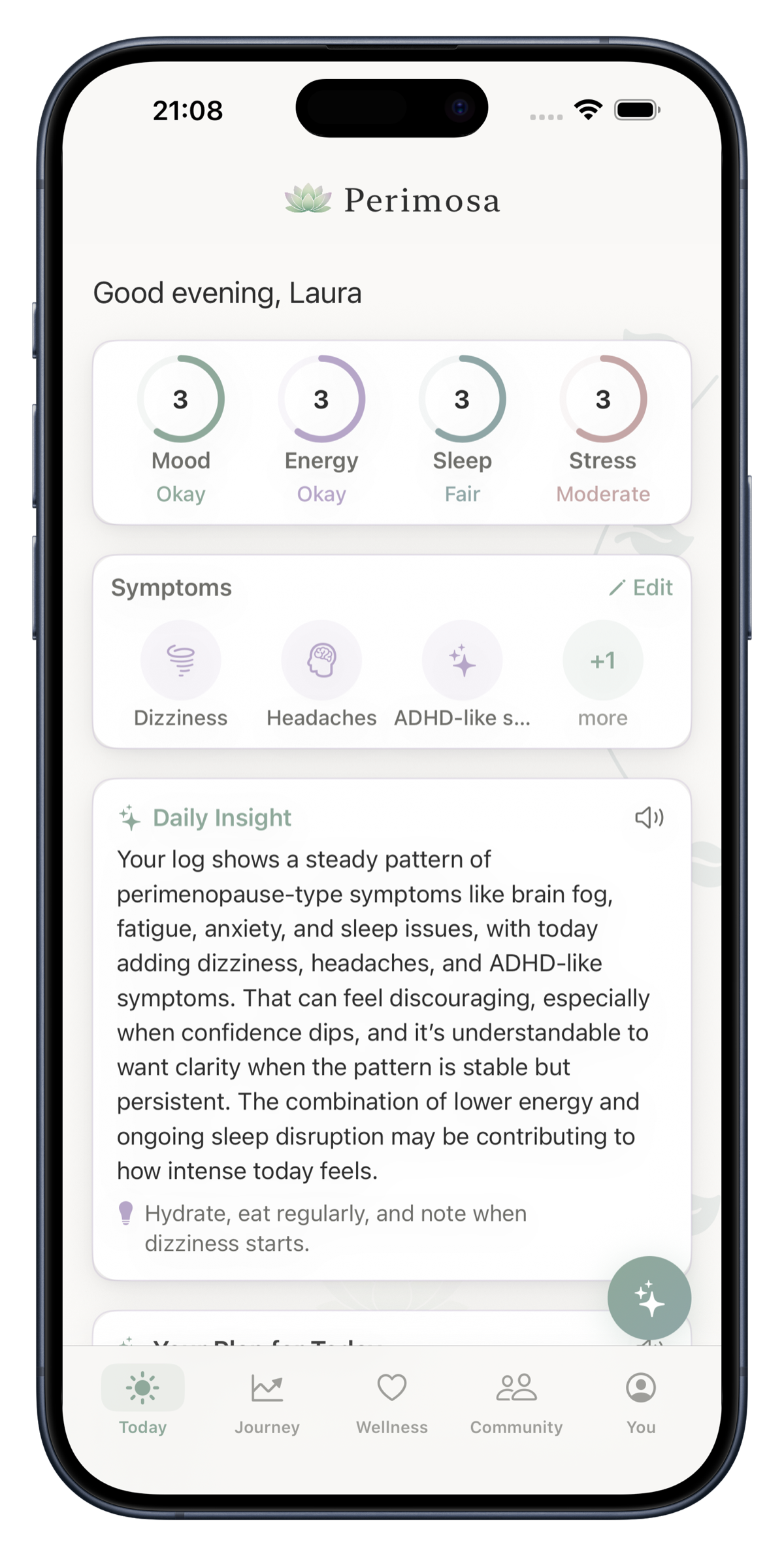
Most women dramatically underestimate their night sweat frequency when asked at a doctor's appointment. Memory averages bad weeks with good weeks. Tracking nightly in Perimosa reveals the true frequency and severity, identifies your specific triggers, and creates the data your doctor needs to evaluate treatment effectiveness.
For example, a woman who "thinks" she has occasional bad nights might log 5 drenching episodes weekly once she's actually counting. Or she might discover that wine on weekends correlates with worse weekends — and switching to alcohol-free Fridays cuts her bad nights in half.
Track:
- Episodes per night (mild/moderate/drenching)
- Whether you changed sleepwear or sheets
- How rested you felt in the morning (0-10)
- What you ate and drank that day
- Stress level
- Bedroom temperature if it varies
- Cycle phase
Patterns emerge within 2-3 weeks. The data also lets you measure treatment effectiveness — whether HRT, magnesium, or environmental changes are actually helping.
What to do when nothing seems to help
If you've optimized environment, eliminated triggers, tried magnesium, and night sweats are still ruining your sleep weeks later — escalate. The mistake many women make is staying in the "natural remedy" tier for years while their quality of life deteriorates. Effective medical treatments exist. Don't suffer for years out of pride or because a previous doctor was dismissive. Find a menopause-trained doctor (the Menopause Society directory lists certified practitioners) and discuss HRT, fezolinetant, or non-hormonal options that match your situation.
The Bottom Line
Night sweats affect roughly 75% of women during the menopausal transition and average 7-10 years in duration without treatment. They're caused by declining estrogen disrupting the hypothalamus, narrowing the body's thermoneutral zone, and triggering inappropriate cooling responses during sleep. Common triggers (alcohol, caffeine, warm bedroom, stress) amplify the underlying biology. Tracking your specific patterns reveals your personal triggers and lets you measure what's actually working.
Start with environmental optimization (cool room, moisture-wicking bedding, eliminating evening alcohol). Add magnesium glycinate. If symptoms persist after 6-8 weeks of consistent foundation work, escalate to HRT, fezolinetant, or non-hormonal medications. Effective treatment exists at every severity level. The mistake is suffering for years when relief is available — and tracking your symptoms is how you know what's actually working for your body.