Does HRT Help with Perimenopause?
Yes, HRT (hormone replacement therapy) is considered the most effective treatment for moderate to severe perimenopause symptoms. It works by supplementing declining estrogen and progesterone, and can significantly reduce hot flashes, night sweats, sleep problems, mood changes, and vaginal dryness.
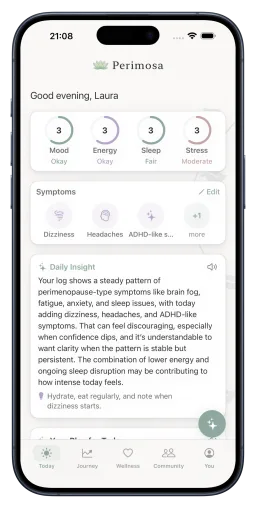
Finally understand what your body is doing
Perimosa logs how you feel each day, finds the pattern, and gives you the words to take to your doctor. Free on iPhone and iPad.
Get the free appHow HRT Works
HRT works by replacing the hormones your ovaries are producing less of during perimenopause. Estrogen therapy reduces vasomotor symptoms (hot flashes and night sweats), improves sleep, stabilizes mood, reduces vaginal dryness, and helps maintain bone density. Progesterone is added for women who still have a uterus to protect the endometrial lining from the effects of unopposed estrogen. By smoothing out hormonal fluctuations, HRT addresses the root cause of many perimenopausal symptoms rather than just managing them individually.
Types of HRT Available
Modern HRT comes in many forms: transdermal patches, gels, and sprays that deliver estrogen through the skin (associated with lower blood clot risk than oral forms); oral tablets; vaginal estrogen (rings, creams, tablets) for localized urogenital symptoms; and micronized progesterone (body-identical) or progestins. Transdermal estrogen combined with micronized progesterone is generally considered the safest systemic option. Your doctor will recommend the type, dose, and delivery method based on your specific symptoms, risk factors, and preferences.
Who Is HRT Appropriate For?
HRT is generally considered appropriate for healthy women under 60 or within 10 years of menopause who have moderate to severe symptoms. It's not recommended for women with a history of breast cancer, blood clots, stroke, liver disease, or undiagnosed vaginal bleeding. The decision should be individualized -- your personal risk factors, family history, symptom severity, and quality of life impact all factor in. Current guidelines from major medical societies support HRT as a first-line treatment when the benefits outweigh the risks.
Current Evidence on Safety
The landmark Women's Health Initiative (WHI) study in 2002 raised concerns about HRT, but subsequent analysis and newer research have significantly refined our understanding. For women under 60, starting HRT within 10 years of menopause carries a favorable benefit-risk profile. Transdermal estrogen does not appear to increase blood clot risk. Body-identical (micronized) progesterone appears safer than older synthetic progestins. The risk of breast cancer with combined HRT is small -- about 1 additional case per 1,000 women per year -- and comparable to risk increases from obesity or regular alcohol consumption.
Starting the Conversation
If your symptoms are significantly affecting your quality of life, discuss HRT with your healthcare provider. Bring a comprehensive symptom log showing what you're experiencing, how often, and how it's affecting your daily life. A tool like Perimosa can help you build this picture over time. Ask about the different types of HRT, expected timelines for improvement (most women notice benefits within 1-3 months), and how to monitor for side effects. HRT is not all-or-nothing -- doses can be adjusted and types can be changed based on your response.
References
Medical disclaimer: This article is for informational purposes only and does not constitute medical advice. Always consult a qualified healthcare provider for diagnosis and treatment decisions. Perimosa is a symptom tracking tool, not a medical device.