Can Perimenopause Cause Anxiety?
Yes, perimenopause can cause anxiety. Fluctuating estrogen and progesterone directly affect serotonin and GABA, the neurotransmitters that regulate mood and calm. Many women experience anxiety for the first time during perimenopause, even without any prior history of anxiety disorders.
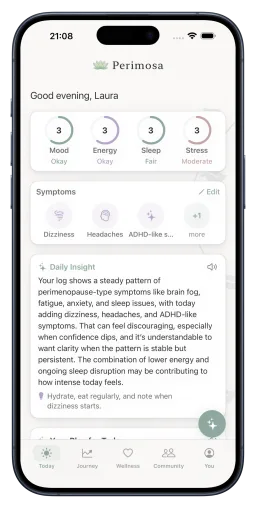
Finally understand what your body is doing
Perimosa logs how you feel each day, finds the pattern, and gives you the words to take to your doctor. Free on iPhone and iPad.
Get the free appThe Hormone-Anxiety Connection
Estrogen and progesterone don't just regulate your reproductive system -- they're deeply involved in brain chemistry. Estrogen promotes serotonin production and receptor sensitivity, while progesterone converts to allopregnanolone, a potent GABA-A receptor activator that produces calming effects. When these hormones fluctuate erratically during perimenopause, the brain's anxiety-regulation systems become unstable. This is why women who've never had anxiety before can suddenly develop it during this transition.
How Perimenopause Anxiety Feels Different
Hormonal anxiety often has a distinct quality. Women frequently describe it as coming out of nowhere -- a sense of dread or unease without an identifiable trigger. It may feel more physical than psychological: a tight chest, racing heart, restlessness, a knot in the stomach, or an inability to sit still. Some women experience it as a constant low-grade hum of worry, while others have sudden spikes that approach panic. It often worsens in the luteal phase (second half of the cycle) or during periods of hormonal fluctuation.
Anxiety and Other Perimenopause Symptoms
Perimenopause anxiety rarely exists in isolation. It often pairs with sleep disruption (which worsens anxiety), heart palpitations (which trigger more anxiety), brain fog (which creates worry about cognitive decline), and hot flashes (which can feel panic-like). This symptom clustering creates a feedback loop where symptoms amplify each other. Tracking these patterns can help you and your healthcare provider understand the full picture and target treatment effectively.
Treatment Options That Work
Effective treatments for perimenopausal anxiety include cognitive behavioral therapy (CBT), which teaches you to recognize and reframe anxious thoughts; regular aerobic exercise, which boosts serotonin and endorphins; mindfulness meditation, which activates the parasympathetic nervous system; SSRIs or SNRIs, which address the serotonin deficit; and hormone therapy, which can stabilize the underlying hormonal fluctuations driving the anxiety. Many women benefit from a combination of approaches. What works best depends on the severity of your symptoms and your personal health profile.
When to Seek Help
If anxiety is interfering with your sleep, relationships, work, or daily functioning, it's time to talk to your healthcare provider. Perimenopausal anxiety is highly treatable, but it's often misdiagnosed as a primary anxiety disorder without recognizing the hormonal component. Bringing a symptom log that tracks your anxiety alongside your cycle, sleep, and other symptoms can help your doctor see the hormonal pattern and choose the most effective treatment.
References
Medical disclaimer: This article is for informational purposes only and does not constitute medical advice. Always consult a qualified healthcare provider for diagnosis and treatment decisions. Perimosa is a symptom tracking tool, not a medical device.