Why Can't I Sleep During Perimenopause?
Sleep disruption during perimenopause has multiple hormonal causes: declining progesterone removes a natural sedative, night sweats cause awakenings, increased cortisol disrupts your sleep-wake cycle, and hormonal anxiety makes it harder to fall asleep. Up to 60% of perimenopausal women experience significant sleep problems.
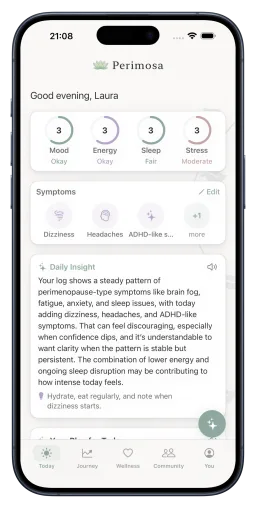
Finally understand what your body is doing
Perimosa logs how you feel each day, finds the pattern, and gives you the words to take to your doctor. Free on iPhone and iPad.
Get the free appThe Progesterone-Sleep Connection
Progesterone is one of your body's natural sleep aids. It converts to a neurosteroid called allopregnanolone, which activates GABA-A receptors in the brain -- the same receptors targeted by sleep medications and anti-anxiety drugs. As progesterone declines during perimenopause, you lose this built-in sedative effect. Many women notice that their sleep problems worsen during the luteal phase (second half of the cycle) or during cycles where ovulation didn't occur (anovulatory cycles produce no progesterone at all).
Night Sweats and Temperature Disruption
Estrogen fluctuations disrupt the hypothalamus, narrowing your thermoneutral zone so that small temperature changes trigger a full sweat response. Night sweats often peak in the second half of the night, causing you to wake up hot, damp, and alert. Even if the sweating isn't severe enough to soak the sheets, the micro-arousals from temperature fluctuations fragment your sleep and reduce time spent in the deep, restorative sleep stages your body needs.
The 3am Wake-Up Pattern
If you consistently wake between 2-4am and can't fall back asleep, you're experiencing one of the most characteristic sleep patterns of perimenopause. Cortisol naturally begins rising in the early morning hours to prepare your body for waking. Without adequate progesterone to buffer this signal, the cortisol surge acts like a premature alarm clock. Once awake, racing thoughts and hormonal anxiety make it nearly impossible to drift off again.
Evidence-Based Sleep Solutions
CBT for insomnia (CBT-I) is considered the gold-standard treatment and is more effective than medication long-term. It addresses the behaviors and thought patterns that perpetuate insomnia. Environmental strategies include keeping your bedroom at 65-68 degrees, using moisture-wicking bedding, and blocking light completely. Progesterone supplementation (oral micronized progesterone taken at bedtime) can restore the natural sedative effect. Magnesium glycinate (200-400mg before bed) promotes relaxation. Limiting alcohol -- which fragments sleep even when it helps you fall asleep initially -- is crucial.
Building a Sleep-Supportive Routine
Consistency is key for perimenopausal sleep. Go to bed and wake at the same time every day. Create a 30-minute wind-down routine that signals sleep to your brain. Limit screen light after dark (or use blue-light blockers). Avoid caffeine after noon -- perimenopausal women often become more caffeine-sensitive. Exercise regularly, but finish vigorous activity at least 3-4 hours before bed. Track your sleep alongside your other symptoms in an app like Perimosa to identify patterns -- you may discover that certain foods, activities, or cycle phases correlate with better or worse sleep.
References
Medical disclaimer: This article is for informational purposes only and does not constitute medical advice. Always consult a qualified healthcare provider for diagnosis and treatment decisions. Perimosa is a symptom tracking tool, not a medical device.