Does Perimenopause Cause Bloating?
Yes, perimenopause commonly causes bloating. Fluctuating estrogen affects gut motility, water retention, bile production, and the gut microbiome. Many women experience worse PMS-style bloating, new food sensitivities, and persistent belly distension. Diet adjustments, stress management, and tracking food triggers can significantly reduce symptoms.
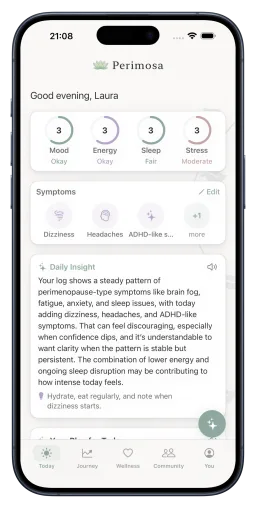
Finally understand what your body is doing
Perimosa logs how you feel each day, finds the pattern, and gives you the words to take to your doctor. Free on iPhone and iPad.
Get the free appWhy Hormones Cause Bloating
Estrogen influences fluid retention, bile production, and how your gut moves food. Progesterone affects bowel motility -- when progesterone is high, motility slows, leading to constipation and gas buildup. As both hormones fluctuate erratically during perimenopause, the gut becomes less predictable. Many women experience worse premenstrual bloating than they had at any point in their lives, with belly distension severe enough to require larger clothing for days at a time.
The Gut Microbiome Connection
Estrogen interacts with the gut microbiome through a system called the estrobolome -- a community of bacteria that helps metabolize estrogen. As estrogen fluctuates, the microbiome shifts, which can alter digestion, immune function, and even mood. Some women develop new food sensitivities during perimenopause that they never had before -- often dairy, gluten, or certain FODMAPs. The microbiome changes are part of why bloating can appear seemingly out of nowhere.
Bloating vs Belly Fat
It's important to distinguish bloating from belly fat. Bloating is temporary distension from gas, water, or digestive content -- you wake up flat and bloat throughout the day. Belly fat is consistent and increases gradually over months. Many perimenopausal women experience both. Bloating responds to dietary and digestive interventions; belly fat requires longer-term metabolic and lifestyle changes. Tracking pattern (time of day, food correlation) helps distinguish.
What Actually Reduces Bloating
Eat slowly and chew thoroughly. Identify and reduce trigger foods through a brief elimination -- common culprits are FODMAPs, dairy, gluten, carbonated drinks, and artificial sweeteners. Increase fiber gradually (sudden increases worsen bloating short-term). Stay hydrated. Consider a quality probiotic. Manage stress, which directly affects gut motility. Limit ultra-processed foods. If bloating is severe or persistent, ask your doctor about SIBO, IBS, or celiac testing -- all of which can emerge during hormonal transitions.
The Foods That Trigger Most Perimenopausal Bloating
The bloating triggers that come up most consistently across women: cruciferous vegetables in large amounts (broccoli, cauliflower, Brussels sprouts -- healthy but high FODMAP), beans and legumes, dairy if you've developed new lactose sensitivity, gluten in some women, carbonated drinks, artificial sweeteners (sorbitol, mannitol, sucralose all ferment in the gut), and ultra-processed foods. Many women find that the foods they tolerated perfectly at 30 now produce significant bloating at 45. This isn't 'all in your head' -- it reflects real shifts in gut motility and microbiome composition. The fix isn't permanently eliminating foods but reducing portion sizes and identifying personal triggers.
How to Identify Your Personal Triggers
The most effective way to identify food triggers is structured tracking, not random elimination. Log every meal and the resulting bloating (0-10 scale, location, duration) in Perimosa for 3-4 weeks. Patterns reveal themselves quickly -- 'every time I have yogurt, I'm bloated by 2pm' is concrete enough to test by eliminating yogurt for two weeks and watching what changes. Many women try restricting 5-6 things at once and can't tell what helped. One change at a time, two weeks each, produces clear answers. This is also how to test whether a low-FODMAP elimination is worth doing formally.
Why Bloating Worsens Specifically in Perimenopause
Three specific changes drive perimenopausal bloating beyond ordinary food sensitivity. First, the estrobolome (gut bacteria that metabolize estrogen) shifts as estrogen fluctuates, changing the microbiome's behavior. Second, progesterone -- which slows gut motility -- becomes less stable, leading to either constipation-driven bloating or motility chaos. Third, water retention varies more across the cycle as hormones swing, producing a 'puffy' bloating that's not gas-based. Each cause has different solutions: probiotics or dietary fiber adjustments for microbiome shifts; magnesium and stool consistency support for motility; reduced sodium and adequate water for water retention.
Bottom Line
Perimenopausal bloating is real, common, and frustrating but largely controllable through targeted interventions. Track meals and bloating for 3-4 weeks to identify your personal triggers. Eat slowly and chew thoroughly. Manage stress -- it directly affects gut motility. Stay well-hydrated. Try a quality multi-strain probiotic for 2-3 months. Reduce ultra-processed foods. If bloating is severe, daily, or accompanied by weight loss, abdominal pain, or change in bowel habits, see a doctor to rule out SIBO, IBS, celiac disease, or ovarian issues. Don't accept dramatic bloating as 'just perimenopause' without ruling out other causes.
References
Medical disclaimer: This article is for informational purposes only and does not constitute medical advice. Always consult a qualified healthcare provider for diagnosis and treatment decisions. Perimosa is a symptom tracking tool, not a medical device.