What Is the Best Diet for Perimenopause?
The Mediterranean diet has the strongest evidence for perimenopause health. It emphasizes vegetables, fruit, legumes, whole grains, fish, olive oil, nuts, and limited red meat. Combined with adequate protein (100g+/day) and minimal ultra-processed foods, it supports hormones, weight, mood, cardiovascular health, and longevity.
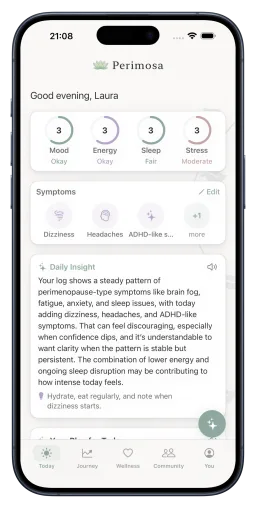
Finally understand what your body is doing
Perimosa logs how you feel each day, finds the pattern, and gives you the words to take to your doctor. Free on iPhone and iPad.
Get the free appWhy Mediterranean Works
Decades of research consistently show the Mediterranean dietary pattern reduces cardiovascular disease, type 2 diabetes, cognitive decline, and inflammation -- all of which become increasing concerns during and after perimenopause. It's rich in fiber, omega-3s, antioxidants, polyphenols, and unsaturated fats that support hormone metabolism. Unlike restrictive diets, it's sustainable for life, flexible across cultures, and emphasizes pleasure and social eating. This sustainability is why it outperforms more aggressive interventions in real-world studies.
Protein Needs Increase
Protein needs rise during perimenopause -- aim for 1.0-1.2 grams per kg of body weight, or roughly 100g+ for most women, distributed across meals (25-30g per meal). Adequate protein preserves muscle mass that's harder to maintain as estrogen declines, supports satiety, stabilizes blood sugar, and provides amino acids for hormone production. Sources can include fish, poultry, eggs, dairy, beans, lentils, tofu, and Greek yogurt. Many women under-eat protein at breakfast specifically -- prioritize it there.
Foods to Emphasize
Fiber-rich vegetables and fruit (aim for 25-35g fiber daily) support gut health, satiety, and estrogen metabolism. Fatty fish (salmon, sardines, mackerel) 2-3x weekly for omega-3s. Legumes for plant protein, fiber, and phytoestrogens. Nuts and seeds for healthy fats and minerals (a small handful daily). Fermented foods (yogurt, kefir, sauerkraut) for gut microbiome support. Olive oil as your primary fat. Calcium-rich foods (dairy, leafy greens, fortified plant milks) for bone health.
What to Limit
Ultra-processed foods (packaged snacks, sugary drinks, refined cereals) drive inflammation and weight gain. Excess refined sugar destabilizes blood sugar and mood. Alcohol worsens nearly every symptom. Excess caffeine (more than 1-2 cups morning coffee) can intensify hot flashes and anxiety. None of this is about perfection -- consistent moderate choices outperform short bursts of strict eating. Track how you feel after meals; your body will tell you what works.
A Sample Day That Hits the Targets
Translating principles into actual meals helps. Breakfast: Greek yogurt with berries, walnuts, and ground flaxseed; or 3-egg veggie omelet with whole grain toast and avocado. Lunch: Large salad with grilled salmon or chicken, mixed greens, beans, olive oil dressing, plus a side of fruit. Snack: Apple with almond butter, or hummus with vegetables, or cottage cheese with seeds. Dinner: Baked fish or lean protein, half plate of vegetables, quarter plate of whole grains or legumes, drizzled with olive oil. This pattern hits 100g+ protein, 25-30g fiber, plenty of omega-3s and phytoestrogens, and keeps blood sugar stable -- without feeling restrictive.
Why Personalization Beats Any Generic Plan
Even the best evidence-based diet won't help every woman the same way. Personal trigger foods vary enormously. Some women feel better on slightly higher carbs, others on lower. Some thrive on intermittent fasting, others worsen with it. The way to find your version: start with Mediterranean foundations, track meals and symptoms in Perimosa for 4-6 weeks, then adjust based on what your body tells you. Maybe you discover dairy bloats you and switch protein sources. Maybe you find evening carbs disrupt sleep and shift them earlier. Maybe you notice tomatoes trigger hot flashes (yes, this happens). Real personalization beats following any guru's plan.
Diet Strategies That Don't Work for Perimenopause
Several popular dietary approaches commonly fail or backfire during perimenopause. Crash dieting accelerates muscle loss, slows metabolism further, and triggers rebound weight gain. Very low-carb diets work for some women but cause hair loss, sleep disruption, and worsened hot flashes in others. Intermittent fasting with long windows often spikes cortisol and disrupts sleep in perimenopausal women, even if it worked at 30. 'Detox' programs do nothing real and often produce nutrient deficiencies. Strict elimination diets (other than for confirmed allergies) usually aren't sustainable and create disordered relationships with food. Match the diet to your biology, not the latest trend.
Bottom Line
The Mediterranean diet remains the best-evidenced eating pattern for perimenopausal health, supporting hormones, weight, mood, cardiovascular health, and longevity simultaneously. Hit your protein targets (100g+ daily, distributed across meals), eat plenty of vegetables and fruit for fiber, include fatty fish 2-3x weekly, use olive oil as your primary fat, and limit ultra-processed foods, excess sugar, and alcohol. Track meals and symptoms in Perimosa to identify your personal triggers and dial in what works for your body specifically. The goal is sustainable nourishment for the next decade, not perfection for the next month.
References
Medical disclaimer: This article is for informational purposes only and does not constitute medical advice. Always consult a qualified healthcare provider for diagnosis and treatment decisions. Perimosa is a symptom tracking tool, not a medical device.