What Foods Should I Avoid During Perimenopause?
The foods most worth limiting during perimenopause are alcohol (worsens hot flashes, sleep, mood, weight), excess caffeine (intensifies hot flashes and anxiety), refined sugar and ultra-processed foods (worsen insulin resistance and inflammation), and any individual foods you've identified as personal triggers through tracking.
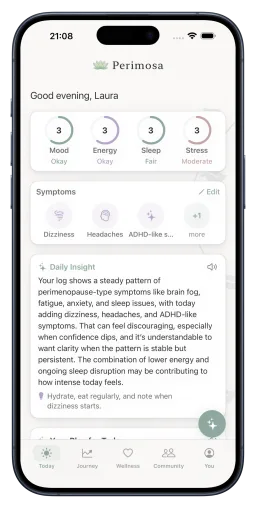
Finally understand what your body is doing
Perimosa logs how you feel each day, finds the pattern, and gives you the words to take to your doctor. Free on iPhone and iPad.
Get the free appAlcohol
Alcohol is arguably the single most impactful food choice during perimenopause. It worsens hot flashes by dilating blood vessels, fragments sleep (especially the second half of the night), increases anxiety the next day, slows fat loss, and affects mood and cognitive clarity. Even moderate drinking that didn't bother you in your 30s often produces noticeably worse effects in your 40s. Many women find that cutting alcohol -- or limiting it to occasional drinks -- produces the single biggest improvement in symptoms.
Excess Caffeine
Caffeine isn't inherently bad, but during perimenopause many women find that the same amount that used to feel fine now triggers anxiety, hot flashes, palpitations, or sleep disruption -- even from morning coffee. The half-life of caffeine lengthens with age, so afternoon caffeine is more likely to disrupt sleep. Try cutting back gradually to one cup before noon and see how you feel. Some women feel dramatically better; others tolerate caffeine fine.
Refined Sugar and Ultra-Processed Foods
Insulin resistance increases during perimenopause as estrogen declines. Refined sugar and ultra-processed foods drive blood sugar swings, increase inflammation, worsen abdominal weight gain, and contribute to mood instability. This doesn't mean perfection -- but reducing daily intake of sugary drinks, pastries, packaged snacks, and refined carbs produces real symptom improvement. Focus on whole-food carbs (oats, beans, fruit, sweet potatoes) instead of cutting carbs entirely.
Personal Trigger Foods
Beyond the universal categories, every woman has personal trigger foods. Spicy food triggers hot flashes for some. Dairy worsens bloating for others. Gluten produces brain fog and fatigue in a subset. Tracking what you eat alongside how you feel for 4-6 weeks reveals personal patterns that no general food list can predict. Don't preemptively cut foods based on internet advice -- instead, identify your own triggers through systematic observation, then make targeted changes based on real data.
How to Find Your Personal Triggers in 4 Weeks
General trigger lists only get you so far. Personal trigger identification is far more useful, and it's not complicated -- just structured. Pick the symptom that bothers you most (hot flashes, sleep disruption, mood, bloating). For 4 weeks, track in Perimosa what you eat at each meal and your symptom intensity afterward. Patterns emerge fast. You might find your hot flashes spike 2-3 hours after wine but not after beer. Or sleep is fragmented on nights you ate carbs after 7pm. Or anxiety is worse on coffee-only mornings without protein. These personal patterns are far more actionable than any general 'avoid this' list because they're built on your actual body.
What Most Women Get Wrong About Sugar
The biggest dietary mistake during perimenopause isn't 'eating sugar' -- it's eating sugar in patterns that destabilize blood sugar. A cookie after a high-protein meal affects you very differently than a cookie on an empty stomach. Fruit eaten with nuts behaves differently than fruit juice on its own. The goal isn't sugar elimination (unsustainable for most) but blood sugar stability through pairing. Always pair refined carbs with protein and fat. Eat sweets as part of meals, not between them. This single shift reduces hot flashes, mood swings, and energy crashes for many women without requiring restriction.
The Foods Most Women Don't Realize Trigger Them
Beyond the obvious (alcohol, caffeine, sugar), several foods commonly trigger perimenopausal symptoms without women making the connection. Spicy food in the evening triggers night sweats for many women hours after eating. Aged cheese and cured meats contain tyramine, which can trigger hot flashes in sensitive women. Artificial sweeteners (sucralose, aspartame, sorbitol) cause bloating and headaches in a meaningful subset. High-histamine foods (fermented foods, leftovers, certain fish) trigger symptoms in women with new histamine intolerance. The only way to identify these for yourself is tracking food alongside symptoms for 2-4 weeks.
Bottom Line
The universally-worth-limiting foods during perimenopause are alcohol, excess caffeine, and ultra-processed foods high in refined sugar -- these cause measurable problems for nearly everyone. Beyond that, personal triggers vary enormously and require structured tracking to identify. Don't preemptively eliminate foods based on internet advice. Instead, track what you eat and how you feel in Perimosa for 4 weeks, identify your top 2-3 personal triggers, and make targeted changes based on real data. This produces better results than restrictive elimination diets and is dramatically more sustainable long-term.
References
Medical disclaimer: This article is for informational purposes only and does not constitute medical advice. Always consult a qualified healthcare provider for diagnosis and treatment decisions. Perimosa is a symptom tracking tool, not a medical device.