Does Perimenopause Cause Hair Loss?
Yes, perimenopause commonly causes hair thinning and increased shedding. Declining estrogen and progesterone shift the hormonal balance toward androgens, which can shrink hair follicles and shorten the growth phase. Most women notice overall thinning, a widening part, or more hair in the shower drain.
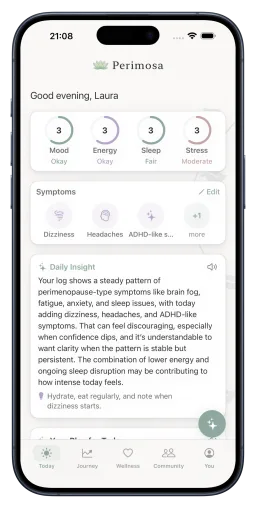
Finally understand what your body is doing
Perimosa logs how you feel each day, finds the pattern, and gives you the words to take to your doctor. Free on iPhone and iPad.
Get the free appHow Hormones Affect Hair Growth
Hair growth follows a cycle: growth phase (anagen), transition phase (catagen), and shedding phase (telogen). Estrogen and progesterone help keep hair in the growth phase longer and promote thicker, healthier strands. As these hormones decline during perimenopause, the relative proportion of androgens (like testosterone and DHT) increases. Androgens can shrink hair follicles -- a process called miniaturization -- producing thinner, shorter hairs. They can also push more follicles into the shedding phase simultaneously, causing noticeable hair loss.
What Perimenopausal Hair Loss Looks Like
Unlike male-pattern baldness, perimenopausal hair loss is typically diffuse -- affecting the entire scalp rather than creating distinct bald patches. You might notice your ponytail getting thinner, your part looking wider, more hair in the shower drain or on your hairbrush, and a general reduction in hair volume and density. The front hairline area is often most affected. If you're experiencing patchy hair loss or bald spots, see a dermatologist to rule out alopecia areata or other conditions.
Contributing Factors
Hormonal changes are the primary driver, but several factors can worsen perimenopausal hair loss. Iron deficiency (common with heavy periods during perimenopause) is a major contributor. Thyroid dysfunction, vitamin D deficiency, vitamin B12 deficiency, chronic stress (which triggers telogen effluvium), poor nutrition, and crash dieting all accelerate hair loss. Identifying and addressing these contributing factors often produces significant improvement.
Treatments and Solutions
Minoxidil (Rogaine) is the only FDA-approved topical treatment for female pattern hair loss and can slow thinning and promote regrowth. Nutritional optimization is essential: ensure adequate iron, ferritin, vitamin D, biotin, zinc, and protein. Some women find that HRT helps by restoring a more favorable estrogen-to-androgen ratio. Spironolactone can block androgen effects on hair follicles. Low-level laser therapy has some evidence supporting its effectiveness. Gentle hair care practices -- avoiding harsh treatments, heat styling, and tight hairstyles -- help prevent further breakage.
What to Discuss with Your Doctor
If hair loss is bothering you, ask your healthcare provider to check your iron/ferritin, thyroid panel, vitamin D, B12, and hormone levels. These treatable causes are commonly overlooked. A dermatologist can examine your scalp, possibly perform a biopsy to determine the type of hair loss, and recommend targeted treatment. Tracking when hair shedding is worst in relation to your cycle and other symptoms can provide useful diagnostic information. Many women find that addressing nutritional deficiencies and hormonal imbalances together produces the best results.
References
Medical disclaimer: This article is for informational purposes only and does not constitute medical advice. Always consult a qualified healthcare provider for diagnosis and treatment decisions. Perimosa is a symptom tracking tool, not a medical device.