What Are the 34 Symptoms of Perimenopause?
The 34 symptoms of perimenopause include irregular periods, hot flashes, night sweats, mood swings, anxiety, brain fog, fatigue, joint pain, weight gain, hair loss, heart palpitations, sleep problems, and many more. Not every woman experiences all of them, and severity varies widely.
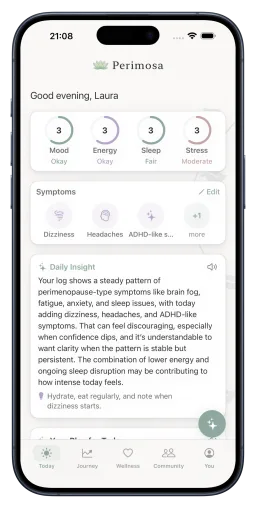
Finally understand what your body is doing
Perimosa logs how you feel each day, finds the pattern, and gives you the words to take to your doctor. Free on iPhone and iPad.
Get the free appWhy 34 Symptoms?
The "34 symptoms" list is widely referenced in menopause education because it captures the full scope of how declining and fluctuating hormones affect nearly every system in the body. Estrogen receptors exist in the brain, bones, heart, skin, gut, bladder, and beyond -- which explains why perimenopause can produce such a wide range of seemingly unrelated symptoms. Understanding the full list helps women connect dots they might otherwise miss.
Vasomotor Symptoms
Hot flashes, night sweats, and cold flashes are among the most well-known perimenopause symptoms. They're caused by estrogen fluctuations disrupting the hypothalamus, your brain's thermostat. Hot flashes can range from a mild warmth to intense heat with visible flushing and sweating. Night sweats can drench bedsheets and severely disrupt sleep. About 75% of perimenopausal women experience vasomotor symptoms.
Neurological and Cognitive Symptoms
Brain fog, memory lapses, difficulty concentrating, dizziness, headaches, and tingling or electric shock sensations in the extremities all have hormonal origins. Estrogen is critical for neural connectivity, blood flow to the brain, and neurotransmitter production. Many women find cognitive symptoms among the most distressing, especially when they affect work performance. The good news is that research suggests cognitive function typically stabilizes after the menopausal transition.
Mood and Emotional Symptoms
Mood swings, anxiety, depression, irritability, panic attacks, and emotional volatility are driven by estrogen's effect on serotonin, GABA, and dopamine. Women with a history of PMS, postpartum depression, or mood disorders may be particularly vulnerable. These are not signs of personal weakness -- they reflect genuine neurochemical changes. Effective treatments include therapy, lifestyle modifications, antidepressants, and hormone therapy.
Musculoskeletal Symptoms
Joint pain and stiffness, muscle tension, and the beginnings of bone density loss occur as estrogen's anti-inflammatory and bone-protective effects decline. Morning stiffness, aching joints, and increased muscle tension are common. Weight-bearing exercise and adequate calcium and vitamin D intake become especially important during this phase.
Skin, Hair, and Appearance Changes
Dry skin, increased wrinkles, thinning hair, brittle nails, changes in body odor, and burning mouth syndrome all reflect declining estrogen's impact on collagen production, hydration, and tissue maintenance. Some women also experience adult acne due to the relative increase in androgens as estrogen falls. Good skincare, hydration, and nutritional support can help manage these changes.
Reproductive and Urinary Symptoms
Irregular periods, heavy bleeding, vaginal dryness, decreased libido, urinary urgency, stress incontinence, and increased UTI susceptibility all stem from hormonal changes affecting reproductive and urinary tract tissues. Vaginal estrogen is highly effective for local symptoms and carries minimal systemic risk.
Digestive and Cardiovascular Symptoms
Bloating, digestive changes, weight gain (especially abdominal), heart palpitations, and changes in allergies round out the list. These reflect estrogen's roles in gut motility, metabolic regulation, cardiovascular function, and immune modulation. While usually benign, new cardiovascular symptoms should always be evaluated by a doctor to rule out other causes.
References
Medical disclaimer: This article is for informational purposes only and does not constitute medical advice. Always consult a qualified healthcare provider for diagnosis and treatment decisions. Perimosa is a symptom tracking tool, not a medical device.