How to Lose Weight During Perimenopause
Losing weight during perimenopause requires addressing the hormonal drivers: prioritize protein to maintain muscle, strength train 2-3 times per week, manage insulin resistance by reducing refined carbs, prioritize sleep, and manage stress. Focus on body composition rather than the scale, and be consistent rather than extreme.
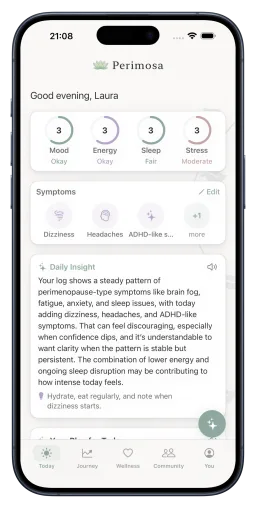
Finally understand what your body is doing
Perimosa logs how you feel each day, finds the pattern, and gives you the words to take to your doctor. Free on iPhone and iPad.
Get the free appWhy the Old Approach No Longer Works
If you're eating and exercising the same way you did in your 30s but gaining weight, you're not doing anything wrong -- your hormonal landscape has changed. Declining estrogen increases insulin resistance (making your body more likely to store carbs as fat), shifts fat storage to the abdomen, and reduces leptin sensitivity (so you feel less satisfied after eating). Loss of muscle mass from declining estrogen and testosterone slows your resting metabolic rate. The calorie deficit that worked before may now be too small to produce results, or worse, extreme restriction can backfire by increasing cortisol and further slowing metabolism.
Prioritize Protein and Strength Training
The single most important dietary change is increasing protein intake to 25-30 grams per meal (about 0.7-1g per pound of body weight daily). Protein maintains muscle mass, boosts metabolism through the thermic effect of food, and improves satiety. Pair this with strength training 2-3 times per week -- resistance exercise is the most effective way to counteract age and hormone-related muscle loss. You don't need to become a bodybuilder; basic exercises like squats, deadlifts, rows, and presses with moderate weights make a significant difference.
Manage Insulin and Blood Sugar
Reducing refined carbohydrates and added sugar helps combat perimenopausal insulin resistance. This doesn't mean eliminating carbs -- choose whole grains, legumes, fruits, and vegetables over white bread, pasta, and sugary snacks. Eating protein and healthy fats alongside carbohydrates slows blood sugar response. Eating meals at consistent times rather than grazing all day gives your insulin levels time to drop between meals. Some women find benefit from time-restricted eating (eating within a 10-12 hour window), though this should be gentle -- extreme fasting can worsen hormonal symptoms.
Fix Your Sleep and Stress
You cannot out-exercise or out-diet poor sleep and chronic stress during perimenopause. Poor sleep increases ghrelin (hunger), decreases leptin (fullness), elevates cortisol (promotes belly fat), and impairs decision-making around food. Chronic stress has similar effects through cortisol elevation. Prioritizing sleep hygiene and stress management isn't a soft add-on to a weight loss plan -- it's foundational. Aim for 7-8 hours of quality sleep, incorporate daily stress management (walking, meditation, breathing exercises), and reduce commitments that drain you.
Set Realistic Expectations
Weight loss during perimenopause is typically slower than in earlier years. Aim for 0.5-1 pound per week at most, and expect plateaus. Focus on body composition metrics (how your clothes fit, energy levels, strength gains) rather than the scale alone. Measure your waist circumference -- visceral fat reduction matters more than total weight for health outcomes. Be consistent rather than extreme. Track what you eat, how you move, how you sleep, and how you feel in an app like Perimosa to identify what actually works for your body during this specific hormonal phase.
References
Medical disclaimer: This article is for informational purposes only and does not constitute medical advice. Always consult a qualified healthcare provider for diagnosis and treatment decisions. Perimosa is a symptom tracking tool, not a medical device.