Why Is My Metabolism Slower During Perimenopause?
Your metabolism slows during perimenopause primarily because of muscle mass loss (which declines faster after 40), reduced physical activity, sleep disruption, and hormonal shifts that affect insulin sensitivity and thyroid function. The slowdown is real but more modest than commonly believed -- and largely reversible through strength training and protein.
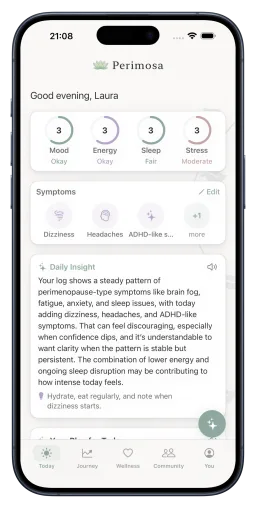
Finally understand what your body is doing
Perimosa logs how you feel each day, finds the pattern, and gives you the words to take to your doctor. Free on iPhone and iPad.
Get the free appThe Actual Cause Is Mostly Muscle
Contrary to popular belief, perimenopause itself doesn't dramatically slow your metabolism through hormonal magic. Research using metabolic chambers shows resting metabolic rate stays relatively stable from your 20s until your 60s -- if muscle mass stays stable. The real culprit is accelerated muscle loss starting around 40, particularly without strength training. Each pound of muscle burns about 6-10 calories daily at rest, so losing 5-10 pounds of muscle over a decade produces a noticeable metabolic decline.
Other Real Factors
Several other things genuinely slow you down. Activity levels often drop -- jobs become more sedentary, kids need less chasing, energy decreases from sleep disruption. Total daily activity matters more for calorie burn than dedicated exercise. Sleep disruption increases insulin resistance and hunger hormones. Thyroid function shifts during perimenopause in many women and often goes undiagnosed -- worth testing. Cortisol patterns disrupt metabolism. Insulin resistance from estrogen decline pushes more calories toward fat storage.
What Doesn't Help
Severe calorie restriction makes things worse, not better -- it accelerates muscle loss, lowers metabolism further, and triggers compensatory hunger and reduced activity. Skipping breakfast doesn't reliably help. 'Detoxes' do nothing real. Most supplements marketed to 'boost metabolism' have no meaningful effect. Constant cardio without strength training preserves cardiovascular fitness but doesn't address the muscle loss driving metabolic decline. The most counterproductive approach is the cycle of crash diets that's left many women metabolically worse off than when they started.
What Genuinely Works
Strength training is non-negotiable -- it's the most effective intervention for preserving and rebuilding muscle. Two to three sessions weekly with progressive overload. Adequate protein (100g+ daily, distributed across meals) supports muscle synthesis and satiety. NEAT (non-exercise activity thermogenesis) -- walking, taking stairs, standing more -- adds up more than you'd think. Adequate sleep and stress management protect the systems that affect metabolism. Get a full thyroid panel if you suspect issues. Consistency over years matters more than intensity for weeks.
Why the 'Slower Metabolism' Story Misleads Many Women
The narrative that metabolism dramatically slows in perimenopause leads many women into ineffective strategies. They eat less to compensate, lose more muscle in the process, and end up with even lower metabolism. The truth: research shows resting metabolic rate stays relatively stable through perimenopause IF muscle mass stays stable. The actual driver of metabolic decline is accelerated muscle loss, decreased activity, and insulin resistance -- all of which are reversible. Believing in some inevitable hormonal metabolism crash often produces resignation and worse outcomes. Believing it's largely about preserving muscle and managing insulin produces empowerment and better outcomes.
How to Build Strength Effectively at 40+
Strength training in perimenopause works differently than at 25. Recovery takes longer (often 48-72 hours between training the same muscle group). Progress is slower but real. Form matters more because injury recovery is slower. Effective approach: 2-3 sessions weekly hitting all major muscle groups, focused compound movements (squats, deadlifts, rows, presses, pulls), progressive overload (gradually increasing weight or reps), 8-12 reps per set typically, 2-3 sets per exercise. Within 12 weeks most women see visible strength gains and body composition improvements. Track workouts and how you feel in Perimosa to measure progress and ensure adequate recovery. This is the single highest-leverage intervention for perimenopausal metabolism.
The Insulin Resistance You Probably Have
Insulin resistance increases significantly during perimenopause for most women and drives metabolic decline more than the hormones themselves. Symptoms suggesting you have it: weight gain especially around the middle, afternoon energy crashes after carb-heavy meals, increased hunger and cravings, difficulty losing weight despite eating less, fasting glucose creeping up. Request a fasting insulin and fasting glucose test alongside A1c. Interventions that work: strength training (the most effective single intervention), adequate protein at meals, reducing refined carbs and ultra-processed foods, time-restricted eating windows (12-14 hours overnight fast), walking after meals, adequate sleep. These reverse insulin resistance over months.
Bottom Line
Your metabolism slowing in perimenopause is mostly explained by muscle loss, decreased activity, sleep disruption, and insulin resistance -- all of which respond to specific interventions. Strength training is the keystone habit, with adequate protein, sleep, stress management, and reducing alcohol close behind. Most metabolic decline is reversible with consistent effort over 6-12 months. Skip the crash diets and metabolism-boosting supplements that don't work. Focus on the boring fundamentals that actually move the needle. Track your strength gains, energy, and body composition in Perimosa over months to measure progress that the scale alone can't show.
References
Medical disclaimer: This article is for informational purposes only and does not constitute medical advice. Always consult a qualified healthcare provider for diagnosis and treatment decisions. Perimosa is a symptom tracking tool, not a medical device.