Breast tenderness is one of the perimenopause symptoms women are least prepared for, largely because they think they already know it. Premenstrual soreness is familiar from decades of cycles. What arrives in the forties is often noticeably different: heavier, more persistent, sometimes sharp, and no longer confined to the few days before a period.
This article is for informational purposes only and is not medical advice. Bleeding changes have many causes, and only your healthcare provider can evaluate yours.
Why it intensifies during the transition
Breast tissue is highly responsive to estrogen, which increases fluid retention and stimulates the glandular tissue. Progesterone moderates that effect.
In perimenopause the balance tips. Estrogen output becomes erratic and often spikes higher than in earlier years, while cycles without ovulation produce no progesterone to counter it. The result is more swelling in breast tissue, for longer, and with less predictability about when it will arrive.
Women often describe it as fullness or heaviness rather than the specific premenstrual soreness they remember, and it can extend into the armpit, where breast tissue also sits.
The usual pattern
- Both breasts, though not always equally
- Diffuse rather than in one spot
- Varies across the cycle, even an irregular one
- Fullness, heaviness, aching; sometimes a burning or prickling quality
- Frequently alongside bloating and mood changes in the same stretch of days
What needs examining
| Feature | Typical of perimenopause | Have it looked at |
|---|---|---|
| Where | Both breasts, spread out | One breast, one fixed spot |
| Texture | Generally lumpy, changes with the cycle | A discrete new lump that persists |
| Skin | Unchanged | Dimpling, thickening, redness, puckering |
| Nipple | Unchanged | Newly inverted, or any discharge |
| Over time | Comes and goes with the cycle | Constant and worsening, or new after menopause |
None of this is a substitute for routine screening. Attend your mammogram invitations regardless of how your breasts feel — screening is designed to find what cannot be felt.
What helps
- A properly fitted bra. Unglamorous and genuinely effective; breast size and shape change during the transition and most women are wearing the size they were fitted for years ago. A supportive bra at night helps some women.
- Anti-inflammatories. Ibuprofen during the worst days, or a topical anti-inflammatory gel applied to the breast.
- Reducing caffeine. Evidence is mixed, but a proportion of women report clear improvement, and a few weeks is a cheap trial.
- Treating the underlying imbalance. Where tenderness travels with other significant symptoms, cyclical progestogen or hormone therapy can help — though starting HRT can itself cause breast tenderness for the first few months before settling.
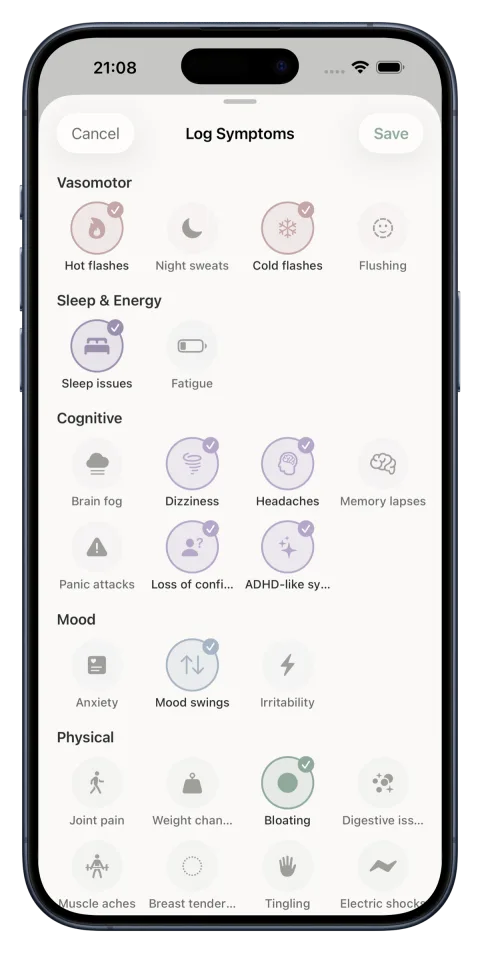
- Knowing your own pattern. Tenderness that reliably precedes a period is far less worrying than tenderness that appears from nowhere, and you can only tell the two apart with a record.
The Bottom Line
Breast tenderness in perimenopause is usually worse than the premenstrual soreness of earlier years, because estrogen surges higher with less progesterone to offset it. The typical pattern is both breasts, diffuse, and varying with the cycle, and it generally settles after menopause. What always warrants examination is a new discrete lump, a change in one breast only, skin or nipple changes, or nipple discharge — and routine screening continues regardless.