Can Lifestyle Changes Reduce Perimenopause Symptoms?
Yes, lifestyle changes can significantly reduce perimenopause symptoms. The five interventions with the strongest evidence are: prioritizing sleep (consistent schedule, cool bedroom), strength training (2-3x/week), adequate protein (100g+/day), stress management, and limiting alcohol. These foundations make medical treatments work better when they're needed.
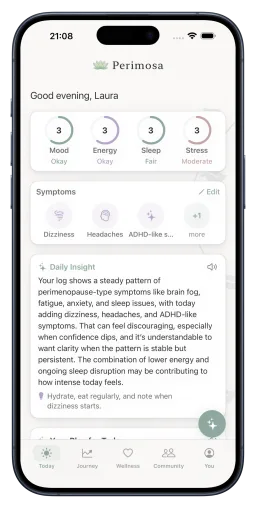
Finally understand what your body is doing
Perimosa logs how you feel each day, finds the pattern, and gives you the words to take to your doctor. Free on iPhone and iPad.
Get the free appSleep Comes First
Sleep quality affects nearly every other symptom. Poor sleep amplifies hot flashes, worsens mood, increases hunger and cravings, impairs cognition, and weakens stress resilience. The interventions with the most evidence: keep a consistent sleep and wake time (even on weekends), keep your bedroom cool (60-67°F), avoid alcohol within 3 hours of bed, get morning light exposure to anchor circadian rhythm, and address night sweats so they don't fragment your sleep. CBT for insomnia is more effective than sleep medications long-term.
Strength Training
Strength training does more for perimenopausal women than perhaps any other single intervention. It builds the muscle mass that declines with age and estrogen loss, supports metabolic rate, protects bone density (critical as estrogen-mediated bone protection fades), improves insulin sensitivity, stabilizes mood, and reduces hot flash severity. Two to three sessions per week of resistance training -- bodyweight, dumbbells, machines, whatever you'll actually do -- produces meaningful results within 8-12 weeks.
Protein and Diet
Protein needs rise during perimenopause -- aim for 1.0-1.2 grams per kg of body weight, or roughly 100g+ for most women. Protein supports muscle maintenance, satiety, blood sugar stability, and hormone production. Distribute it across meals (30g+ per meal). A Mediterranean-style eating pattern -- vegetables, fruit, legumes, whole grains, fish, olive oil, nuts -- has the most evidence for cardiovascular and metabolic protection during this transition. Reduce ultra-processed foods and excess sugar.
Stress Management and Alcohol
Chronic stress directly worsens cortisol, sleep, mood, and weight regulation. Daily stress practices -- meditation, breathing exercises, time in nature, social connection, therapy -- aren't optional during perimenopause. Limiting alcohol may be the single highest-leverage change, since it negatively affects hot flashes, sleep, mood, weight, and inflammation simultaneously. None of these are about perfection -- consistent moderate effort across all five areas outperforms intense focus on one.
How Much Improvement to Expect From Lifestyle Alone
Setting realistic expectations matters. Research suggests consistent lifestyle changes can reduce mild-to-moderate hot flashes by 30-50%, improve sleep quality by 40-60%, reduce mood symptom severity by 30-40%, and produce meaningful improvements in energy, body composition, and overall quality of life. For mild symptoms, lifestyle alone is often sufficient. For moderate symptoms, lifestyle plus targeted supplements may be enough. For severe symptoms (disrupting sleep nightly, affecting work, damaging relationships), lifestyle is foundational but rarely sufficient -- medical treatment usually adds another layer of improvement on top. Knowing this helps you avoid the trap of trying ever-stricter lifestyle interventions when the right answer is adding medical treatment to your lifestyle base.
Why Most Women's Lifestyle Changes Fail to Stick
Lifestyle changes that produce dramatic results in research studies often don't stick in real life. The failure pattern is consistent: too much change at once, no measurement of what's actually working, and willpower-based approaches that collapse under stress. The version that works: pick one change at a time, give it 2-3 weeks to stabilize, measure whether it's helping with Perimosa, then add the next. This 'stack one habit at a time' approach builds sustainable change over 6-12 months rather than the explosive crash-and-burn cycle of trying everything at once. Tracking what's actually working also prevents you from continuing changes that aren't helping.
The Compounding Effect Over 6-12 Months
Lifestyle changes during perimenopause compound differently than they did at 25. Sleep, strength training, protein, and stress management each help slightly in isolation but transform your experience when combined consistently over 6-12 months. Women who maintain consistent foundations through perimenopause often report dramatically milder transitions than they expected. Women who don't often find symptoms accelerating year over year. This is also why starting earlier matters -- the woman who builds these habits at 40 is in a fundamentally different place at 50 than the woman who waits until severe symptoms force her hand.
Bottom Line
Lifestyle changes can significantly reduce perimenopause symptoms, but expectations need to match reality. They work best for mild-to-moderate symptoms and as a foundation when medical treatment is also needed. The five highest-impact areas: consistent sleep, strength training, adequate protein, stress management, and reducing alcohol. Add one at a time, give each 2-3 weeks to take effect, and track in Perimosa to measure actual impact. For severe symptoms, combine lifestyle with medical treatment rather than trying lifestyle alone. The compounding effect over months matters more than perfection in any single week.
References
Medical disclaimer: This article is for informational purposes only and does not constitute medical advice. Always consult a qualified healthcare provider for diagnosis and treatment decisions. Perimosa is a symptom tracking tool, not a medical device.