Does Perimenopause Affect Sex Drive?
Yes, perimenopause commonly affects sex drive. Declining estrogen can cause vaginal dryness and discomfort, falling testosterone reduces desire, and symptoms like fatigue, mood changes, and sleep deprivation further dampen libido. However, some women experience increased desire during this transition.
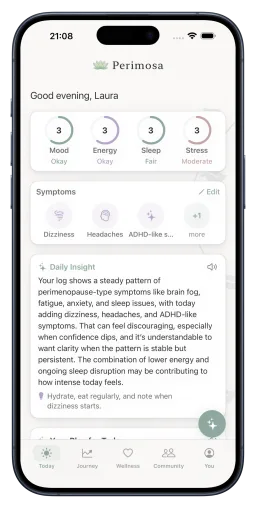
Finally understand what your body is doing
Perimosa logs how you feel each day, finds the pattern, and gives you the words to take to your doctor. Free on iPhone and iPad.
Get the free appThe Hormonal Drivers of Desire
Sexual desire is influenced by multiple hormones. Testosterone -- present in smaller quantities in women but essential for libido -- declines gradually throughout adulthood and more noticeably during perimenopause. Estrogen contributes to arousal, vaginal lubrication, and genital sensitivity. Progesterone in high amounts can suppress libido (one reason desire may fluctuate with your cycle). As all three hormones become erratic during perimenopause, desire may feel unpredictable -- strong some weeks, absent others.
Physical Barriers to Intimacy
Declining estrogen causes vaginal tissues to become thinner, drier, and less elastic (vaginal atrophy). This can make intercourse uncomfortable or painful, which naturally reduces interest. Reduced blood flow to the genital area can decrease sensitivity and arousal. Pelvic floor changes may cause discomfort. These physical changes create a negative feedback loop: discomfort reduces desire, avoidance leads to further tissue thinning, and the cycle continues. The good news is that these physical changes are very treatable.
The Role of Non-Hormonal Factors
Libido during perimenopause is affected by much more than hormones alone. Chronic fatigue from sleep disruption is a major desire killer. Mood changes, anxiety, and depression reduce interest in sex. Body image shifts during weight redistribution and physical changes can affect confidence and self-perception. Relationship stress, often amplified by mood swings and misunderstanding of symptoms, creates emotional distance. Addressing these factors is often as important as addressing the hormonal component.
Treatment Options
Vaginal estrogen (creams, rings, tablets) is highly effective for dryness and discomfort with minimal systemic absorption. Over-the-counter lubricants and vaginal moisturizers provide immediate relief. Systemic HRT can improve overall desire, arousal, and response. Testosterone therapy for women is gaining acceptance for libido, though it's not yet widely available in all countries. DHEA vaginal suppositories (Intrarosa) are another option. Regular sexual activity (including solo) helps maintain vaginal tissue health and blood flow.
Communicating with Your Partner
Open communication about what's happening physically and emotionally is crucial. Explain that changes in desire are hormonal, not personal. Discuss what feels good and what doesn't -- your body's responses may have changed. Explore different forms of intimacy beyond intercourse. Schedule intimate time rather than waiting for spontaneous desire (responsive desire -- getting in the mood after starting -- is normal and valid). Consider couples counseling if the changes are causing significant relationship strain. Tracking your desire and physical symptoms can help you identify patterns and plan accordingly.
References
Medical disclaimer: This article is for informational purposes only and does not constitute medical advice. Always consult a qualified healthcare provider for diagnosis and treatment decisions. Perimosa is a symptom tracking tool, not a medical device.