Does Perimenopause Cause Depression?
Yes, perimenopause significantly increases the risk of depression. Women are 2 to 4 times more likely to experience a major depressive episode during perimenopause compared to premenopause. Fluctuating estrogen directly affects serotonin, norepinephrine, and dopamine, the neurotransmitters that regulate mood.
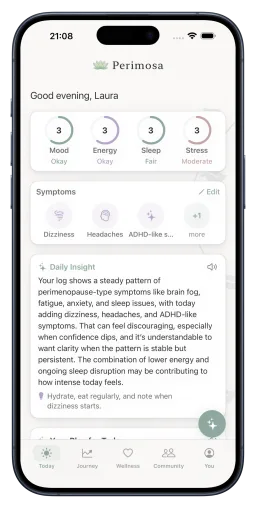
Finally understand what your body is doing
Perimosa logs how you feel each day, finds the pattern, and gives you the words to take to your doctor. Free on iPhone and iPad.
Get the free appThe Science Behind Hormonal Depression
Estrogen has a direct, well-documented relationship with the brain's mood-regulating systems. It promotes serotonin synthesis, increases serotonin receptor sensitivity, and inhibits serotonin breakdown. It also supports dopamine and norepinephrine function. When estrogen levels fluctuate erratically during perimenopause, these neurotransmitter systems become unstable. Research from Harvard and other institutions has confirmed that the hormonal instability of perimenopause -- not just low estrogen -- is the key trigger for depressive episodes.
Who Is Most at Risk?
While any woman can develop perimenopausal depression, certain factors increase risk: a history of PMS or PMDD, previous episodes of depression (including postpartum depression), high stress levels, poor sleep, a history of trauma or adverse childhood experiences, lack of social support, and surgical menopause (which causes a sudden hormonal drop). Women who are sensitive to hormonal fluctuations throughout their reproductive life tend to be more vulnerable during perimenopause.
Recognizing Perimenopausal Depression
Perimenopausal depression can look like classic depression -- persistent sadness, loss of interest, fatigue, difficulty concentrating, changes in appetite and sleep, feelings of worthlessness -- or it may present differently. Some women experience primarily anger and irritability rather than sadness. Others describe a pervasive sense of emptiness or flatness. The key distinguishing factor is the timing: symptoms that emerge or worsen during the perimenopausal transition, particularly in relation to hormonal fluctuations.
Effective Treatments
Perimenopausal depression responds to multiple treatment approaches. SSRIs and SNRIs are effective and can also help with hot flashes. Hormone therapy, particularly estrogen, can be effective especially when depression is clearly linked to hormonal fluctuations. Cognitive behavioral therapy (CBT) is proven effective for perimenopausal mood disorders. Exercise is a powerful antidepressant -- research shows 150+ minutes per week of moderate exercise significantly reduces depressive symptoms. Many women benefit from a combination: lifestyle changes + therapy + medication tailored to their specific situation.
Don't Wait to Get Help
If you're experiencing symptoms of depression during perimenopause, please reach out to your healthcare provider. Perimenopausal depression is not something you need to power through, and it's not a character flaw. It has a biological basis and responds well to treatment. Tracking your mood patterns alongside your cycle and other symptoms -- using a tool like Perimosa -- can provide valuable data that helps your doctor distinguish hormonal depression from other causes and choose the most effective treatment.
References
Medical disclaimer: This article is for informational purposes only and does not constitute medical advice. Always consult a qualified healthcare provider for diagnosis and treatment decisions. Perimosa is a symptom tracking tool, not a medical device.