Can Perimenopause Make You Feel Crazy?
Feeling like you are "going crazy" is one of the most commonly reported experiences during perimenopause. Rapid hormone fluctuations affect brain chemistry, causing mood swings, rage, anxiety, crying spells, brain fog, and emotional reactions that feel completely out of proportion. You are not crazy -- your hormones are in flux.
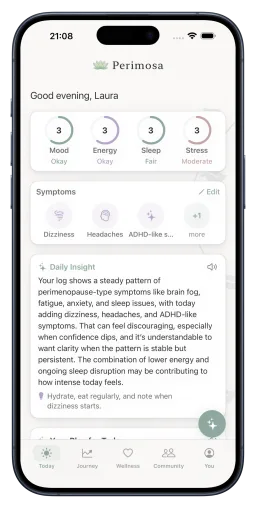
Finally understand what your body is doing
Perimosa logs how you feel each day, finds the pattern, and gives you the words to take to your doctor. Free on iPhone and iPad.
Get the free appWhy It Feels Like You're Losing Your Mind
During perimenopause, estrogen and progesterone don't decline smoothly -- they fluctuate wildly and unpredictably. These hormones directly regulate serotonin (mood stability), GABA (calm and relaxation), dopamine (motivation and pleasure), and norepinephrine (alertness and focus). When they swing up and down erratically, your brain's emotional regulation systems become unstable. Add in sleep deprivation, brain fog, and physical symptoms, and it's no wonder many women feel like they're becoming a completely different person.
The Symptoms That Make You Doubt Yourself
You might find yourself crying over a commercial, then furious at your partner for a minor comment, then completely flat and empty -- all in the same day. You walk into meetings at work and forget why you're there. You lose your temper with your children in ways that shock you. You lie awake at 3am with racing, catastrophic thoughts. You have a good week and think it's over, then it all comes back. These experiences are real, they have a biological basis, and they do not mean you're losing your grip on reality.
Historical Dismissal and Gaslighting
For decades, perimenopausal women's experiences were dismissed, minimized, or misdiagnosed. Women were told they were "just stressed," prescribed antidepressants without investigating hormonal causes, or made to feel that their symptoms were psychological rather than physiological. This medical gaslighting compounded the feeling of going crazy. The reality is that perimenopause causes real, measurable changes in brain chemistry and function. Your experiences are valid and biologically explainable.
What Actually Helps
Understanding the biological basis of what you're feeling is the first step -- it's profoundly reassuring to know there's a reason for these changes. Practical strategies include prioritizing sleep (the single biggest mood stabilizer), regular exercise (proven to reduce mood volatility), stress management, and limiting alcohol (which worsens hormonal mood swings). CBT helps you develop strategies for managing intense emotions. If symptoms are severe, HRT can stabilize the underlying hormonal fluctuations, and SSRIs/SNRIs can support mood regulation. Many women benefit from a combination of approaches.
Building Your Support System
Talking to other women going through perimenopause can be incredibly normalizing. Hearing "me too" is powerful medicine. Share what you're experiencing with your partner, close friends, or family -- and educate them about what perimenopause actually involves. Consider therapy with a provider who understands hormonal health. Tracking your symptoms with Perimosa helps you see patterns, validate your experiences, and communicate concretely with your healthcare provider rather than just saying "I feel crazy."
References
Medical disclaimer: This article is for informational purposes only and does not constitute medical advice. Always consult a qualified healthcare provider for diagnosis and treatment decisions. Perimosa is a symptom tracking tool, not a medical device.