How Do You Know When Perimenopause Is Ending?
Perimenopause officially ends 12 months after your final menstrual period -- the moment defined as menopause. Late-stage signs include cycles 60+ days apart, more intense symptoms (peak hot flashes typically occur near the end), then gradually fewer periods until they stop completely. Most women reach menopause between 49-52.
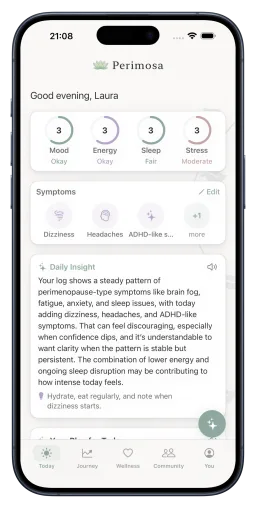
Finally understand what your body is doing
Perimosa logs how you feel each day, finds the pattern, and gives you the words to take to your doctor. Free on iPhone and iPad.
Get the free appThe 12-Month Rule
Menopause is defined retrospectively as 12 consecutive months without a menstrual period. You can only know perimenopause has ended in hindsight -- once you go a full year without bleeding. This definition exists because in late perimenopause, periods can be skipped for several months and then unexpectedly return. The 12-month threshold ensures you've truly reached the post-reproductive phase.
Late-Stage Perimenopause Signs
As perimenopause approaches its end, several patterns emerge. Cycles typically become longer apart -- 60 days or more between periods is common. When periods do come, they may be lighter than they used to be. Hot flashes and night sweats often peak in this final phase. Vaginal dryness becomes more noticeable as estrogen drops more steadily. Sleep can be at its worst. This intensity is part of why the last 1-2 years of perimenopause are often the hardest.
What Tests Show
Blood tests can support but not definitively diagnose the transition. FSH typically rises above 25-30 mIU/mL as ovarian function declines, and estradiol drops below 30 pg/mL. However, these values fluctuate during perimenopause, so a single test isn't conclusive. AMH, which measures ovarian reserve, will be very low. Some doctors check FSH twice, 6-8 weeks apart, to confirm consistency. Symptom patterns and cycle history are more reliable indicators than any single blood test.
What to Expect After
After 12 months without a period, you're officially in menopause -- a single day, not a phase. The years that follow are called post-menopause. Hot flashes typically continue for 5-10 more years before gradually fading. Vaginal and urinary symptoms often persist or worsen and respond well to topical estrogen. Bone density loss accelerates in the first few years, making strength training and adequate calcium/vitamin D critical. Many women report feeling more emotionally steady after the transition is complete.
Why the 12-Month Rule Matters Practically
Beyond definition, the 12-month rule has real practical implications. Until you reach it, you should still consider yourself capable of pregnancy and use contraception if that matters to you. Cycles in late perimenopause are often anovulatory but not always -- women have gotten pregnant after 9 months without a period and then found themselves with a baby. The 12-month rule is also the threshold many doctors use for HRT decisions, bone density screening, and some lab interpretations. Once you've crossed it, the conversation shifts from 'managing perimenopause' to 'managing post-menopausal health.' That conceptual shift matters because some interventions become more or less appropriate.
Why Tracking the Last Year Specifically Helps
The final year of perimenopause is often the most volatile. Symptoms can peak, cycles can be wildly unpredictable, and mood swings intensify. Many women describe it as the hardest phase. Tracking systematically in Perimosa during this stretch -- cycle gaps (whether 30, 60, 90+ days), symptom intensity, sleep, mood -- creates the precise record that lets you know when you've actually crossed the 12-month threshold. Women who don't track often miscalculate, thinking they've reached menopause when they had a single overlooked period 8 months prior. The pattern data also helps your doctor calibrate any treatment during this peak-symptom window.
Signs You're Close but Not There Yet
Several markers suggest you're in the final year or two before menopause but not yet across the threshold. Cycles 60+ days apart consistently. Periods becoming notably lighter when they do occur. Hot flashes peaking in frequency and intensity. Vaginal dryness becoming more noticeable. Sleep at its worst. Mood swings particularly volatile. FSH consistently elevated (>30) when tested. AMH undetectable or near-zero. None of these alone confirms anything -- the 12-month rule is the only definitive marker -- but together they suggest you're in late perimenopause and worth discussing treatment timing with your doctor.
Bottom Line
Perimenopause officially ends 12 months after your final menstrual period -- a single retrospective date, not a gradual fade. Until you cross that threshold, you remain in perimenopause regardless of how long you've gone without bleeding. Track carefully during late perimenopause to identify the threshold precisely, continue contraception if pregnancy isn't desired, and discuss with your doctor how treatment recommendations may shift once you've reached menopause. The years immediately before menopause are often the hardest, but they're also finite -- knowing you're close to the end can help you endure the worst of it without losing hope.
References
Medical disclaimer: This article is for informational purposes only and does not constitute medical advice. Always consult a qualified healthcare provider for diagnosis and treatment decisions. Perimosa is a symptom tracking tool, not a medical device.