How Long Does Perimenopause Last?
Perimenopause typically lasts 4 to 8 years, with the average being about 4-6 years. It can range from as short as 2 years to as long as 10-12 years. Symptoms are usually most intense in the 1-2 years before the final menstrual period.
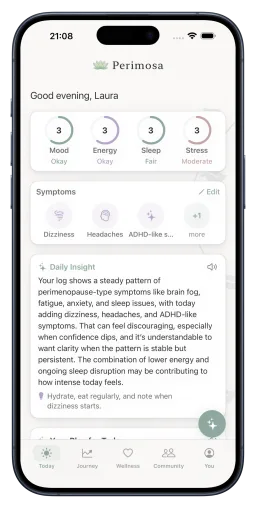
Finally understand what your body is doing
Perimosa logs how you feel each day, finds the pattern, and gives you the words to take to your doctor. Free on iPhone and iPad.
Get the free appThe Timeline of Perimenopause
Perimenopause isn't a single phase -- it unfolds in stages. In early perimenopause, cycles may become slightly shorter or irregular, and symptoms like sleep disruption and mood changes begin subtly. In late perimenopause (the 1-2 years before your final period), hormone fluctuations become more dramatic, periods may skip months, and symptoms like hot flashes and brain fog tend to peak. Perimenopause officially ends when you've gone 12 consecutive months without a period, marking menopause.
Why Duration Varies So Much
The length of perimenopause depends on genetics, overall health, lifestyle factors, and how gradually your ovaries reduce hormone production. Women who smoke tend to have a shorter but more intense perimenopause. Women with a higher BMI may have a longer transition. Some autoimmune conditions and medical treatments can shorten or alter the timeline. Your mother's and sisters' experiences can offer a rough guide, but individual variation is significant.
When Symptoms Are Most Intense
Most women find that the 1-2 years before and the year after their final period are when symptoms peak. This is when hormonal fluctuations are the most erratic and the body is undergoing the most rapid change. Hot flashes, night sweats, mood disturbances, and sleep problems tend to be worst during this window. Knowing this can be reassuring during the hardest phase -- it does get better for the majority of women.
Tracking Your Progress
Because perimenopause is so gradual, it can be hard to know where you are in the transition without systematic tracking. Logging your periods, symptoms, and their severity over months and years creates a personal timeline that helps you understand your trajectory. Apps like Perimosa are designed specifically for this kind of long-term pattern recognition. This data is also invaluable when discussing your health with your doctor.
Life After Perimenopause
For most women, the acute symptoms of perimenopause gradually ease after menopause. Hot flashes may continue for a few years in post-menopause but generally decrease in frequency and intensity. Mood and sleep often stabilize. Many women report feeling more settled, energetic, and confident after the transition is complete. The focus shifts to maintaining bone health, cardiovascular health, and overall wellness in the decades ahead.
References
Medical disclaimer: This article is for informational purposes only and does not constitute medical advice. Always consult a qualified healthcare provider for diagnosis and treatment decisions. Perimosa is a symptom tracking tool, not a medical device.