What Is the Difference Between Perimenopause and Menopause?
Perimenopause is the transition period when hormones fluctuate and periods become irregular. Menopause is the single point in time when you've gone 12 consecutive months without a period. Perimenopause can last 4-10 years; menopause is a specific moment that typically occurs around age 51.
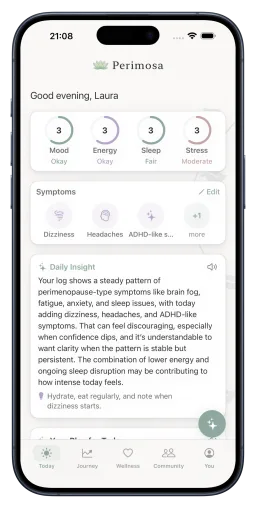
Finally understand what your body is doing
Perimosa logs how you feel each day, finds the pattern, and gives you the words to take to your doctor. Free on iPhone and iPad.
Get the free appDefining the Terms
The terms are often used interchangeably, but they describe different things. Perimenopause (literally "around menopause") is the transition phase when your ovaries are gradually winding down. You still have periods, but they become irregular. Menopause is technically a single date -- the day that marks 12 consecutive months without a menstrual period. Post-menopause is everything after that date. When people say "going through menopause," they usually mean perimenopause.
Hormonal Differences
During perimenopause, estrogen and progesterone levels are fluctuating wildly -- they can spike above normal levels one month and plummet the next. It's this hormonal rollercoaster that makes perimenopause symptoms so unpredictable. After menopause, hormone levels have settled at a consistently low baseline. The body is no longer on a rollercoaster -- it's adapted to the new normal. This is why many women find that acute symptoms like hot flashes and mood swings gradually ease in post-menopause.
Symptom Differences
Perimenopause symptoms tend to be more volatile: dramatic mood swings, unpredictable hot flashes, cycle chaos, and intense brain fog. Post-menopausal symptoms tend to be more stable and related to chronic low estrogen: vaginal dryness, bone density loss, increased cardiovascular risk, and ongoing (but usually milder) hot flashes. The transition from perimenopause to post-menopause is gradual, and there's no clear line where one set of symptoms replaces the other.
When Each Phase Occurs
Perimenopause typically begins in the early 40s (sometimes late 30s) and lasts an average of 4-8 years. Menopause occurs on average at age 51 in the US, though the range is roughly 45-55. Post-menopause lasts the rest of your life. Because perimenopause lasts so much longer than people realize, many women spend nearly a decade navigating symptoms before reaching menopause.
Treatment Considerations
Treatment approaches can differ between the phases. During perimenopause, the goal is often to smooth out hormonal fluctuations -- low-dose birth control pills can regulate cycles and reduce symptoms. In post-menopause, HRT is used to supplement consistently low hormones. Non-hormonal treatments like SSRIs, CBT, and lifestyle modifications are effective in both phases. Tracking your symptoms and cycle patterns helps your healthcare provider determine which phase you're in and choose the most appropriate treatment approach.
References
Medical disclaimer: This article is for informational purposes only and does not constitute medical advice. Always consult a qualified healthcare provider for diagnosis and treatment decisions. Perimosa is a symptom tracking tool, not a medical device.