When Does Perimenopause Start?
Perimenopause typically starts between ages 40-44, though it can begin as early as the mid-30s. The transition is triggered when the ovaries gradually produce less estrogen and progesterone. Genetics, smoking, and certain medical conditions can cause earlier onset.
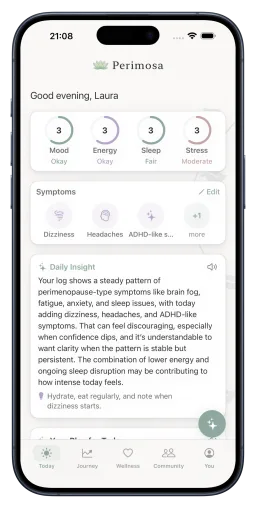
Finally understand what your body is doing
Perimosa logs how you feel each day, finds the pattern, and gives you the words to take to your doctor. Free on iPhone and iPad.
Get the free appAverage Age of Onset
Most women begin experiencing perimenopause symptoms in their early to mid-40s, with the average onset around age 40-44. However, there's a wide range of normal. Some women notice subtle changes as early as their mid-30s, while others don't experience symptoms until their late 40s. The transition ends at menopause, which occurs on average at age 51. This means many women spend 7-10 years in some phase of perimenopause.
Factors That Influence Timing
Genetics are the strongest predictor of when perimenopause will begin. If your mother went through menopause at 48, there's a good chance your timeline will be similar. Smoking can advance menopause by 1-2 years. Certain medical treatments -- particularly chemotherapy and pelvic radiation -- can damage the ovaries and trigger earlier perimenopause. Ovarian surgery, even partial, reduces ovarian reserve. Autoimmune conditions like thyroid disease and rheumatoid arthritis are also associated with earlier onset. Higher body weight is loosely associated with later menopause.
Early Signs You Might Miss
The earliest perimenopausal changes are easy to miss or attribute to other causes. Your cycle might shorten by a day or two. PMS might feel slightly worse. You might need to use the bathroom more at night. These subtle shifts often precede more obvious symptoms like hot flashes and irregular periods by months or years. Paying attention to these early changes -- and tracking them -- can help you recognize the transition sooner.
Is There a Test?
There's no single definitive blood test for perimenopause. Doctors sometimes measure FSH (follicle-stimulating hormone) and estradiol levels, but these fluctuate so much during perimenopause that a single reading can be misleading. A high FSH might indicate perimenopause, but a normal reading doesn't rule it out. The most reliable "test" is your symptom pattern over time. Tracking your cycles, symptoms, and their changes over several months gives your healthcare provider the best diagnostic information.
What to Do if You Think It's Starting
If you suspect perimenopause, start tracking your symptoms and cycles systematically -- an app like Perimosa makes this easy. See your healthcare provider for a general check-up that includes thyroid function and basic blood work to rule out other conditions. Ask about your family history of menopause timing. And remember, perimenopause is not a disease -- it's a natural transition. But that doesn't mean you need to suffer through disruptive symptoms without support.
References
Medical disclaimer: This article is for informational purposes only and does not constitute medical advice. Always consult a qualified healthcare provider for diagnosis and treatment decisions. Perimosa is a symptom tracking tool, not a medical device.