What Are the First Signs of Perimenopause?
The first signs of perimenopause typically include changes in menstrual cycle length or flow, difficulty sleeping, increased PMS symptoms, unexplained mood shifts, mild hot flashes, and occasional brain fog. These often begin in the early to mid-40s but can start in the late 30s.
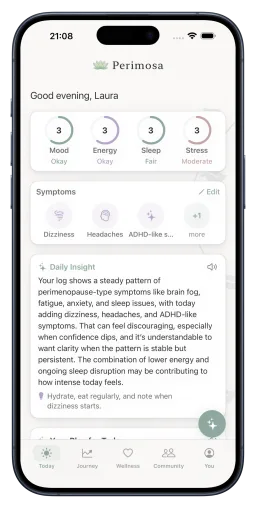
Finally understand what your body is doing
Perimosa logs how you feel each day, finds the pattern, and gives you the words to take to your doctor. Free on iPhone and iPad.
Get the free appUnderstanding Early Perimenopause
Perimenopause begins when your ovaries gradually start producing less estrogen and progesterone. This transition doesn't happen overnight -- it unfolds over months and years, and the earliest signs are often so subtle that many women attribute them to stress, aging, or lifestyle factors. Recognizing the early signs allows you to seek support sooner, make informed decisions about your health, and stop wondering whether something is "wrong" with you.
Menstrual Cycle Changes
The most reliable early sign is a change in your menstrual cycle. Your periods may come slightly closer together (every 24-26 days instead of 28) or further apart. Flow may become heavier or lighter. You might notice more spotting between periods. These changes reflect irregular ovulation -- some months you ovulate normally, others you don't, and the resulting hormone imbalances affect your cycle. Many women don't connect cycle changes with perimenopause because they still assume they're "too young."
Sleep Disruption
Difficulty falling asleep, staying asleep, or waking too early is one of the most common early signs. Declining progesterone -- which has a natural calming, sleep-promoting effect -- is the primary culprit. You might notice waking between 2-4am, feeling wired but tired at bedtime, or sleeping through the night but still feeling unrested. This often appears before more recognizable symptoms like hot flashes.
Mood and Emotional Changes
New or worsened anxiety, irritability, mood swings, or tearfulness frequently appear early in perimenopause. If you find yourself overreacting to minor things, feeling anxious without a clear cause, or crying more easily, hormonal shifts may be the underlying driver. These mood changes are caused by estrogen's direct effect on serotonin and other neurotransmitters. Women who experienced premenstrual mood changes earlier in life may be more susceptible.
Brain Fog and Cognitive Changes
Difficulty concentrating, forgetting words mid-sentence, and general mental cloudiness often appear in early perimenopause. You might find yourself struggling with tasks that were previously effortless, re-reading emails multiple times, or walking into rooms with no idea why. Estrogen plays an important role in cognitive function, and its fluctuations during perimenopause can impair focus, verbal recall, and working memory.
When to See a Doctor
If you're experiencing several of these symptoms and you're over 35, it's worth discussing with your healthcare provider. They can help rule out other conditions (thyroid issues, anemia, stress disorders) that share similar symptoms. Bringing a log of your symptoms -- what you're experiencing, when, and how severe -- makes the conversation much more productive. Tracking apps like Perimosa can help you build this picture over time.
References
Medical disclaimer: This article is for informational purposes only and does not constitute medical advice. Always consult a qualified healthcare provider for diagnosis and treatment decisions. Perimosa is a symptom tracking tool, not a medical device.