Can Perimenopause Start at 35?
Yes, perimenopause can start at 35. While the average onset is in the early 40s, some women begin experiencing hormonal changes in their mid-to-late 30s. When menopause occurs before 40, it may indicate premature ovarian insufficiency, which affects about 1% of women.
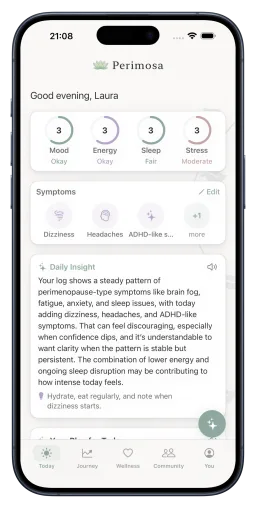
Finally understand what your body is doing
Perimosa logs how you feel each day, finds the pattern, and gives you the words to take to your doctor. Free on iPhone and iPad.
Get the free appEarly Perimenopause Is More Common Than You Think
While the textbook onset of perimenopause is the early 40s, many women begin noticing subtle hormonal shifts in their mid-to-late 30s. Studies suggest that ovarian reserve (the number and quality of remaining eggs) begins declining more rapidly around age 35, which is why fertility specialists consider this a significant milestone. Some women feel the effects of this decline earlier than others. If you're 35 and experiencing irregular periods, new sleep problems, increased PMS, or unexplained anxiety, perimenopause is worth considering.
Premature Ovarian Insufficiency
When menopause occurs before age 40, it's clinically termed premature ovarian insufficiency (POI). POI affects about 1% of women and results in significantly earlier estrogen decline. It can be caused by autoimmune conditions, genetic factors (including Turner syndrome and Fragile X premutation), previous chemotherapy or radiation, or ovarian surgery. POI requires medical attention because early estrogen loss increases the risk of osteoporosis, cardiovascular disease, and cognitive decline. Hormone therapy is generally recommended until the natural age of menopause.
Risk Factors for Early Onset
Several factors increase the likelihood of earlier perimenopause. Family history is the strongest predictor -- if your mother or sisters went through early menopause, you may too. Smoking accelerates ovarian aging by 1-2 years. Autoimmune conditions (thyroid disease, type 1 diabetes, rheumatoid arthritis) are associated with earlier onset. Previous ovarian surgery or endometriosis treatment can reduce ovarian reserve. Extreme underweight, eating disorders, and chronic stress may also contribute, though evidence is less conclusive.
Getting Evaluated
If you're under 40 and suspect perimenopause, see your healthcare provider. They should test FSH and estradiol levels (ideally on day 2-3 of your cycle), AMH (anti-Mullerian hormone, which indicates ovarian reserve), thyroid function, and prolactin. While a single FSH test isn't definitive during perimenopause, consistently elevated FSH with low estradiol in a woman under 40 warrants further investigation. An ultrasound to assess ovarian follicle count may also be recommended.
What Early Perimenopause Means for You
An earlier start to perimenopause has implications for fertility planning, bone health, and cardiovascular risk. If you haven't completed your family, discuss fertility preservation options with your doctor sooner rather than later. Bone density monitoring should begin earlier. Cardiovascular screening becomes more important. On the positive side, recognizing and addressing hormonal changes early gives you more time to implement lifestyle strategies and treatments that protect your long-term health. Tracking your symptoms from the start provides valuable data for managing this longer journey.
References
Medical disclaimer: This article is for informational purposes only and does not constitute medical advice. Always consult a qualified healthcare provider for diagnosis and treatment decisions. Perimosa is a symptom tracking tool, not a medical device.