Why Do I Wake Up at 3am During Perimenopause?
Waking at 3am during perimenopause happens because declining progesterone can no longer buffer the natural cortisol rise that occurs in the early morning hours. Without this hormonal counterbalance, the cortisol surge acts like a premature alarm clock, jolting you awake and making it difficult to fall back asleep.
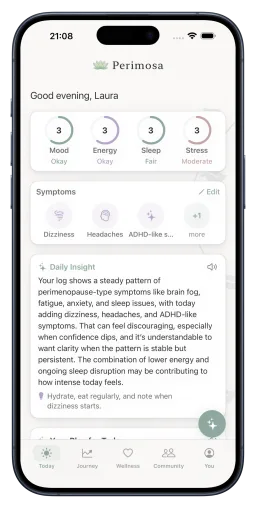
Finally understand what your body is doing
Perimosa logs how you feel each day, finds the pattern, and gives you the words to take to your doctor. Free on iPhone and iPad.
Get the free appThe Cortisol-Progesterone Imbalance
Your body's cortisol cycle follows a natural rhythm: it's lowest around midnight and begins rising around 2-4am, peaking shortly after you wake. During your reproductive years, progesterone acts as a counterbalance to this cortisol rise, keeping you asleep through the transition. But during perimenopause, progesterone declines significantly. Without this buffer, the early-morning cortisol increase becomes a wake-up signal your brain can't ignore. Once cortisol has activated your alert systems, falling back asleep becomes extremely difficult.
Night Sweats Compound the Problem
Hot flashes and night sweats tend to peak during the second half of the night, adding another layer of disruption around the same 2-4am window. A night sweat episode raises your core temperature, triggers sweating, and activates your sympathetic nervous system -- all of which promote wakefulness. Even without a full drenching night sweat, subtle temperature fluctuations can cause micro-arousals that bring you to light sleep just as the cortisol surge hits.
The Racing Mind Effect
Once you're awake at 3am, hormonal anxiety kicks in. The early morning hours are when rumination and worry feel most intense, partly because cortisol activates the amygdala (the brain's threat-detection center) and partly because the quiet darkness provides no distractions. You may find yourself catastrophizing about work, health, relationships, or the fact that you're not sleeping. This anxiety further elevates cortisol, creating a vicious cycle that makes returning to sleep feel impossible.
Strategies That Help
Keep your bedroom cool (65-68 degrees F) and use moisture-wicking bedding. Avoid alcohol in the evening -- while it helps you fall asleep, it fragments sleep in the second half of the night. Consider magnesium glycinate (200-400mg) before bed, which supports GABA activity and relaxation. If you wake and can't sleep within 20 minutes, get up and do something quiet in dim light rather than lying in bed building frustration. Progressive muscle relaxation or 4-7-8 breathing can activate the parasympathetic nervous system and promote sleep return.
Medical Options
If the 3am wake-up pattern is chronic and significantly affecting your life, discuss medical options with your healthcare provider. Oral micronized progesterone taken at bedtime can restore the natural sedative effect -- it's both a hormone supplement and a sleep aid. Low-dose trazodone or gabapentin may be prescribed for sleep maintenance. CBT for insomnia (CBT-I) is highly effective and addresses the behavioral patterns that perpetuate the problem. Tracking your sleep patterns in Perimosa can help your doctor identify the severity and pattern of your sleep disruption.
References
Medical disclaimer: This article is for informational purposes only and does not constitute medical advice. Always consult a qualified healthcare provider for diagnosis and treatment decisions. Perimosa is a symptom tracking tool, not a medical device.