What Does Perimenopause Brain Fog Feel Like?
Perimenopause brain fog feels like a persistent mental cloudiness -- difficulty finding words, forgetting why you walked into a room, struggling to concentrate on familiar tasks, and feeling mentally slower overall. It is caused by estrogen's effect on cognitive function and is usually temporary.
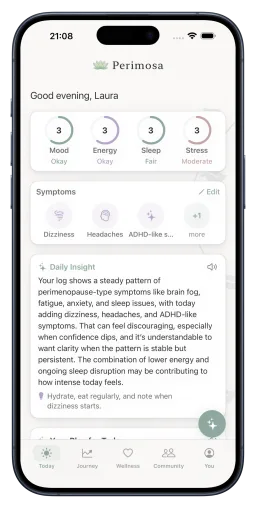
Finally understand what your body is doing
Perimosa logs how you feel each day, finds the pattern, and gives you the words to take to your doctor. Free on iPhone and iPad.
Get the free appWhat Brain Fog Actually Feels Like
Women describe perimenopause brain fog in remarkably consistent ways. You might reach for a common word and find it just won't come. You walk into a room with purpose, then stand there blankly. Reading a page of text requires multiple attempts because nothing sticks. You forget appointments, lose your keys, or zone out during conversations. Some women describe it as thinking through cotton wool, or as if their brain is running on dial-up instead of broadband. It's not a dramatic cognitive decline -- it's a frustrating, persistent fuzziness that makes everyday tasks require more effort.
Why Estrogen Affects Your Brain
Estrogen is not just a reproductive hormone -- it plays crucial roles in brain function. It promotes blood flow to the brain, supports the growth and maintenance of neural connections, regulates neurotransmitters involved in memory and attention (acetylcholine, serotonin, dopamine), and helps with glucose metabolism in brain cells. When estrogen fluctuates erratically during perimenopause, all of these processes become less reliable. The hippocampus, which is critical for memory, has a particularly high concentration of estrogen receptors.
Is It Permanent?
The reassuring news from research is that perimenopause brain fog is typically temporary. Studies following women through the menopausal transition show that cognitive function generally stabilizes and improves in post-menopause as the brain adapts to consistently lower estrogen levels. The worst brain fog tends to occur during the most hormonally turbulent phase -- typically the year or two before and after the final menstrual period. This doesn't mean you should just wait it out if it's significantly affecting your life, but it does mean this isn't the beginning of a permanent decline.
Strategies That Help
Several evidence-based strategies can reduce brain fog severity. Physical exercise increases blood flow to the brain and promotes neuroplasticity. Adequate sleep is critical -- sleep is when your brain consolidates memories and clears metabolic waste. Omega-3 fatty acids support brain cell membrane health. Reducing multitasking and using external memory aids (lists, calendars, phone reminders) reduces cognitive load. Staying mentally active through reading, puzzles, or learning new skills helps maintain neural pathways. Some women find that HRT significantly improves cognitive function.
When to Be Concerned
While brain fog during perimenopause is normal, it's worth discussing with your doctor if it's severe enough to affect your work or safety, if it's worsening progressively rather than fluctuating, or if you have a family history of early-onset dementia. Your doctor can check for contributing factors like thyroid dysfunction, vitamin B12 deficiency, iron deficiency, sleep apnea, or depression, all of which can cause or worsen cognitive symptoms. Tracking your brain fog patterns alongside other symptoms in an app like Perimosa can help distinguish hormonal fog from other causes.
References
Medical disclaimer: This article is for informational purposes only and does not constitute medical advice. Always consult a qualified healthcare provider for diagnosis and treatment decisions. Perimosa is a symptom tracking tool, not a medical device.