A perimenopause sleep tracker that understands why you keep waking up at 3am.
A perimenopause sleep tracker monitors your sleep quality, night sweats, and wake-up patterns during the menopausal transition, revealing how disrupted sleep connects to daytime symptoms like brain fog, mood swings, and fatigue. Perimosa tracks sleep as part of your complete perimenopause picture.
Sleep disruption is one of the earliest and most impactful perimenopause symptoms. You might start waking at 3am for no apparent reason. Night sweats might drench your sheets. You might fall asleep easily but wake feeling exhausted. These changes affect everything from your cognitive function to your emotional resilience. Perimosa helps you track exactly what is happening with your sleep and shows you how it connects to every other symptom you experience.
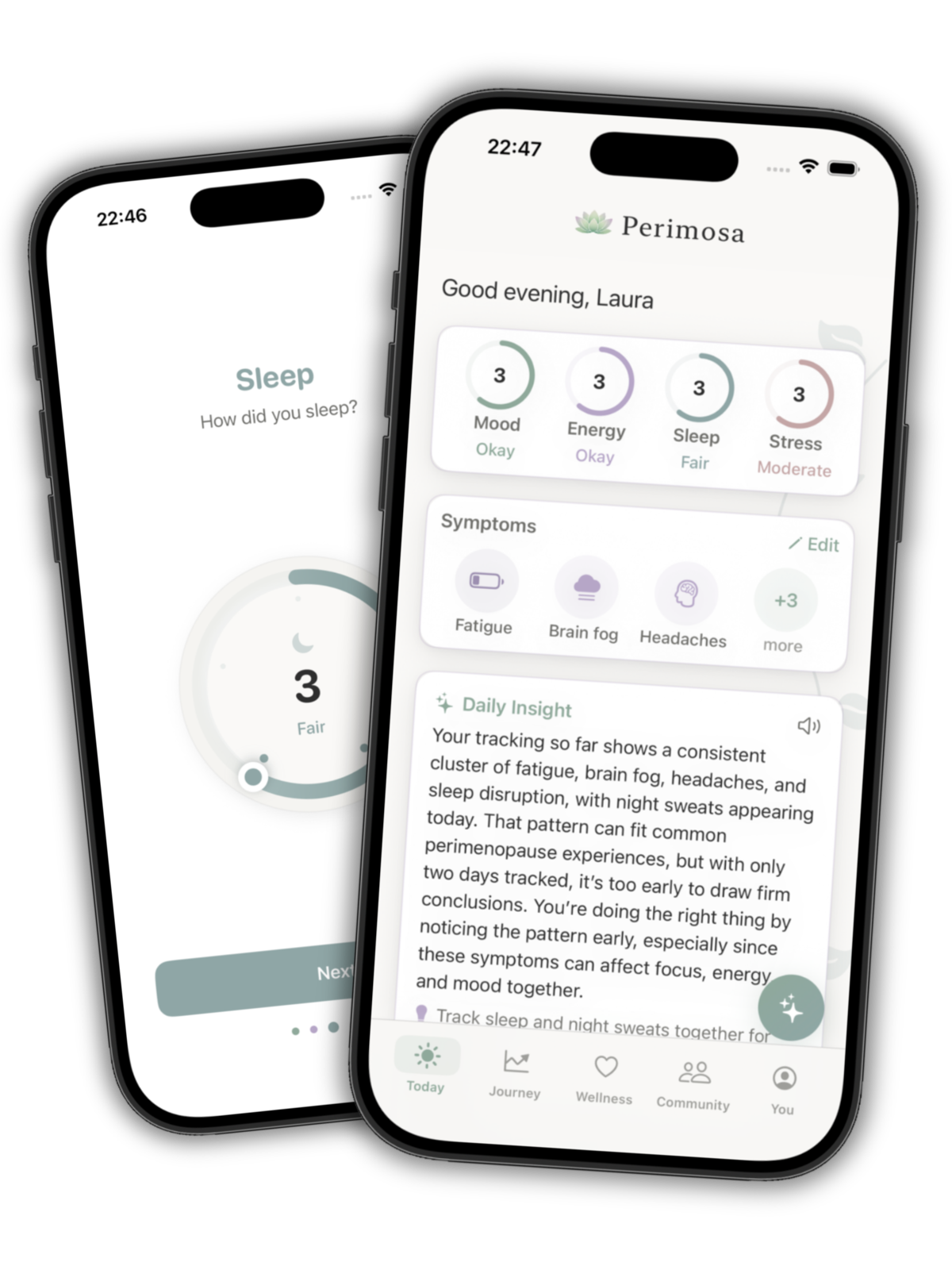
How Perimosa Tracks Your Sleep
Sleep Quality Tracking
Rate your sleep quality each morning on an intuitive dial. Log how long it took to fall asleep, how many times you woke up, and how rested you feel.
Night Sweat Logging
Track night sweats with severity and frequency. See how nighttime vasomotor episodes affect your sleep quality and next-day symptoms.
Sleep-Symptom Cascades
Perimosa's AI shows how poor sleep cascades into next-day brain fog, mood changes, and symptom flare-ups. Understand the ripple effect of each disrupted night.
Sleep Trend Analysis
Track your sleep quality over weeks and months. See whether changes in habits, environment, or routine are making a measurable difference.
Why Perimenopause Disrupts Sleep
Sleep disruption during perimenopause has multiple overlapping causes. Declining progesterone, which has natural sedative properties, makes it harder to stay asleep. Estrogen fluctuations affect body temperature regulation, leading to night sweats that wake you up. Increased cortisol, often linked to the stress of navigating this transition, can cause early morning waking. Anxiety and racing thoughts, fueled by hormonal changes, make it difficult to fall back asleep. And the cumulative sleep debt from weeks of disrupted nights creates a vicious cycle where poor sleep worsens the very symptoms that caused the disruption in the first place.
The Ripple Effect of Poor Sleep During Perimenopause
Sleep is the foundation of almost every other perimenopause symptom. When you sleep poorly, your brain fog worsens, your mood drops, your pain threshold decreases, your hot flashes may intensify, your stress tolerance shrinks, and your energy plummets. This is not an exaggeration. Research consistently shows that sleep quality is the strongest predictor of overall wellbeing during the menopausal transition. Perimosa tracks this ripple effect in your personal data. It shows you exactly how your sleep quality on Tuesday night affected your brain fog, mood, and energy on Wednesday. This makes the invisible visible and gives you a concrete reason to prioritize sleep above other interventions.
Tracking Night Sweats and Their Impact
Night sweats are more than a nighttime inconvenience. Each episode disrupts your sleep architecture, pulling you out of deep sleep or REM sleep and forcing your body to thermoregulate. Multiple episodes in a single night can leave you feeling like you did not sleep at all, even if you were technically in bed for eight hours. Perimosa tracks night sweat frequency and severity alongside your sleep quality rating, creating a clear picture of how vasomotor episodes are affecting your rest. Many users discover that their night sweats follow patterns related to what they ate or drank in the evening, the temperature of their bedroom, their stress level before bed, or their position in their cycle.
What women are saying
“I finally stopped Googling my symptoms at 2am. Perimosa showed me my sleep and hot flashes are connected, and what to do about it. My sleep quality score has gone from averaging a 3 to a 6 just by addressing the patterns the app found.”
Sarah, 43
Tracking for 3 months
Frequently Asked Questions
Why do I keep waking up at 3am during perimenopause?+
Early morning waking is very common during perimenopause and is often linked to declining progesterone levels, which have natural sleep-maintaining properties, and cortisol patterns that shift during the menopausal transition. Night sweats, anxiety, and bladder changes can also contribute to middle-of-the-night waking.
How does Perimosa track sleep differently from a sleep app?+
Standalone sleep apps track sleep duration and quality in isolation. Perimosa tracks sleep as part of your complete perimenopause picture, connecting sleep quality to next-day symptoms like brain fog, mood changes, and hot flash frequency. The AI identifies how your sleep patterns interact with your other perimenopause symptoms.
Can tracking sleep actually help me sleep better?+
Tracking alone does not change your sleep, but understanding your patterns empowers you to make targeted changes. Users often discover specific factors that worsen or improve their sleep, such as evening caffeine timing, bedroom temperature, or pre-bed screen use. Armed with this personal data, changes become more effective.
Should I see a doctor about perimenopause sleep problems?+
If sleep disruption is significantly affecting your daily functioning, consulting a healthcare provider is recommended. Bringing your Perimosa sleep tracking data provides your doctor with a clear picture of the frequency and severity of disruptions, which helps them make more informed recommendations.
Understand your sleep and reclaim your mornings
Track sleep disruptions, night sweats, and their ripple effects. Perimosa is free to download.
Free on iOS · Android
Perimosa is a tracking and awareness tool. If you are experiencing chronic insomnia or severe sleep disruption, please consult a healthcare provider.