Are Perimenopause Symptoms Worse Than Menopause?
For many women, perimenopause symptoms are actually worse than menopause itself. The dramatic hormone fluctuations of perimenopause -- estrogen swinging up and down rather than just being low -- produce more intense mood swings, sleep disruption, and physical symptoms than the stable low-estrogen state after menopause.
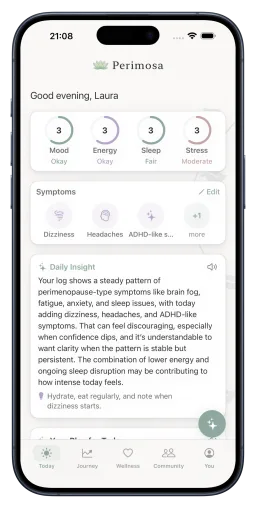
Finally understand what your body is doing
Perimosa logs how you feel each day, finds the pattern, and gives you the words to take to your doctor. Free on iPhone and iPad.
Get the free appFluctuation Is Harder Than Stability
The body adapts to consistent hormone levels better than it does to wild swings. During perimenopause, estrogen can be very high one week and very low the next -- and this volatility produces more dramatic symptoms than the steady low estrogen of postmenopause. Mood swings, brain fog, anxiety, and sleep disruption are often most severe during late perimenopause when the swings are most intense. Once your body settles into the new postmenopausal baseline, these often improve.
Symptoms That Often Improve After Menopause
Several symptoms peak during perimenopause and improve afterward. Mood instability and rage often calm once hormones stop swinging. Heavy or unpredictable bleeding ends entirely. Brain fog typically improves within a few years post-menopause. Sleep can stabilize once night sweats decrease. Migraines linked to estrogen drops often improve or resolve. The emotional volatility many women describe as 'feeling crazy' tends to fade.
Symptoms That Persist or Worsen
Not everything gets better. Hot flashes typically continue for 5-10 years post-menopause for many women. Vaginal dryness, urinary urgency, and recurrent UTIs often worsen because low estrogen continues affecting genitourinary tissues -- these respond very well to local estrogen treatment. Bone density loss accelerates in the first few years. Cardiovascular risk increases. Weight management remains challenging. Skin and hair changes continue.
What This Means Practically
If you're in the thick of perimenopause and feel like you're losing your mind, take heart -- for most women, this is the hardest phase, and it does eventually pass. That doesn't mean you should suffer through it untreated. Effective treatments exist for the worst perimenopausal symptoms. Track your symptoms over time so you can both validate what you're experiencing and measure whether treatments are working. Knowing the storm has a foreseeable end helps many women endure the worst of it.
Which Specific Symptoms Tend to Be Worst in Perimenopause
Some symptoms specifically peak during perimenopause and improve significantly after menopause. Mood instability and 'rage' often calm as hormones stop swinging. Heavy or unpredictable bleeding ends entirely once you're postmenopausal. Migraines linked to estrogen drops typically improve. The 'feeling crazy' emotional volatility many women describe usually fades within a year or two of menopause. Severe PMS-related symptoms disappear. Cyclical breast tenderness ends. Brain fog often improves within a few years post-menopause. If you're currently in the thick of any of these and feel like you can't take it anymore, it helps to know that this specific phase is typically time-limited.
What Tracking Reveals About the Trajectory
Tracking symptoms consistently from perimenopause into postmenopause shows the trajectory more clearly than memory does. Many women look back and underestimate how rough perimenopause was for them. The data in Perimosa across years tells the truer story: the peak intensity in late perimenopause, the gradual stabilization in early postmenopause, and which symptoms persisted versus resolved. This longitudinal record is also valuable for treatment decisions -- knowing whether your hot flashes are getting better, worse, or staying the same year over year informs whether to continue HRT, taper, or escalate. Without tracking, these decisions are guesswork.
Why Recognition of This Pattern Matters
When women understand that perimenopause is often the hardest phase, several things shift. The despair of 'this is my new life forever' becomes 'this is a temporary peak.' Decision-making about HRT becomes clearer -- the years of peak symptoms are exactly when intervention has the biggest impact. Partners, families, and workplaces can be educated that this is a finite phase rather than a permanent change. And women endure the worst of it with hope rather than resignation. The 'it gets worse before it gets better, then it does get better' narrative is more accurate than either 'perimenopause is forever' or 'menopause will be a nightmare.'
Bottom Line
For most women, perimenopause -- especially late perimenopause -- is genuinely harder than postmenopause. The dramatic hormone fluctuations produce more intense symptoms than the stable low-estrogen state that follows. Mood symptoms, sleep disruption, and emotional volatility typically improve after menopause. Hot flashes, genitourinary symptoms, and long-term health risks (bone, cardiovascular) require ongoing attention. The 'window of opportunity' for HRT during late perimenopause and early postmenopause carries the most benefits with the lowest risks. Knowing perimenopause is a peak rather than a permanent state can help you endure the worst of it -- and motivate the treatment decisions that improve quality of life during this finite period.
References
Medical disclaimer: This article is for informational purposes only and does not constitute medical advice. Always consult a qualified healthcare provider for diagnosis and treatment decisions. Perimosa is a symptom tracking tool, not a medical device.