Can Perimenopause Cause Heart Palpitations?
Yes, perimenopause can cause heart palpitations. Fluctuating estrogen affects the autonomic nervous system and cardiac electrical activity, causing the heart to beat faster, skip beats, or flutter. While usually benign, new palpitations should always be evaluated by a healthcare provider.
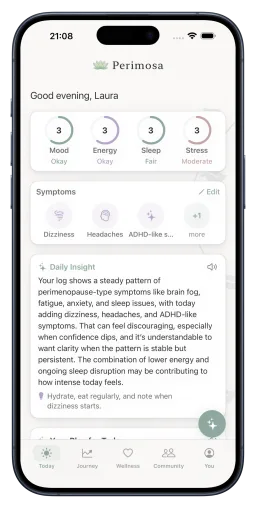
Finally understand what your body is doing
Perimosa logs how you feel each day, finds the pattern, and gives you the words to take to your doctor. Free on iPhone and iPad.
Get the free appWhy Hormones Affect Your Heart
Estrogen has a direct protective effect on the cardiovascular system. It helps maintain blood vessel flexibility, supports healthy cholesterol levels, and has a regulating effect on the heart's electrical system. When estrogen levels fluctuate sharply during perimenopause, the autonomic nervous system can become dysregulated, leading to palpitations. The sudden drops in estrogen can trigger adrenaline surges that cause the heart to race or beat irregularly. This is the same mechanism behind the racing heart that often accompanies hot flashes.
What Palpitations Feel Like
Perimenopausal heart palpitations may feel like your heart is racing without physical exertion, skipping beats or having extra beats, fluttering or flipping in your chest, pounding hard enough that you can feel it in your throat or neck, or a sudden thud followed by a pause. They often occur at night (when progesterone is lowest and you're more aware of your body) or alongside hot flashes. Episodes typically last seconds to minutes and resolve on their own.
When Palpitations Are Concerning
While most perimenopausal palpitations are benign, see a doctor promptly if palpitations are accompanied by chest pain, shortness of breath, or fainting; if they last longer than a few minutes; if they're happening frequently (multiple times daily); or if you have a family history of heart disease or arrhythmia. Your doctor may recommend an ECG, Holter monitor, blood tests (thyroid, electrolytes, iron), or echocardiogram to rule out structural or electrical heart issues.
Managing Palpitations
Reducing known triggers can significantly decrease palpitation episodes. Common triggers include caffeine, alcohol, dehydration, stress, lack of sleep, and low blood sugar. Staying hydrated, managing stress through breathing exercises or meditation, getting regular exercise, and avoiding large meals before bed all help. Magnesium supplementation may reduce palpitations in some women. For persistent palpitations, hormone therapy can help by stabilizing estrogen levels. If an underlying arrhythmia is identified, your cardiologist will recommend appropriate treatment.
Tracking Your Heart Symptoms
Keeping a log of when palpitations occur, what you were doing, what you ate or drank beforehand, and any accompanying symptoms (hot flash, anxiety, night sweat) can reveal patterns. Many women discover their palpitations cluster around specific phases of their cycle or specific triggers. This information is invaluable for your healthcare provider. Tracking tools like Perimosa allow you to log heart palpitations alongside your other symptoms to identify correlations over time.
References
Medical disclaimer: This article is for informational purposes only and does not constitute medical advice. Always consult a qualified healthcare provider for diagnosis and treatment decisions. Perimosa is a symptom tracking tool, not a medical device.