Can Perimenopause Cause Dizziness?
Yes, perimenopause can cause dizziness, lightheadedness, and occasional vertigo. Fluctuating estrogen affects the inner ear, blood pressure regulation, blood sugar stability, and the vestibular system. Dehydration, poor sleep, anxiety, and low iron can intensify episodes. Frequent or severe dizziness should always be evaluated by a doctor.
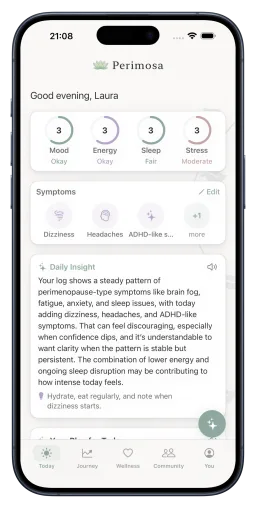
Finally understand what your body is doing
Perimosa logs how you feel each day, finds the pattern, and gives you the words to take to your doctor. Free on iPhone and iPad.
Get the free appWhy Hormones Cause Dizziness
Estrogen receptors are found throughout the vestibular system, which controls balance. When estrogen levels fluctuate erratically during perimenopause, this delicate balance system can become temporarily unstable. Estrogen also influences blood pressure regulation and the blood vessels in the inner ear -- both of which directly affect whether you feel steady on your feet. Many women describe their first perimenopausal dizzy spell as alarming because it appears without any obvious cause.
What Perimenopause Dizziness Feels Like
Women describe several distinct sensations: a mild lightheadedness when standing up too quickly, a brief room-spinning vertigo that resolves in seconds, a vague feeling of unsteadiness while walking, or floating sensations during stress. Episodes can also occur alongside hot flashes or right before a period. Severity varies day to day, which is why tracking when dizziness happens reveals whether it follows a hormonal pattern or something else.
Other Causes to Rule Out
Because dizziness has many possible causes, it's important to see a doctor if episodes are frequent, severe, or accompanied by other symptoms. Conditions that mimic perimenopausal dizziness include BPPV (benign positional vertigo), inner ear infections, low iron, thyroid disorders, blood pressure issues, dehydration, low blood sugar, and certain medications. Sudden severe dizziness with headache, weakness, vision changes, or speech difficulty warrants immediate medical evaluation.
What Actually Helps
Stay well-hydrated -- even mild dehydration intensifies dizziness. Eat regularly to keep blood sugar stable. Stand up slowly, especially after sitting for long periods. Reduce alcohol and caffeine, which can disrupt inner ear fluid balance. Address sleep quality and stress, both of which amplify hormonal symptoms. If anxiety contributes, breathing exercises and CBT can help. Tracking your dizzy spells alongside other symptoms helps you and your doctor identify triggers.
The Patterns Most Women Notice
When perimenopausal women track dizziness over a few weeks, patterns reliably emerge. Episodes often cluster in the late luteal phase as estrogen drops sharply before a period. Some women see a morning pattern -- dizzy spells in the first hour after waking, especially if dinner was light. Stressful days and poor sleep nights are reliably followed by worse dizziness the next day. Hot weather, dehydration, and skipped meals increase episode frequency dramatically. Caffeine on an empty stomach is a common trigger many women never connect. Tracking dizziness alongside cycle phase, sleep quality, hydration, and meals in Perimosa reveals the personal pattern in 2-3 weeks. Once you can predict when episodes are most likely, prevention becomes possible -- a meal an hour earlier, an extra glass of water, a less ambitious schedule on bad-pattern days.
When You Should See a Doctor Now
Mild occasional dizziness usually doesn't require urgent care. But certain patterns warrant immediate evaluation: sudden severe dizziness with weakness on one side, vision changes, slurred speech, or severe headache (rule out stroke); recurrent fainting or near-fainting; chest pain or shortness of breath alongside dizziness; dizziness after starting a new medication. For non-urgent but persistent dizziness, request a workup that includes iron studies, vitamin B12, thyroid panel, fasting glucose and A1c, ECG if palpitations are present, and blood pressure measurements both lying and standing. Dismissing dizziness as 'just perimenopause' without these tests is a common mistake -- iron deficiency in perimenopausal women with heavy bleeding is missed all the time, and it's a treatable major contributor.
Why This Often Gets Dismissed
Dizziness sits in an uncomfortable gap for doctors -- it's vague, it's intermittent, and there's no single test to diagnose it. Many women describe being told it's anxiety, dehydration, or 'just stress' on their first visit without any workup. This is one of the most common cases where bringing data fundamentally changes the conversation. A woman who says 'I sometimes feel dizzy' will often be reassured and sent home. A woman who shows two weeks of timestamped episodes, each with surrounding context (sleep, food, cycle day, stress level), gets taken seriously. The data forces the conversation to be specific. This is the single biggest reason to track before your appointment, not after.
Bottom Line
Perimenopausal dizziness is real, common, and usually benign -- but you should never assume that without evaluation. Track episodes for 2-3 weeks to identify your triggers and rule out emergencies. Address the foundations: regular meals to keep blood sugar stable, 2+ liters of water daily, consistent sleep, and reduced alcohol. Ask your doctor for the full workup above rather than accepting a guess. And don't suffer in silence -- the small changes (eating earlier, hydrating more, slowing morning transitions) often reduce episode frequency by 50% or more within a month. If foundation changes don't help and dizziness persists, HRT improves vasomotor-related dizziness for many women.
References
Medical disclaimer: This article is for informational purposes only and does not constitute medical advice. Always consult a qualified healthcare provider for diagnosis and treatment decisions. Perimosa is a symptom tracking tool, not a medical device.