Can Perimenopause Cause Itchy Skin?
Yes, perimenopause can cause itchy skin. Declining estrogen reduces collagen, oil production, and skin hydration, making skin dry and reactive. Some women also experience formication -- a sensation of crawling, tingling, or 'electric' skin -- which is a recognized hormonal symptom and not in your imagination.
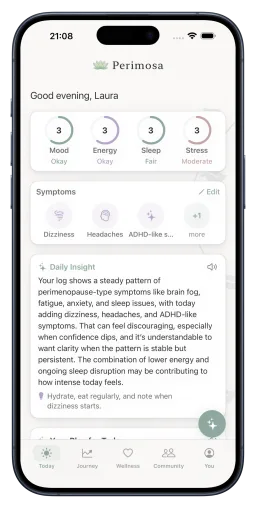
Finally understand what your body is doing
Perimosa logs how you feel each day, finds the pattern, and gives you the words to take to your doctor. Free on iPhone and iPad.
Get the free appHow Estrogen Affects Your Skin
Estrogen is essential for skin health. It stimulates collagen production, maintains the lipid barrier that keeps moisture in, supports oil gland function, and influences nerve sensitivity in the skin. As estrogen declines during perimenopause, all of these functions weaken. Skin becomes drier, thinner, more reactive, and itchier. The change can feel sudden -- many women describe their skin acting like a stranger compared to how it behaved a year earlier.
Formication: The Crawling Skin Symptom
Formication is the sensation that insects are crawling on or just under your skin. It can also feel like prickling, tingling, or electric currents. It's a recognized symptom of perimenopause caused by fluctuating estrogen affecting peripheral nerves. It's harmless but can be deeply unsettling, especially at night. The first time it happens many women fear something neurological is wrong -- but for most, it resolves as hormone levels stabilize. Tell your doctor; don't suffer in silence.
Other Skin Changes During Perimenopause
Beyond itchiness, women often notice their skin becoming thinner, less elastic, and slower to heal. Adult acne can appear or return as the ratio of androgens to estrogen shifts. Age spots may emerge faster. The skin barrier weakens, making you more reactive to products you've used for years. Some women develop new sensitivities to fragrances, fabrics, or detergents. These changes reflect estrogen's central role in maintaining skin integrity.
What Helps Itchy Perimenopausal Skin
Switch to fragrance-free, gentle cleansers and moisturizers with ceramides, hyaluronic acid, or colloidal oatmeal. Shorten and cool down showers; hot water strips natural oils. Apply moisturizer to damp skin to lock in hydration. Drink enough water and eat omega-3-rich foods. Use a humidifier if your home air is dry. If itching disrupts sleep or daily life, see a dermatologist -- conditions like eczema and contact dermatitis can be triggered or worsened by perimenopausal skin changes.
How to Tell Hormonal Itching From Something Else
Several conditions look like perimenopausal itching but require different treatment. Eczema flares often appear or worsen during perimenopause because the skin barrier weakens -- but eczema usually involves visible red patches, cracking, or weeping skin in specific zones. Allergic contact dermatitis follows a new product (laundry detergent, new lotion, new fabric) and tends to be localized. Liver or thyroid issues can cause generalized itching and warrant blood work if itching is severe. Scabies in adults gets missed often -- it's intensely itchy at night, usually starts in finger webs, and is contagious. If your itching has a clear visible rash, is localized, or doesn't improve with skin-barrier basics, it probably isn't just hormones.
Why Formication Is the Symptom Doctors Miss Most
Formication -- the sensation of insects crawling on or under your skin -- is one of the most under-recognized perimenopause symptoms. Many women never mention it because it sounds 'crazy.' Many doctors don't know it's a recognized hormonal symptom and refer women to neurology or psychiatry. The result: anxious women being worked up for delusional parasitosis when the underlying cause is fluctuating estrogen affecting peripheral nerves. If you experience this, name it directly with your doctor: 'I've been experiencing formication, which I understand is a recognized perimenopause symptom.' Most cases resolve with hormone stabilization (often HRT) or as you progress through the transition.
What Tracking Reveals About Skin Symptoms
Most women's perimenopausal skin issues have a cyclical pattern, and tracking them in Perimosa for a few weeks usually exposes it clearly. Itching often spikes in the days before a period when estrogen drops. Acne breakouts may follow the same pattern or appear mid-cycle. Formication episodes often cluster at night. Logging skin symptoms alongside cycle, sleep, and stress reveals which interventions are worth pursuing. Without tracking, women often try 5-6 products in random sequence and can't tell what worked. With cycle-aware tracking, you can match interventions to your worst days and measure actual impact rather than guessing.
Bottom Line
Perimenopausal skin changes are real, common, and mostly manageable -- but they require patience because skin turnover takes weeks. Switch to a fragrance-free routine with ceramides and hyaluronic acid. Shorten and cool showers. Apply moisturizer to damp skin within three minutes of stepping out. Use a humidifier in dry climates. Address omega-3 intake from food or supplements. If itching is severe, a dermatologist appointment is warranted -- they can rule out other causes and prescribe stronger topicals when needed. For widespread severe itching, HRT often resolves the underlying cause when nothing else has worked.
References
Medical disclaimer: This article is for informational purposes only and does not constitute medical advice. Always consult a qualified healthcare provider for diagnosis and treatment decisions. Perimosa is a symptom tracking tool, not a medical device.