Does Perimenopause Cause Joint Pain?
Yes, perimenopause commonly causes joint pain and stiffness, sometimes called menopausal arthralgia. Estrogen has anti-inflammatory properties and helps maintain joint lubrication and cartilage. As estrogen declines, inflammation increases and joints feel stiff, achy, or sore -- particularly in the morning. Fingers, knees, hips, and shoulders are most affected.
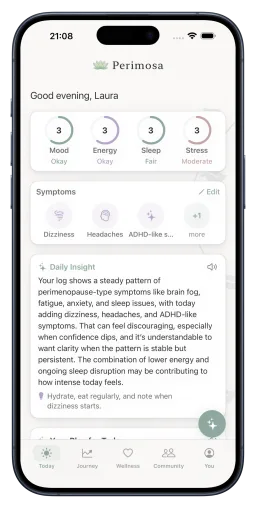
Finally understand what your body is doing
Perimosa logs how you feel each day, finds the pattern, and gives you the words to take to your doctor. Free on iPhone and iPad.
Get the free appWhy Hormones Affect Joints
Estrogen does much more than regulate reproduction. It modulates inflammation, supports cartilage health, maintains joint lubrication via synovial fluid, and influences how the body perceives pain. When estrogen declines during perimenopause, inflammatory cytokines rise, joints become less cushioned, and pain signaling sensitizes. Women often notice symptoms most acutely in the morning -- joints feel stiff for the first 30 minutes after waking before loosening with movement.
Which Joints Are Most Affected
The fingers, wrists, knees, hips, and shoulders are the most commonly affected areas. Many women notice it first in the small joints of the hands -- a sense of stiffness when making a fist in the morning. Knees may ache going up stairs. Hips can feel sore after sitting too long. The pattern is often symmetric -- both sides at once. This is different from the asymmetric pattern of mechanical joint injury.
When to See a Doctor
While most perimenopausal joint pain is benign, certain patterns warrant medical evaluation. Swelling, redness, or warmth in a joint, severe morning stiffness lasting hours, asymmetric pain in a single joint, or systemic symptoms like fatigue and rash could indicate rheumatoid arthritis, lupus, or another autoimmune condition that can emerge during the hormonal transition. A doctor can run blood tests and imaging to differentiate.
What Actually Helps
Regular low-impact exercise (walking, swimming, cycling, yoga) lubricates joints and reduces stiffness more than rest. Strength training protects joints by building supporting muscle. Omega-3 fatty acids and a Mediterranean-style diet reduce systemic inflammation. Maintain a healthy weight to lessen joint load. Vitamin D and calcium support bone and joint health. For severe symptoms, HRT can dramatically improve joint pain. Track which activities help versus hurt to build your personal plan.
How to Tell Hormonal Joint Pain From Arthritis
Several patterns differentiate menopausal arthralgia from inflammatory joint disease. Hormonal joint pain typically affects multiple joints symmetrically (both hands, both knees), is worst in the morning but eases within 30-60 minutes of moving, often cycles with menstrual phase, lacks visible swelling or warmth, and has no systemic symptoms like fever, rash, or weight loss. Rheumatoid arthritis, by contrast, often produces visible swelling, warmth, prolonged morning stiffness (1+ hours), and progressive joint damage. Lupus may include rashes, sun sensitivity, and fatigue. Osteoarthritis is usually asymmetric and weight-bearing joints first. If your joint pain has any 'red flag' features, push for blood work (RF, anti-CCP, ANA, CRP, ESR) rather than accepting 'just hormones.'
Why Tracking Joint Pain Changes Treatment
Joint pain is the kind of symptom doctors find easy to dismiss until you bring data. Tracking which joints hurt, when, how badly (0-10 scale), what helps, and the relationship to cycle phase in Perimosa over 4-6 weeks turns a vague complaint into a clear pattern. Women who track this consistently catch things they'd otherwise miss: 'my knees flare every month between days 24 and 28' is far more actionable than 'my knees hurt sometimes.' This pattern data also makes the case for HRT when joint pain is genuinely hormonal -- doctors are more responsive to specific cyclical patterns than to vague complaints.
Exercises That Help vs. Hurt
Counterintuitively, the worst thing for perimenopausal joint pain is rest. Joints lubricate and tissues remain healthy with regular movement. The best evidence supports low-impact daily movement (walking, swimming, cycling) plus 2-3 strength sessions weekly. Yoga improves flexibility and joint mobility. Tai chi is excellent for hip and knee stability. What hurts: long sedentary periods broken by sudden intense activity, high-impact exercise that aggravates already-inflamed joints, and the misguided strategy of waiting until pain resolves before resuming activity (it gets worse with deconditioning).
Bottom Line
Menopausal joint pain affects up to 50% of perimenopausal women and is one of the most commonly missed symptoms. Track patterns for 4-6 weeks to confirm a hormonal connection and rule out other causes. Move daily, lift weights twice weekly, and don't deconditioning yourself into chronic pain. Anti-inflammatory diet (Mediterranean pattern, omega-3s, reduced processed foods and alcohol) helps. For persistent severe joint pain interfering with daily life, talk to your doctor about HRT, which dramatically improves joint pain for many women when it's truly hormonally driven. Don't accept it as inevitable -- it's treatable.
References
Medical disclaimer: This article is for informational purposes only and does not constitute medical advice. Always consult a qualified healthcare provider for diagnosis and treatment decisions. Perimosa is a symptom tracking tool, not a medical device.