Can Perimenopause Cause Nausea?
Yes, perimenopause can cause nausea. Hormonal fluctuations affect gut motility, blood sugar, and the autonomic nervous system. Nausea can occur during hot flashes, alongside migraines, around your period, or with anxiety. While usually benign, persistent or severe nausea should always be evaluated by a doctor.
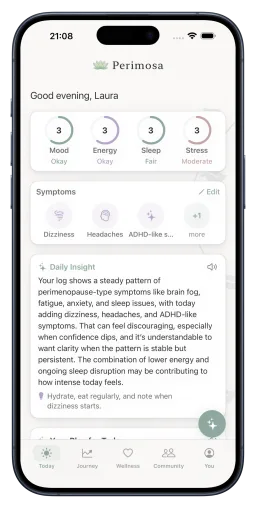
Finally understand what your body is doing
Perimosa logs how you feel each day, finds the pattern, and gives you the words to take to your doctor. Free on iPhone and iPad.
Get the free appWhy Hormonal Shifts Cause Nausea
Estrogen and progesterone both influence the digestive system. Estrogen affects gut motility, the lining of the stomach, and bile production. When these hormones fluctuate dramatically during perimenopause, the digestive system can become unsettled in ways that produce nausea. Some women experience this monthly around ovulation or before their period; others feel waves of nausea seemingly at random. It's similar in mechanism to morning sickness during pregnancy, where rapid hormone shifts produce nausea.
Nausea Patterns to Notice
Track when nausea happens. Common patterns include: alongside hot flashes (the surge of adrenaline that triggers the flash can also produce nausea), with migraines or severe headaches, around your period when hormones drop sharply, in the morning shortly after waking, or with anxiety episodes. Each pattern points to a slightly different mechanism. Identifying yours helps determine the right management approach.
When to See a Doctor
Most perimenopausal nausea is mild and intermittent. But persistent daily nausea, nausea with vomiting, weight loss, pain, or other concerning symptoms should be evaluated. Gallbladder issues become more common in perimenopause and can cause nausea after fatty meals. Acid reflux often worsens. Thyroid changes can cause nausea. Pregnancy is still possible during perimenopause -- if there's any chance, test before assuming hormones.
What Helps
Eat smaller, more frequent meals to keep blood sugar stable. Avoid heavy or greasy foods that trigger nausea. Ginger -- in tea, capsules, or candied form -- has strong evidence for reducing nausea. Stay well-hydrated. Manage stress, since anxiety amplifies nausea. If nausea co-occurs with hot flashes, treating the hot flashes often resolves the nausea. Track patterns alongside other symptoms to build the data your doctor needs.
Patterns That Distinguish Hormonal Nausea
Hormonal nausea has tell-tale patterns that distinguish it from gastrointestinal causes. It typically waxes and wanes with your cycle -- worst in the late luteal phase or around ovulation. It often co-occurs with other hormonal symptoms (hot flashes, mood shifts, breast tenderness). It tends to be mild-to-moderate and intermittent rather than relentless. Food doesn't usually trigger it the way it would with reflux or gallbladder disease. Tracking your nausea episodes in Perimosa alongside cycle phase and other symptoms over a month usually reveals the pattern clearly. Once you can see that nausea hits on days 24-28 each cycle, you can plan ahead and treat it pre-emptively rather than reactively.
When Nausea Means Something Else
Several conditions cause nausea and become more common in perimenopause. Gallbladder disease (especially in women with weight gain or HRT) often produces nausea after fatty meals, sometimes with right-upper-quadrant pain. GERD/acid reflux can cause nausea with regurgitation, especially lying down. Migraines often include nausea (sometimes without obvious headache -- called 'silent migraine'). Thyroid issues, both hyper- and hypo-, can cause nausea. Pregnancy is still possible in perimenopause and is the most common missed cause of new nausea. Persistent daily nausea, nausea with weight loss, severe pain, or vomiting blood warrants prompt medical evaluation, not 'just hormones.'
What Actually Reduces Hormonal Nausea
Ginger has the strongest evidence -- 1000-1500mg daily as capsules, fresh tea, or candied form. Acupressure wristbands (sea-bands) help some women, especially during morning episodes. Small, frequent meals prevent the blood-sugar swings that worsen nausea. Avoiding strong smells when you're vulnerable. Protein at breakfast stabilizes the morning hours. Reducing caffeine, especially on empty stomach. For severe perimenopausal nausea linked to migraines or hot flashes, treating the underlying issue (with HRT, migraine prevention, or magnesium) often resolves the nausea downstream. Anti-emetic medication is rarely necessary for hormonal nausea but can bridge during particularly bad weeks.
Bottom Line
Perimenopausal nausea is real but underdiscussed compared to hot flashes or mood symptoms. Most cases are mild, cyclical, and respond well to ginger, regular small meals, and stress reduction. But never assume it's hormonal without ruling out other causes -- especially if it's persistent, severe, or accompanied by pain, weight loss, or other GI symptoms. Track for a month to confirm the cyclical pattern, then treat the underlying cause if you find one. For perimenopausal women, the most commonly missed alternative causes are gallbladder issues, silent migraine, and pregnancy -- all worth ruling out before chalking it up to hormones.
References
Medical disclaimer: This article is for informational purposes only and does not constitute medical advice. Always consult a qualified healthcare provider for diagnosis and treatment decisions. Perimosa is a symptom tracking tool, not a medical device.