Can Perimenopause Make You Lose Interest in Things You Used to Enjoy?
Yes, perimenopause can cause loss of interest in things you used to enjoy -- a symptom called anhedonia. It can reflect hormone-driven shifts in dopamine and reward processing, depression, or chronic fatigue from sleep disruption. If it persists beyond a few weeks or impacts daily function, talk to your doctor.
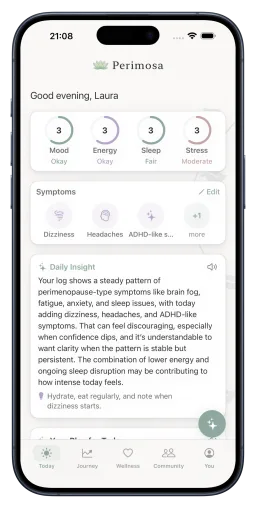
Finally understand what your body is doing
Perimosa logs how you feel each day, finds the pattern, and gives you the words to take to your doctor. Free on iPhone and iPad.
Get the free appAnhedonia During Perimenopause
Many women describe a strange flatness during perimenopause -- activities, foods, people, hobbies, and sex that used to bring pleasure suddenly feel muted or pointless. This is anhedonia, and it has biological roots. Estrogen supports dopamine signaling and reward processing in the brain. As estrogen fluctuates and declines, the brain's reward system becomes less responsive. The same activity can feel less rewarding even when nothing about it has objectively changed. It's not character change -- it's chemistry.
Distinguishing It From Depression
Anhedonia is a core symptom of depression, but it can also occur in perimenopause without full clinical depression. Depression typically includes pervasive low mood, sleep changes, appetite changes, fatigue, guilt or worthlessness, difficulty concentrating, and sometimes suicidal thoughts. If you have several of these alongside loss of interest, treatment for depression is warranted. If you mostly just feel flat and disengaged without other depressive symptoms, it may still warrant intervention but may reflect hormonal rather than depressive causes. A good doctor can help distinguish.
The Sleep and Fatigue Factor
Chronic sleep deprivation and fatigue produce anhedonia even in people who aren't depressed. When you're exhausted week after week, the energy required to engage with hobbies, social activities, or new interests isn't available. The brain prioritizes survival mode. Many women find that addressing sleep quality -- treating night sweats, building sleep routines, reducing alcohol -- restores their interest in activities within weeks. Don't underestimate how much chronic poor sleep mimics depression and anhedonia.
What Helps
Address the foundations first: sleep quality, exercise (which directly boosts dopamine), nutrition, and reducing alcohol. Force engagement with at least one activity you previously enjoyed even when you don't feel like it -- pleasure often follows action rather than preceding it. CBT can help with both depression and anhedonia. If symptoms persist 6+ weeks despite foundation work, see a doctor. HRT helps some women dramatically when symptoms are hormonally driven. Antidepressants help when depression is present. Don't accept feeling flat as your new normal.
How to Tell Hormonal Flatness From Burnout
Loss of interest can come from several sources that overlap during perimenopause. Hormonal anhedonia tends to be relatively cyclical (worse in late luteal phase), affects multiple activities at once, and often improves with proper sleep and treatment. Burnout from chronic overwhelm produces flatness specifically about responsibilities and roles, often with resentment and depletion. Depression includes flatness plus other symptoms (low mood, hopelessness, sleep/appetite changes, sometimes suicidal thoughts). Sleep deprivation alone produces a temporary flatness that resolves with rest. Tracking your interest in different activities in Perimosa alongside sleep, cycle phase, and stress over a few weeks reveals patterns that point to root cause.
The Reactivation Strategies That Actually Work
Loss of interest often resolves through behavioral activation rather than waiting to feel motivated. Force engagement with one activity you previously enjoyed -- 20 minutes, then stop. Schedule it on your calendar like an appointment. Pleasure often follows action rather than preceding it. Pair the activity with something easier: walk with a podcast you used to love, exercise during a favorite TV show. Reduce barriers to entry -- if reading feels too effortful, try audiobooks. If exercise feels overwhelming, just put on workout clothes and see what happens. Track engagement in Perimosa to see whether your interest level is actually returning over weeks. Sometimes feeling 'nothing' during an activity is fine; consistent engagement rebuilds the neural pathways for pleasure.
When This Means Depression and Needs Treatment
Anhedonia is a core symptom of clinical depression. Worth seeking professional evaluation if loss of interest is accompanied by: persistent low mood, hopelessness or worthlessness, sleep and appetite changes, severe fatigue, difficulty concentrating, withdrawal from people, and especially any thoughts of self-harm. Don't wait to see if it improves on its own if these are present. Effective treatments exist: therapy (especially CBT), SSRIs/SNRIs (often dramatically helpful), HRT when symptoms are hormonally driven, and addressing co-occurring issues like sleep, thyroid, vitamin D. The right intervention often produces significant improvement within 4-8 weeks. Don't accept feeling flat as your permanent normal.
Bottom Line
Loss of interest during perimenopause is real and biologically driven, but it's not your new identity -- it's typically a temporary phase that responds to the right interventions. Track what you've lost interest in alongside sleep, cycle, and stress in Perimosa to identify patterns and root causes. Address sleep aggressively (it drives most cases of mild anhedonia). Use behavioral activation -- force engagement with one previously-enjoyed activity for 20 minutes daily. Rule out depression and other treatable causes (thyroid, vitamin D, sleep apnea). If symptoms persist 6+ weeks despite foundations, seek professional help. The richness of life is worth pursuing actively rather than waiting for motivation to return.
References
Medical disclaimer: This article is for informational purposes only and does not constitute medical advice. Always consult a qualified healthcare provider for diagnosis and treatment decisions. Perimosa is a symptom tracking tool, not a medical device.