How Does Perimenopause Affect Work Performance?
Perimenopause can affect work performance through brain fog, fatigue from sleep disruption, mood instability, hot flashes during meetings, and reduced confidence. Studies suggest 1 in 10 women have considered leaving their jobs because of symptoms. Treatment, accommodations, and workplace awareness all help.
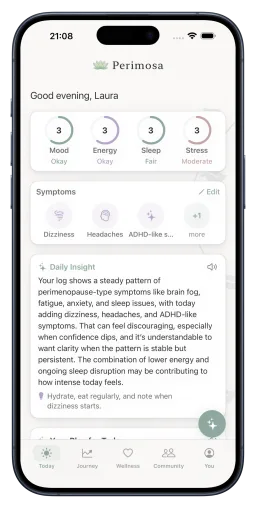
Finally understand what your body is doing
Perimosa logs how you feel each day, finds the pattern, and gives you the words to take to your doctor. Free on iPhone and iPad.
Get the free appThe Scale of the Workplace Impact
Research increasingly recognizes perimenopause as a significant workplace issue. Studies in the UK and US suggest 10-25% of women have considered reducing hours, changing roles, or leaving work entirely because of perimenopausal symptoms. Brain fog affects memory and decision-making. Fatigue from disrupted sleep reduces cognitive bandwidth. Mood instability strains professional relationships. Hot flashes during presentations or meetings are embarrassing and distracting. This happens precisely when many women are at career peaks with the most responsibility.
Which Symptoms Hit Work Hardest
Brain fog and memory issues affect knowledge work most -- forgetting commitments, struggling to find words in meetings, re-reading the same document. Sleep deprivation amplifies everything else and reduces decision-making capacity. Hot flashes can be physically uncomfortable in professional settings. Mood instability tests workplace relationships. Anxiety can make presentations or conflicts more difficult. Many women describe feeling like they're suddenly underperforming in roles they previously excelled in, which damages confidence.
What Helps at Work
Several practical strategies make a measurable difference. Identify your hardest hour of the day and protect it for solo focused work, not meetings. Take notes more aggressively -- it compensates for short-term memory issues. Schedule important conversations when you're at your best. Use cooling strategies (small fan at your desk, layered clothing, water with ice). Build in recovery time. If symptoms are severe, formally request accommodations -- some workplaces have menopause policies, and the Equality Act in the UK provides legal protection.
The Bigger Picture
Treating symptoms medically often produces dramatic improvement in work performance. HRT can resolve brain fog, fatigue, and mood symptoms within weeks for many women. Sleep interventions cascade into better cognition. Untreated, perimenopause can derail careers; treated effectively, most women continue performing at their previous level. Workplace culture around menopause is shifting -- more companies are offering policies and benefits. Advocating for yourself, both medically and professionally, prevents perimenopause from costing you more than it should.
Specific Workplace Accommodations Worth Considering
If symptoms significantly affect your work, several accommodations are reasonable to request. Flexible start times to accommodate sleep disruption. Ability to work from home on particularly bad days. Schedule control to put important meetings in your high-energy windows. A small fan at your desk and ability to wear layers for temperature management. Access to private space for hot flash management. Adjustments to physically demanding tasks if needed. In some jurisdictions (UK under the Equality Act, parts of Europe), perimenopause symptoms can qualify for formal accommodations. Even where there's no legal requirement, many employers respond reasonably when asked. Document the impact, propose specific solutions, and frame it as performance support rather than complaints.
How Brain Fog Specifically Hits Knowledge Work
Brain fog affects different types of work differently. Knowledge work is hit hardest -- writing, complex analysis, presentations, learning new systems all become significantly harder when cognitive function declines. Practical adaptations: take notes more aggressively (don't rely on memory), use checklists for previously routine tasks, schedule deep work for your sharpest hour of the day, batch similar tasks together rather than context-switching, use voice notes when typing feels harder, and don't be too proud to write things down that you never used to need to. These aren't permanent accommodations -- they're bridges through the hardest cognitive phase, which typically improves significantly post-menopause.
When to Consider Bigger Career Decisions
Some women face genuine decisions about career trajectory during perimenopause. Worth pausing to evaluate: Are your symptoms driving the consideration of leaving, or are there other reasons? Have you tried medical treatment that might dramatically improve symptoms? Is the issue your specific job (manageable with changes) or work in general (might recur in new role)? Studies show 10-25% of women consider reducing hours or leaving work because of perimenopause symptoms -- meaning many treatable cases become career-changing decisions when they didn't need to. Treat symptoms aggressively before making major career moves. Many women who were ready to quit found their performance returned with proper treatment.
Bottom Line
Perimenopause significantly affects work performance for a meaningful portion of women, often during peak career years with the most responsibility. Track your work performance and symptoms in Perimosa to identify patterns and high-impact areas. Implement practical accommodations -- some self-directed, some requested from your employer. Address symptoms medically rather than just enduring them -- HRT often dramatically improves brain fog, fatigue, and mood symptoms within weeks. Don't make major career decisions while symptoms are untreated -- many women regret moves made during peak symptom phases that wouldn't have been necessary with proper care. The transition is finite; your career is longer.
References
Medical disclaimer: This article is for informational purposes only and does not constitute medical advice. Always consult a qualified healthcare provider for diagnosis and treatment decisions. Perimosa is a symptom tracking tool, not a medical device.