Does Perimenopause Affect Mental Health?
Yes, perimenopause significantly affects mental health. Depression risk doubles during the transition. Anxiety often appears for the first time. Mood instability, rage, and emotional volatility are common. These aren't signs of psychological weakness -- they reflect estrogen's direct effect on brain chemistry. Treatment is effective when accessed.
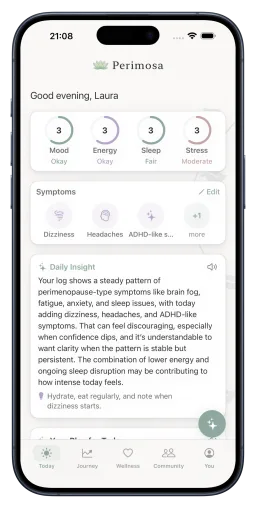
Finally understand what your body is doing
Perimosa logs how you feel each day, finds the pattern, and gives you the words to take to your doctor. Free on iPhone and iPad.
Get the free appThe Evidence Is Clear
Research consistently shows perimenopause is a window of increased vulnerability for depression, anxiety, and mood disorders. Women with a history of PMS, postpartum depression, or mood sensitivity to hormones are particularly vulnerable. But even women with no prior mental health history can develop significant symptoms during this transition. The risk peaks during late perimenopause when hormone fluctuations are most dramatic, then often improves once postmenopausal stability is reached.
Why Hormones Affect Mood So Directly
Estrogen receptors are densely concentrated in brain regions that regulate mood, anxiety, and emotional processing -- the amygdala, hippocampus, and prefrontal cortex. Estrogen boosts serotonin synthesis and receptor sensitivity, enhances GABA, supports dopamine, and reduces neuroinflammation. When estrogen swings unpredictably, these systems become unstable. Progesterone metabolites also affect GABA function. The result is biological vulnerability to mood symptoms that's not a character flaw -- it's chemistry.
How It Often Gets Missed
Perimenopausal mental health symptoms are frequently misdiagnosed. Anxiety in a 45-year-old gets attributed to life stress. Depression gets treated with antidepressants without checking hormone status. Rage gets dismissed as personality. ADHD-like cognitive symptoms get labeled as midlife distraction. Many women cycle through providers, treatments, and self-blame before someone connects the symptoms to perimenopause. Knowing the link allows you to advocate for proper evaluation and treatment.
Treatment Options That Work
Multiple effective treatments exist, often in combination. Therapy, especially CBT, has strong evidence for perimenopausal mood symptoms. SSRIs and SNRIs help with depression, anxiety, and also reduce hot flashes. HRT can dramatically improve mood when symptoms are hormonally driven. Lifestyle foundations matter enormously -- sleep, exercise, nutrition, stress management, and reducing alcohol all support mental health. Get tested for thyroid issues and vitamin D deficiency, which mimic and worsen depression. You don't have to choose just one path.
Specific Mental Health Symptoms Worth Naming
Perimenopausal mental health symptoms are often vague at first, which makes them hard to name and address. Specific patterns to watch for: new-onset anxiety especially in someone with no prior anxiety history, panic attacks that come without obvious triggers, depression with a strong cyclical component (worse in late luteal phase), rage episodes that feel out of character, anhedonia (loss of pleasure in things you used to enjoy), intrusive negative thoughts, persistent sense of dread, social withdrawal, or feeling unrecognizable to yourself. Naming what you're experiencing specifically helps you and your doctor have a more productive conversation. Tracking these in Perimosa over weeks shows the trajectory and patterns that single appointments miss.
The Risk Factors That Predict Higher Vulnerability
Several factors predict higher risk of significant mental health symptoms during perimenopause. Prior depression, anxiety, or PTSD increases risk substantially. Severe PMS or PMDD history. Postpartum depression history. Mood sensitivity to hormonal contraception. Family history of perimenopausal mood issues. Recent or accumulated major life stressors. Sleep apnea, thyroid issues, or vitamin D deficiency amplify mental health symptoms. Knowing your risk factors helps you proactively monitor and seek help earlier rather than waiting until symptoms are severe. If you have multiple risk factors, discussing proactive treatment options with a menopause-trained doctor before peak symptoms hit is worth doing.
Why Tracking Specifically Helps Mental Health
Mental health symptoms vary in intensity, sometimes dramatically from day to day or week to week. Without tracking, you remember the worst moments and underestimate or overestimate the overall pattern. Tracking daily mood, anxiety, and energy in Perimosa over months builds the longitudinal record that catches both the absolute severity and the trajectory. This data is invaluable for treatment decisions -- whether to start medication, when to adjust dosing, whether interventions are working. It also helps separate hormonal patterns from situational responses, which informs whether the right intervention is medical, therapeutic, lifestyle-based, or some combination.
Bottom Line
Perimenopause significantly increases mental health vulnerability for many women, with depression risk roughly doubling during the transition and anxiety often appearing for the first time. This is biological, not character, and it's highly treatable. Multiple effective options exist: therapy (especially CBT), SSRIs/SNRIs, HRT for hormonally-driven symptoms, lifestyle foundations, and addressing co-occurring issues like sleep apnea or vitamin D deficiency. Track your mental health daily in Perimosa to build the record needed for good treatment decisions. Don't suffer in silence or accept feeling unrecognizable as your new normal -- effective help exists when you ask for it specifically.
References
Medical disclaimer: This article is for informational purposes only and does not constitute medical advice. Always consult a qualified healthcare provider for diagnosis and treatment decisions. Perimosa is a symptom tracking tool, not a medical device.