Can You Get Pregnant During Perimenopause?
Yes, you can get pregnant during perimenopause. As long as you're still having periods, even irregular ones, ovulation can occur. Fertility declines significantly but doesn't reach zero until menopause, which is defined as 12 consecutive months without a period.
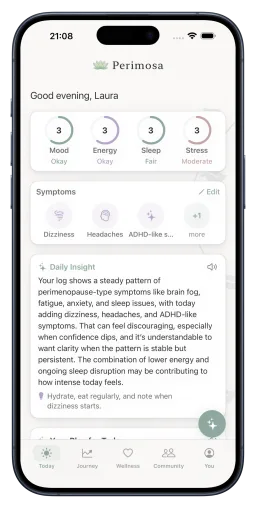
Finally understand what your body is doing
Perimosa logs how you feel each day, finds the pattern, and gives you the words to take to your doctor. Free on iPhone and iPad.
Get the free appFertility During Perimenopause
During perimenopause, ovulation becomes less frequent and less predictable, but it doesn't stop entirely until menopause. In any given cycle, you might ovulate or you might not. This unpredictability makes natural conception harder but not impossible. Egg quality also declines, which affects fertility and increases the risk of chromosomal abnormalities. However, some perimenopausal cycles produce perfectly viable eggs. Elevated FSH can occasionally trigger the release of multiple eggs, which is why the rate of twin pregnancies increases in the years before menopause.
Contraception Until Menopause
If you don't want to become pregnant, continue using reliable contraception until your doctor confirms menopause (12 consecutive months without a period, usually confirmed with FSH testing at that point). Effective options during perimenopause include hormonal IUDs (which also manage heavy bleeding), copper IUDs, barrier methods, and low-dose hormonal contraception. Low-dose combined pills can serve double duty by managing perimenopausal symptoms while preventing pregnancy. Discuss options with your doctor based on your age, health risks, and symptoms.
Trying to Conceive During Perimenopause
If you're hoping to conceive during perimenopause, time is a factor. See a reproductive endocrinologist or fertility specialist promptly. They can assess your ovarian reserve through AMH testing and follicle counts, discuss whether natural conception is realistic, and explore options like IVF, donor eggs, or embryo banking. The success rates for IVF decline significantly after 40, so early consultation is important. Optimizing your health -- nutrition, exercise, sleep, stress management -- supports the best possible fertility outcomes.
Pregnancy Risks in Your 40s
Pregnancy during perimenopause carries higher risks that should be discussed with your healthcare provider. These include increased risk of gestational diabetes, preeclampsia, chromosomal abnormalities (particularly Down syndrome), miscarriage, placenta previa, and cesarean delivery. Prenatal screening and monitoring are especially important. That said, many women in their 40s have healthy pregnancies and babies with appropriate medical care.
When You're Not Sure
If your periods are irregular and you're unsure whether you might be pregnant, take a home pregnancy test. Irregular periods during perimenopause can mask early pregnancy signs. If you're sexually active and not using contraception, keep pregnancy tests on hand. And if you experience sudden cessation of periods, don't assume it's menopause -- especially if you haven't had 12 consecutive months without a period and could have been exposed to pregnancy.
References
Medical disclaimer: This article is for informational purposes only and does not constitute medical advice. Always consult a qualified healthcare provider for diagnosis and treatment decisions. Perimosa is a symptom tracking tool, not a medical device.