Can Perimenopause Start at 38?
Yes, perimenopause can start at 38. While the average onset is in the early-to-mid 40s, about 5-10% of women begin experiencing perimenopausal symptoms in their late 30s. If you're 38 with classic symptoms like cycle changes, sleep disruption, or hot flashes, don't dismiss them -- get evaluated.
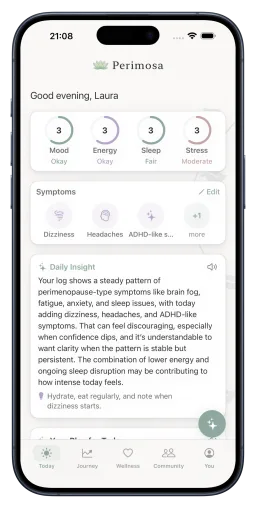
Finally understand what your body is doing
Perimosa logs how you feel each day, finds the pattern, and gives you the words to take to your doctor. Free on iPhone and iPad.
Get the free appWhy 38 Is Within the Range
Perimenopause is defined by declining ovarian reserve and increasingly irregular hormone production. While the average age of onset is around 45, the range is wide and individual. Late 30s onset accounts for a meaningful minority of women. Genetic predisposition is the strongest factor -- women whose mothers had early menopause are more likely to start early themselves. Lifestyle and medical factors also influence timing.
Common Symptoms at 38
Early perimenopause at 38 often looks like worsened PMS, cycle length changes (shorter or longer), unexpected mood shifts, sleep that's not as restorative, and mild hot flashes or night sweats. Many women also notice anxiety appearing or worsening without clear cause. Because women at 38 don't expect perimenopause, these symptoms frequently get misattributed to stress, postpartum changes, work demands, or thyroid issues.
Getting Properly Evaluated
If you're 38 and suspect perimenopause, request a thorough workup: FSH (ideally on day 3 of multiple cycles since levels fluctuate), AMH (a more stable marker of ovarian reserve), TSH and free T4 for thyroid function, prolactin, and a full metabolic panel. A single FSH test can miss perimenopause because hormone levels swing dramatically. Some doctors won't order these tests for women under 40 -- if yours refuses, request a referral to a gynecologist or menopause specialist.
Why It Matters to Diagnose Early
Early perimenopause has implications beyond symptom management. Earlier menopause is associated with higher long-term risks for osteoporosis and cardiovascular disease. Understanding your status allows you to make informed decisions about fertility, hormone therapy, bone density screening, and cardiovascular protection. It also validates what you're experiencing and lets you take it seriously rather than dismissing it as stress.
The Pattern Recognition That Catches Early Perimenopause
The reason many 38-year-olds get dismissed is that single visits miss patterns. Hormones fluctuate enough during perimenopause that a Tuesday FSH can look normal and a Thursday FSH can look elevated. The solution is longitudinal data, not more single tests. Tracking cycle length, flow, sleep, mood, and any new symptoms in Perimosa for 8-12 weeks creates the pattern a single appointment can't see. Bring screenshots of trends -- cycle variability over the period tracked, symptoms emerging together, intensifying PMS. This data turns 'I think I might be in perimenopause' into 'Here's three months of evidence that my cycle is varying 7+ days and I'm having documented vasomotor symptoms.'
What 'Normal' Looks Like at 38
At 38, most women still have regular cycles, ovulate reliably, and have no menopausal symptoms. That's the baseline most doctors assume. Cycles are typically 26-32 days, periods last 3-7 days with moderate flow, sleep is generally consistent, and mood is stable. Subtle shifts at 38 -- a few day variation in cycle length, intensifying PMS, occasional sleep disruption, mild brain fog -- can be the start of perimenopause OR can reflect stress, thyroid changes, postpartum recovery, or lifestyle factors. The pattern over months tells you which. One bad cycle means little. Three months of trending changes is meaningful.
Why 'Too Young' Is Not a Diagnosis
If you bring symptoms to a doctor at 38 and get told 'you're too young,' that's not a diagnosis -- it's an assumption that needs evidence. About 1 in 10 women begin perimenopause before 40. Genetic predisposition (especially if your mother had early menopause), autoimmune conditions, prior chemotherapy or radiation, smoking, and certain genetic variants all increase risk. A thorough evaluation includes asking these questions and ordering appropriate tests, not dismissing concerns based on age alone. If your doctor won't take you seriously, find one who will -- the Menopause Society directory lists certified practitioners who handle perimenopause regardless of patient age.
Bottom Line
Perimenopause can absolutely start at 38, and the evidence base supporting this is well-established. If you're experiencing classic symptoms (cycle changes, sleep disruption, mood shifts, hot flashes, brain fog), track them for 8-12 weeks, request appropriate hormonal and metabolic blood work, and don't accept dismissal based on age alone. Get a referral to a gynecologist or menopause specialist if needed. Early diagnosis has long-term implications for bone health, cardiovascular health, and fertility planning -- so it's worth pursuing definitive evaluation rather than living with uncertainty.
References
Medical disclaimer: This article is for informational purposes only and does not constitute medical advice. Always consult a qualified healthcare provider for diagnosis and treatment decisions. Perimosa is a symptom tracking tool, not a medical device.