Is Perimenopause at 40 Normal?
Yes, perimenopause at 40 is completely normal. The average woman begins experiencing perimenopausal changes between ages 40 and 45, with the transition lasting 4-10 years. By age 40, most women have already begun the early phase of hormonal change, even if symptoms are still subtle.
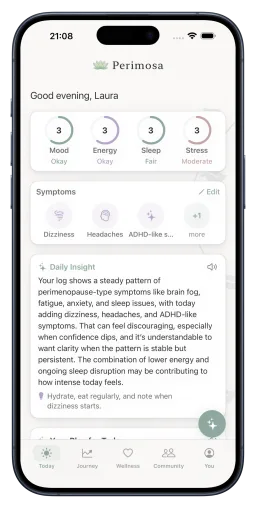
Finally understand what your body is doing
Perimosa logs how you feel each day, finds the pattern, and gives you the words to take to your doctor. Free on iPhone and iPad.
Get the free app40 Is Right in the Window
Many women are surprised that perimenopause begins this early, but 40 is squarely within the typical onset window. By age 40, ovarian follicle count has dropped significantly from peak fertility, FSH levels begin to rise as the body works harder to ovulate, and progesterone production typically declines first. Early perimenopause symptoms in your early 40s reflect normal biological aging, not anything wrong with you.
What's Typical at 40
By 40, most women begin noticing subtle shifts: cycles may shorten slightly (every 24-26 days instead of 28), PMS becomes more intense, sleep starts being lighter, mild mood swings appear, and energy dips become more noticeable. Heavy symptoms like frequent hot flashes are less common in early 40s but begin appearing in the mid-40s for many. The early phase is often dismissed as 'just getting older' when it's actually hormonal.
What Makes It Concerning
While 40 is normal for early symptoms, certain things still warrant medical attention. Periods that suddenly become very heavy or last more than 7 days, cycles shorter than 21 days, persistent bleeding between periods, or skipping multiple cycles before age 45 deserve evaluation. Severe symptoms that disrupt daily life shouldn't be tolerated as 'normal aging.' If something feels significantly off, see a doctor -- both to rule out other causes and to discuss treatment options.
What to Do Now
Start tracking your cycle and symptoms early -- the patterns you establish now will be invaluable data over the next 5-10 years. Prioritize sleep, strength training, protein intake, and stress management. These habits matter more in your 40s than they ever did. Schedule a baseline well-woman visit and discuss your symptoms openly. Don't wait until things are severe to seek information -- understanding what's happening empowers you to make better choices.
The Symptoms Most 40-Year-Olds Don't Connect to Hormones
At 40, many women experience symptoms they don't recognize as hormonal because they don't match the stereotype of perimenopause (severe hot flashes, missed periods). The most commonly missed early signs in 40-year-olds: shorter cycles by 2-3 days, intensifying PMS, new or worsening anxiety, lighter sleep, mild joint stiffness in the morning, increased breast tenderness, occasional brain fog, and a sense of being more easily overwhelmed. None of these alone screams 'perimenopause,' but together they form a pattern. Tracking symptoms in Perimosa for 8-12 weeks reveals the connections that single bad days obscure -- and lets you have a different conversation with your doctor than 'I just don't feel like myself.'
What's Actually Normal at 40 vs Worth Investigating
Normal at 40: cycles varying by 2-3 days from your previous norm; slightly heavier or lighter periods; intensifying PMS; occasional sleep disruption; mild mood shifts; occasional brain fog episodes; subtle weight redistribution toward the midsection; some changes in skin and hair. Worth investigating: bleeding between periods, periods lasting more than 7 days, very heavy flow soaking through protection hourly, severe pelvic pain, severe depression or anxiety, cycles consistently shorter than 21 days, or symptoms severe enough to disrupt daily function. The threshold isn't 'unusual' -- it's 'significantly impacting your quality of life or signaling something other than perimenopause.'
Why Starting Treatment Early at 40 Is Worth Considering
Research increasingly supports starting HRT earlier rather than waiting for severe symptoms. The 'window of opportunity' framework suggests HRT initiated within 10 years of menopause (which for a 40-year-old means right now or soon) carries the most cardiovascular and bone benefits with the lowest risks. Women who wait until symptoms are severe often suffer for years unnecessarily. This doesn't mean every 40-year-old needs HRT -- but it does mean that 'wait until it gets worse' isn't always the right strategy. Discussing your symptoms, family history, and risk factors with a menopause-trained doctor at 40 is more useful than at 50.
Bottom Line
Perimenopause at 40 is completely normal and worth taking seriously. Start tracking now -- the patterns you establish over the next 5-10 years will be invaluable. Build the foundation habits that matter most through the transition: strength training, protein, sleep, and stress management. Schedule a well-woman visit with a doctor who's comfortable discussing perimenopause; the Menopause Society maintains a directory of certified practitioners. Don't wait until symptoms are severe -- early evaluation lets you make informed decisions about HRT, lifestyle, and proactive long-term health management while you have the most options.
References
Medical disclaimer: This article is for informational purposes only and does not constitute medical advice. Always consult a qualified healthcare provider for diagnosis and treatment decisions. Perimosa is a symptom tracking tool, not a medical device.