Can Perimenopause Start in Your 30s?
Yes, perimenopause can start in your 30s. About 5-10% of women begin the transition between ages 35-40. Genetic factors, autoimmune conditions, certain medical treatments, and surgical history can all contribute to earlier onset. Early perimenopause is real and deserves medical attention, not dismissal.
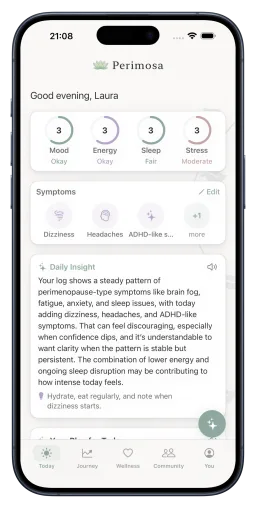
Finally understand what your body is doing
Perimosa logs how you feel each day, finds the pattern, and gives you the words to take to your doctor. Free on iPhone and iPad.
Get the free appEarly Perimenopause Is Real
The average age perimenopause begins is around 45, but the range is much wider than most women realize. Five to ten percent of women begin experiencing symptoms in their late 30s, and a smaller percentage even earlier. This is sometimes called early perimenopause to distinguish it from primary ovarian insufficiency (POI), which is full menopause before age 40. If you're 35 with classic symptoms, you're not imagining it -- but you should also be evaluated to rule out other causes.
Risk Factors for Early Onset
Genetics is the strongest predictor: if your mother went through menopause early, you're more likely to as well. Smoking accelerates ovarian decline. Autoimmune conditions like thyroid disease, lupus, or rheumatoid arthritis can trigger earlier onset. A history of chemotherapy, radiation, or ovarian surgery affects timing. Certain genetic conditions like fragile X premutation are linked to early menopause. BMI extremes (very low or very high) can also influence timing.
Why Early Perimenopause Often Gets Missed
Many doctors assume women in their 30s are too young for perimenopausal symptoms and attribute them to stress, postpartum changes, or thyroid issues. Tests often come back normal because hormone levels fluctuate so much during perimenopause that a single blood draw doesn't capture the pattern. This is why systematic symptom tracking matters: it provides the longitudinal data that single tests miss. Don't accept dismissal -- request a thorough workup including FSH (across multiple cycles), AMH, thyroid panel, and prolactin.
What to Do If You Suspect It
Track your symptoms daily for at least 2-3 months before your appointment -- patterns matter more than any single bad day. Note cycle changes, sleep quality, mood, hot flashes, and any new symptoms. Bring this data to a doctor who takes women's hormonal health seriously. If your primary care doctor dismisses you, ask for a referral to a gynecologist or menopause specialist. Early perimenopause has implications for fertility, bone health, and cardiovascular health that deserve proactive management.
What to Bring to Your Doctor at 30-Something
Doctors often dismiss perimenopausal symptoms in women under 40 because it doesn't match the textbook age. Walking in with structured data fundamentally changes the conversation. Track in Perimosa for 8-12 weeks before your appointment: cycle length and flow patterns, daily symptoms (sleep, mood, hot flashes, energy, brain fog), and any new physical changes. Print or screenshot a summary. This shifts the dynamic from 'I've been feeling off' (easy to dismiss) to 'My cycles are now varying 24-34 days and I'm having documented symptom patterns matching the STRAW criteria for early menopausal transition' (hard to dismiss). Women who bring data get tested. Women who don't often get told it's stress.
What Tests to Specifically Request
If you suspect perimenopause in your 30s, ask for: FSH on day 2-3 of your cycle, repeated 6-8 weeks later (single tests miss perimenopause because levels fluctuate); AMH (anti-Müllerian hormone, a more stable marker of ovarian reserve); estradiol on the same days as FSH; full thyroid panel including free T3, free T4, and TPO antibodies (autoimmune thyroid often co-occurs); prolactin; fasting glucose and A1c; vitamin D; B12; and ferritin (not just hemoglobin). If your doctor refuses to order these for someone in their 30s, request a referral to a gynecologist or menopause specialist. The Menopause Society maintains a directory of certified menopause practitioners.
Long-Term Implications That Matter
Earlier perimenopause has long-term health implications that deserve proactive management, not just symptom relief. Earlier menopause is linked to higher cardiovascular risk, faster bone density loss, and somewhat higher cognitive risk later in life. Knowing your status earlier lets you take preventive action: bone density screening, optimized vitamin D and calcium, regular cardiovascular evaluation, weight-bearing exercise habits. It's also relevant if you want children -- early perimenopause means a narrower fertility window, and reproductive endocrinology consultation may be worth pursuing. None of these are reasons to panic. They're reasons to know your status.
Bottom Line
Perimenopause in your 30s is uncommon (5-10% of women) but not abnormal, and it deserves proper evaluation rather than dismissal. Track symptoms systematically for 2-3 months before your appointment. Request appropriate blood work. If your primary care doctor dismisses you, get a referral. Understand that long-term implications (cardiovascular, bone, possibly cognitive) make early diagnosis worth pursuing for proactive management, not just symptom relief. You're not crazy, you're not making it up, and 'too young' is not a diagnosis.
References
Medical disclaimer: This article is for informational purposes only and does not constitute medical advice. Always consult a qualified healthcare provider for diagnosis and treatment decisions. Perimosa is a symptom tracking tool, not a medical device.