Why Does Perimenopause Cause Mood Swings?
Perimenopause causes mood swings because estrogen directly regulates the neurotransmitters that control mood -- serotonin, GABA, and dopamine. When estrogen swings unpredictably, so does your emotional baseline. Combined with sleep disruption, stress, and physical discomfort, the result is the emotional volatility many women describe as feeling like a different person.
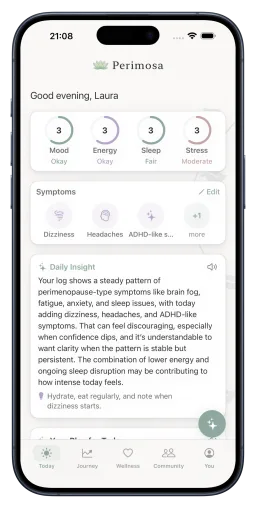
Finally understand what your body is doing
Perimosa logs how you feel each day, finds the pattern, and gives you the words to take to your doctor. Free on iPhone and iPad.
Get the free appThe Neurochemistry Behind It
Estrogen isn't just a reproductive hormone -- it's a major regulator of brain chemistry. It boosts serotonin (mood, calm), enhances GABA (the brain's natural anti-anxiety neurotransmitter), supports dopamine (motivation, pleasure), and protects against inflammation in the brain. When estrogen fluctuates dramatically during perimenopause, all of these systems become unstable. Your emotional regulation isn't broken -- it's responding to chemical instability the same way it would after extreme stress or sleep deprivation.
Why It Feels So Intense
Mood swings during perimenopause often feel different from anything women experienced before. They can come without obvious triggers, peak rapidly, and resolve as suddenly as they started. Rage at small annoyances, tears over minor things, anxiety about issues that wouldn't have bothered you a year ago, and emotional numbness all become possible. The intensity reflects the magnitude of the hormonal swings combined with reduced resilience from poor sleep and other symptoms.
Compounding Factors
Hormones don't explain everything. Sleep disruption from night sweats and 3am wake-ups directly worsens emotional regulation. Chronic stress depletes the systems that compensate for hormone fluctuations. Diet (especially blood sugar swings from refined carbs) affects mood. Alcohol amplifies emotional volatility for 1-2 days after drinking. Major life pressures common in midlife (aging parents, teenagers, career demands) increase the load. Addressing these compounding factors often produces dramatic improvement even before treating the hormones directly.
What Actually Helps
Track your moods alongside your cycle, sleep, and stress for a few weeks -- patterns emerge that single bad days don't reveal. Prioritize sleep, even at the cost of other commitments. Reduce or eliminate alcohol, which intensifies mood swings the next day. Regular exercise, especially strength training, stabilizes mood significantly. CBT is highly effective for mood symptoms. SSRIs help some women dramatically. HRT can resolve mood symptoms when they're hormonally driven. None of this is weakness -- it's responding to a real biological challenge.
The Cycle Pattern of Mood Swings
Most perimenopausal mood swings have a cyclical pattern even when they feel random. The most common pattern: worst mood in the late luteal phase (days 7-3 before period), peaking in the 2-3 days right before bleeding starts. A second pattern is the ovulation dip in the middle of the cycle. A third is the wake-up-on-the-wrong-foot mornings after a poor sleep night, regardless of cycle phase. Tracking your mood (0-10 scale) daily in Perimosa alongside cycle phase, sleep, and any obvious stressors for 2-3 months reveals your specific pattern. Once you can see it, prevention becomes possible -- extra sleep protection, social calendar adjustments, and even pre-emptive treatment timing become available.
Why Some Women Get Hit Much Harder Than Others
Mood symptoms during perimenopause aren't distributed equally. Women with a history of premenstrual mood symptoms (PMS or PMDD), postpartum depression, mood sensitivity to hormonal contraception, prior anxiety or depression episodes, or family history of perimenopause-related mood issues are particularly vulnerable. This isn't a moral failing -- it reflects underlying biology that responds more strongly to hormonal shifts. If you've had any of these in your history, mention it specifically to your doctor and consider whether proactive intervention (earlier HRT, preventive SSRI, intensive CBT) makes sense rather than waiting for severe symptoms to develop.
What Definitely Doesn't Help Mood Swings
Several common approaches make perimenopausal mood swings worse. Alcohol, even in moderate amounts, dramatically amplifies mood instability for 1-2 days after. Restrictive dieting (especially low-carb crashes) destabilizes blood sugar and worsens mood. Sleep deprivation -- even one bad night -- noticeably worsens mood the next day. Excessive caffeine on empty stomach spikes anxiety. 'Pushing through' busy weeks without scheduled downtime guarantees crashes. Trying to white-knuckle through with willpower alone is the most common mistake. These aren't moral failures -- they're well-documented biological triggers that combine with already-volatile hormones to produce intensified symptoms.
Bottom Line
Perimenopausal mood swings are caused by estrogen's direct effects on serotonin, GABA, and dopamine -- the neurotransmitters that regulate emotional intensity. When estrogen swings, so does emotional stability. The strongest interventions: track your patterns in Perimosa to identify your worst-mood days and prepare for them, eliminate or dramatically reduce alcohol, prioritize sleep ferociously, and lift weights regularly (it stabilizes mood significantly). For severe mood swings interfering with relationships or work, talk to your doctor about HRT, SSRIs, or CBT -- effective treatments exist. Don't accept feeling unrecognizable to yourself as your new permanent state.
References
Medical disclaimer: This article is for informational purposes only and does not constitute medical advice. Always consult a qualified healthcare provider for diagnosis and treatment decisions. Perimosa is a symptom tracking tool, not a medical device.