Does Perimenopause Cause Insomnia?
Yes, perimenopause is a major cause of insomnia. Up to 60% of women experience significant sleep disruption during the transition. Causes include night sweats, declining progesterone (which normally promotes sleep), cortisol shifts, anxiety, and the 3am wake-up pattern. Multiple effective treatments exist beyond sleep medications.
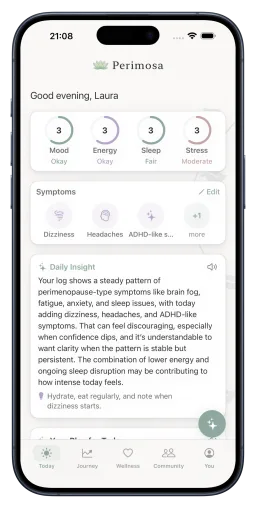
Finally understand what your body is doing
Perimosa logs how you feel each day, finds the pattern, and gives you the words to take to your doctor. Free on iPhone and iPad.
Get the free appThe Scale of the Problem
Insomnia is one of the most common and disruptive perimenopause symptoms. Research suggests 40-60% of perimenopausal women experience clinically significant sleep disruption, and the prevalence rises further as the transition progresses. For many women, sleep problems are the symptom that finally drives them to seek help, because the downstream effects -- fatigue, mood, cognition, weight -- compound rapidly. Insomnia isn't just inconvenient; it's a real medical issue that deserves treatment.
What's Causing It
Several mechanisms combine. Night sweats fragment sleep, often without you fully waking -- you cycle out of deep sleep into lighter stages. Declining progesterone removes a natural sleep-promoting hormone. Cortisol patterns shift, producing the wired-tired evening feeling and 3am awakenings. Anxiety and mood symptoms feed insomnia and vice versa. Sleep architecture itself changes, with less deep sleep and more fragmented REM. Each factor compounds the others, creating a vicious cycle.
What Doesn't Work Long-Term
Standard sleep medications -- prescription and over-the-counter -- can help short-term but rarely solve perimenopausal insomnia. They don't address night sweats, cortisol patterns, or the underlying hormonal contributors. Tolerance builds quickly with most. Some (especially anticholinergics like diphenhydramine in OTC sleep aids) impair cognition and are linked to long-term issues with regular use. Alcohol is the worst 'sleep aid' for perimenopause -- it fragments the second half of sleep dramatically.
What Actually Works
CBT for insomnia (CBT-I) has the strongest long-term evidence and is more effective than sleep medication after 8-12 weeks of practice. Treating night sweats through HRT or non-hormonal medications often resolves insomnia downstream. Magnesium glycinate at night has modest evidence. Keep a cool bedroom, consistent schedule, no alcohol within 3 hours of bed, no caffeine after noon, and morning light. Rule out sleep apnea, which is underdiagnosed in women. Treat anxiety if it's driving wakefulness. Most women need a combination, not a single fix.
The Four Specific Patterns of Perimenopause Insomnia
Perimenopausal insomnia has identifiable patterns that respond to different treatments. Pattern 1: Trouble falling asleep -- often driven by anxiety, cortisol dysregulation, or evening caffeine. Pattern 2: Frequent awakenings throughout the night -- usually night sweats fragmenting sleep, sometimes sleep apnea. Pattern 3: The 3am wake-up -- characteristic of perimenopausal cortisol shifts and progesterone decline. Pattern 4: Sleeping but waking unrested -- typically reflects poor sleep quality even with adequate duration, often from undiagnosed sleep apnea or fragmented architecture. Tracking specifically when you wake and what wakes you in Perimosa for 2-3 weeks identifies your pattern, which determines the right treatment approach.
Sleep Apnea: The Diagnosis Women Get Missed
Sleep apnea is wildly underdiagnosed in perimenopausal women because the typical presentation differs from men. Women often present with insomnia, fatigue, mood symptoms, and morning headaches rather than loud snoring. The risk rises significantly during perimenopause due to weight redistribution toward the neck, declining progesterone (a respiratory stimulant), and changes in airway tissue. If you have insomnia plus daily fatigue, morning headaches, dry mouth on waking, or your partner notices breathing pauses, request a sleep study. Treatment (typically CPAP) often transforms sleep quality dramatically -- and it's frequently the missing diagnosis when other insomnia treatments don't work.
Why Sleep Medications Often Make Things Worse
Most over-the-counter and prescription sleep medications work poorly for perimenopausal insomnia long-term. OTC products (Benadryl, doxylamine, melatonin in non-therapeutic doses) build tolerance quickly and impair cognition. Benzodiazepines and Z-drugs (Ambien, Lunesta) carry dependency risks, impair next-day function, and don't address underlying causes. Trazodone can help short-term but often produces grogginess. The pattern that works long-term: identify root cause (night sweats, anxiety, sleep apnea), treat that directly, build environmental and behavioral foundations, and reserve medications for short bridging periods rather than ongoing use. CBT-I outperforms medication for chronic insomnia at 8+ weeks.
Bottom Line
Yes, perimenopause is a major cause of insomnia, affecting 40-60% of women during the transition. The good news: it's highly treatable when approached systematically. Identify your specific pattern (falling asleep, staying asleep, 3am wake, unrested mornings) by tracking in Perimosa. Rule out sleep apnea if fatigue is severe. Address root causes rather than masking symptoms with medication. Combine environmental optimization, behavioral changes, targeted supplements, and medical treatment as needed. CBT-I is the most effective long-term intervention. Don't accept years of bad sleep -- effective treatment exists and dramatically improves quality of life when it works.
References
Medical disclaimer: This article is for informational purposes only and does not constitute medical advice. Always consult a qualified healthcare provider for diagnosis and treatment decisions. Perimosa is a symptom tracking tool, not a medical device.