What Helps With Night Sweats During Perimenopause?
What helps with perimenopause night sweats, from least to most aggressive: cool bedroom (60-67°F), moisture-wicking bedding and sleepwear, no alcohol within 3 hours of bed, reduced caffeine, magnesium glycinate at night, black cohosh, and HRT or non-hormonal medications (gabapentin, SSRIs, fezolinetant) for severe cases.
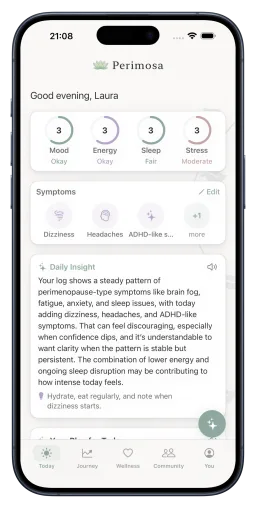
Finally understand what your body is doing
Perimosa logs how you feel each day, finds the pattern, and gives you the words to take to your doctor. Free on iPhone and iPad.
Get the free appEnvironmental Changes First
Optimizing your sleep environment is the highest-leverage and lowest-cost intervention. Drop bedroom temperature to 60-67°F (15-19°C). Use moisture-wicking sheets (bamboo, eucalyptus, or lightweight cotton). Sleep in breathable sleepwear or nude. Run a fan year-round for both temperature and air circulation. Keep ice water and a cooling cloth by the bed. Some women benefit from a cooling mattress topper or a Chilipad/Ooler temperature-controlled pad.
Behavioral Changes Second
Several daily habits dramatically affect night sweats. Avoid alcohol within 3 hours of bed -- it triggers sweats in many women. Limit caffeine, especially in the afternoon. Skip spicy food at dinner. Eat earlier and lighter in the evening. Manage daytime stress with consistent practice. Lose excess weight if relevant -- higher BMI correlates with more severe vasomotor symptoms. Stop smoking, which worsens night sweats significantly.
Supplements With Evidence
Magnesium glycinate (200-400mg at night) supports sleep quality and may indirectly reduce sweats. Black cohosh has modest evidence for reducing both hot flash and night sweat frequency in some women -- allow 4-8 weeks of consistent use. Soy isoflavones help a subset of women. Sage extract has emerging evidence specifically for sweating. Skip the 'menopause complex' supplements that throw 15 ingredients at the problem in subtherapeutic doses -- single ingredients with evidence work better.
Medical Options for Severe Cases
When night sweats severely fragment sleep, medical treatment is appropriate. Hormone replacement therapy (HRT) is the most effective option, often producing dramatic improvement within weeks. Non-hormonal options include gabapentin (especially good for nighttime sweats), low-dose SSRIs and SNRIs (paroxetine, escitalopram, venlafaxine), oxybutynin, and the newer medication fezolinetant (Veozah), which targets the brain pathway driving hot flashes. Discuss your specific symptoms, severity, and risk factors with a doctor experienced in menopause medicine.
The Stack That Actually Works for Most Women
Combining the right strategies typically produces 50-70% reduction in night sweat frequency and severity within 6-8 weeks. The stack: bedroom 60-67°F with fan, moisture-wicking sheets and sleepwear, no alcohol within 3 hours of bed, no spicy food at dinner, no caffeine after noon, finish dinner 3+ hours before bed, 200-400mg magnesium glycinate in the evening, daily strength training plus 8000+ steps, and daily stress practice (10 minutes of breathing or meditation). Track frequency and severity of night sweats in Perimosa before and during to measure actual results. Most women see meaningful improvement when consistent, even before considering medical treatment.
When to Discuss HRT Specifically for Night Sweats
HRT is the most effective treatment for moderate-to-severe night sweats and produces dramatic improvement for most women within 4-6 weeks. Reasonable timing to discuss it with a menopause-trained doctor: night sweats are drenching enough to require changing sleepwear or sheets, fragmenting your sleep multiple nights weekly, daily exhaustion is affecting work or relationships, foundation work hasn't produced enough improvement after 8+ weeks, or you're in the 'window of opportunity' (within 10 years of menopause). The decision depends on your specific risk factors, history, and severity -- but suffering for years when effective treatment exists is unnecessary.
Non-Hormonal Medical Options Worth Knowing About
For women who can't or don't want HRT, several non-hormonal medications work well for night sweats. Gabapentin (300-900mg at bedtime) is particularly effective for nighttime symptoms and improves sleep quality directly. Low-dose SSRIs/SNRIs (paroxetine, escitalopram, venlafaxine) reduce vasomotor symptoms by 50-60% with the bonus of mood support if needed. Fezolinetant (Veozah) is the newest option, specifically designed for vasomotor symptoms, reducing them 60-70% in trials. Oxybutynin can help with combined hot flashes and urinary symptoms. Clonidine is an older option still occasionally used. Each has different side effect profiles -- a menopause-trained doctor can match the right one to your specific situation.
Bottom Line
Night sweats during perimenopause respond well to layered intervention. Start with environmental optimization (cool room, moisture-wicking bedding) and behavioral changes (eliminate alcohol within 3 hours of bed). Add magnesium glycinate. Build foundation health habits (sleep, strength training, stress management). Track in Perimosa to measure progress. For moderate-to-severe cases, escalate to medical treatment -- HRT, gabapentin, low-dose SSRIs, or fezolinetant all work well. The mistake to avoid: suffering for years thinking nothing will help. Multiple effective options exist, and quality of life during this transition is worth investing in.
References
Medical disclaimer: This article is for informational purposes only and does not constitute medical advice. Always consult a qualified healthcare provider for diagnosis and treatment decisions. Perimosa is a symptom tracking tool, not a medical device.